




Managing IT services (MSPs) can feel like a puzzle. Business owners often wonder why certain cities have more diverse MSP offerings than others. Why does one city have more advanced options while another seems stuck with the basics? Understanding this difference is key to making smarter decisions.
Here’s an insight: city size plays a big role in shaping MSP service diversity. Larger cities tend to offer more progressive and varied services, but smaller or medium-sized areas aren’t out of the game either.
Objectives of the Study
This study aims to examine how city size influences managed service provider (MSP) diversity. It centers on understanding the differences in services provided across cities of varying sizes, from small towns to large metropolitan areas.
Researchers observed patterns connecting population density, geographic factors, and economic activity with MSP offerings. The objective is to assist businesses and MSPs in refining their strategies based on city-specific needs and resources.
Methodology
Researchers collected and analyzed city data to uncover patterns in MSP service offerings. Advanced tools helped reveal critical connections between city size and service diversity.
Data collection strategies
Teams collected information from public records, business directories, and regional government databases. To complement these sources with market-facing provider snapshots, city-level lists reviewed by Jumpfactor can add context on how MSP offerings are positioned in specific metros. They concentrated on factors like city population, economic activity levels, and current MSP service offerings.
Surveys reached businesses of different sizes across various industries. These surveys assessed the need for IT services such as cloud computing or cybersecurity. Analysts also observed patterns using tools that tracked real-time market activity in urban areas.
Analytical framework
The analytical framework outlined trends between city size and MSP service variety. It identified key factors like population density, economic activity, and technological infrastructure.
By grouping cities into small, medium, and large categories, the study examined how these variables impact service availability.
Statistical tools measured correlations within datasets collected from urban centers. Patterns revealed changes in demand for specific services like cloud computing or cybersecurity as cities grew. Data reveals insights that numbers alone cannot.
Tools and technologies used
Researchers used data analytics platforms to handle city and service data efficiently. Geographic Information Systems (GIS) mapped urban areas, highlighting differences in infrastructure and service availability.
Cloud-based tools stored and examined massive datasets for immediate insights. Statistical software determined connections between population size, density, and MSP offerings in various regions.
Defining City Size
City size influences everything from population distribution to business operations — let’s analyze it.
Metrics for categorizing city size
City size plays a critical role in determining service offerings for managed IT providers. Understanding the right measurements can refine your business strategies. Below is a simple breakdown.
| Metric | Description | Relevance to MSPs |
| Population Size | Population count within a specific geographic boundary. | Larger populations often indicate higher IT service demand. |
| Population Density | Number of people per square mile or kilometer. | High density areas may need faster, adaptable solutions. |
| Geographic Spread | Total land area covered by a city or municipality. | Larger areas might demand mobile and distributed IT support. |
| Economic Output | City’s GDP or contribution to the national economy. | Wealthier regions often invest more in advanced IT services. |
| Business Volume | Number of active businesses or industries operating. | More businesses translate to higher IT service opportunities. |
| Infrastructure Quality | Availability of tech infrastructure, such as high-speed internet. | Reliable infrastructure supports broader IT service portfolios. |
| Urbanization Level | Proportion of developed and urbanized zones. | Urban areas tend to drive IT service development and variety. |
Each measurement gives you a clearer picture of your target audience. Adjust strategies based on what these numbers reveal.
Population thresholds and density
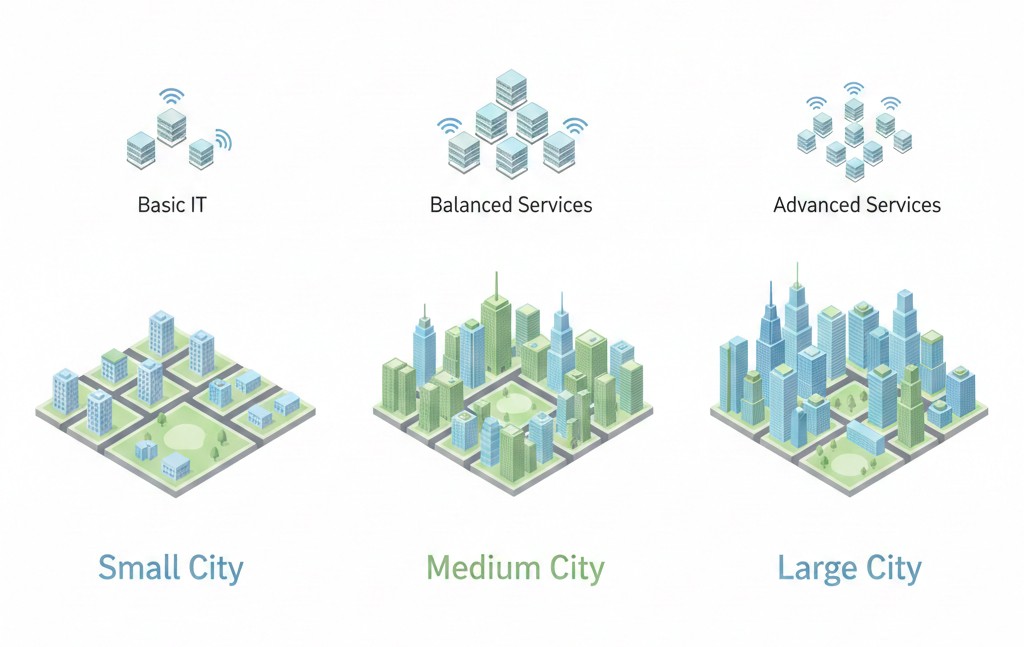
Transitioning from metrics used to categorize city size, population thresholds and density serve as fundamental indicators for understanding urban areas. These factors directly affect service demand, resource allocation, and MSP opportunities. Let’s break this down in a structured way.
| City Size | Population Range | Population Density | Service Demand |
| Small Cities | Below 100,000 residents | Low (under 1,500/sq mile) | Niche markets with limited IT needs |
| Medium-Sized Cities | 100,000 to 500,000 residents | Moderate (1,500–6,000/sq mile) | Balanced demand across various sectors |
| Large Cities | 500,000+ residents | High (6,000+ residents/sq mile) | Diverse and advanced service requirements |
Population thresholds determine the scale of potential clients. Small cities deal with tight-knit communities. Larger cities exhibit more fluctuation in demand. Density impacts the frequency and complexity of services. Sparse populations lead to basic IT needs. High-density areas require broader cybersecurity and networking efforts. Managing these dynamics is demanding but achievable.
Geographic and economic parameters
City size often relies on both its structure and economic activity. Larger cities commonly span broader geographic areas with diverse infrastructures, while smaller cities are more compact. Dense urban setups often result in increased demand for managed IT services due to concentrated businesses needing support.
Economic factors significantly influence available MSP services. Prosperous regions with thriving industries attract tech providers offering tailored solutions like cybersecurity or cloud computing. In contrast, smaller economies might have limited access to sophisticated services, focusing instead on basic IT support due to lower market demand or constrained budgets.
MSP Service Diversity
MSP service diversity encompasses a wide range of offerings customized to different client needs. It adapts based on local demand, market size, and available resources.
Definition of MSP service diversity
MSP service diversity refers to the variety of services managed service providers offer businesses. These can range from IT support and cybersecurity solutions to cloud computing and network infrastructure management. It highlights how MSPs adjust their offerings based on market demand, industry needs, and technological advancements.
This diversity ensures companies have access to customized tools for efficient operations. For instance, a healthcare provider may require HIPAA-compliant data systems, while a retail business might prioritize POS system integration with cloud backups. Such varied options cater to businesses across industries and city sizes effectively.
Key elements of MSP services
Defining MSP service diversity sets the stage for understanding crucial elements that support Managed IT Services. Each element connects to solving real-world issues businesses face daily.
- Proactive IT Support
IT teams monitor systems 24/7 to detect problems early, reducing downtime. This approach prevents costly disruptions and keeps businesses running smoothly. - Cybersecurity Solutions
Protecting networks from threats like malware and phishing is essential. Experts provide firewalls, antivirus software, and employee training to safeguard sensitive data. - Cloud Computing Services
Flexible cloud storage offers adaptability for growing companies. It enables remote access while reducing costs tied to physical servers. - Network Management
Strong connections matter in today’s fast-paced world. Teams enhance bandwidth usage, configure devices, and ensure connectivity remains stable. - Data Backup and Recovery
Accidental data loss can cripple operations. Backup solutions restore critical information quickly after hardware failures or cyberattacks. - Help Desk Support
Employees need quick fixes when technical issues arise. Help desks offer instant troubleshooting through phone or online chat options. - Compliance Assistance
Industries like healthcare must meet strict regulations such as HIPAA standards. Specialists guide businesses on staying compliant with ever-changing policies. - Vendor Management
Handling relationships with software providers takes time companies may not have. MSPs negotiate contracts and simplify communication for better outcomes. - Software Updates and Patching
Outdated programs lead to security vulnerabilities or poor performance over time. Teams regularly update systems to keep them secure and efficient. - Remote Monitoring Tools
MSPs use advanced tools to manage devices from anywhere without needing on-site visits, saving time and resources effectively allocated elsewhere in operational workspaces.
Importance of diversity in MSP services
Diversity in MSP services allows businesses to address a wide range of technology challenges. It helps them meet varying client needs, whether it’s managing cloud systems or securing data from cyber threats. With more service options, firms can adjust more quickly to changing market demands.
A varied MSP portfolio also supports growth by reaching into different industries and serving businesses of all sizes. Cities with active economies gain significant advantages, as businesses there require customized IT solutions. This connection between service diversity and city size leads directly to examining how cities influence offerings through factors like population density and geography.
Relationship Between City Size and MSP Service Diversity
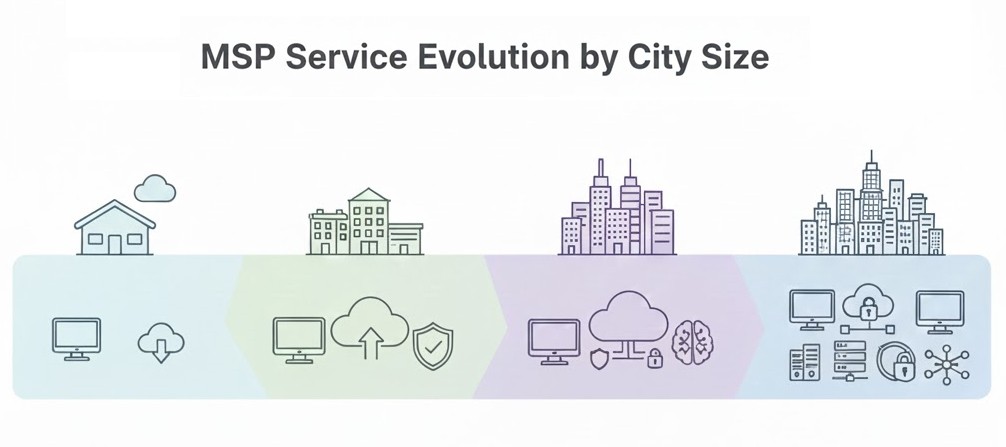
City size influences the range of MSP services much like a skilled craftsman adjusts suits to fit. Larger cities often require wider and more sophisticated options, while smaller areas focus on essentials.
Trends observed in small cities
Small cities often display limited diversity in Managed Service Provider (MSP) offerings. Population density directly affects the demand for advanced IT services, leaving smaller markets focused on basic needs like network troubleshooting and hardware maintenance. Fewer businesses mean fewer clients seeking extensive packages such as cloud management or cybersecurity upgrades.
Economic activity plays a big role in shaping what MSPs provide. Smaller cities with modest business ecosystems usually support industries that don’t heavily rely on advanced tech solutions.
This trend keeps the focus on foundational IT services instead of advanced innovations seen in larger urban areas. Tech infrastructure also lags, creating challenges for expanding operations or introducing complex technologies to these locales.
Trends observed in medium-sized cities
Medium-sized cities often show a balance in MSP service diversity. These areas generally attract a mix of small businesses and mid-sized firms, leading to moderate yet varied demand for IT services. Local businesses require cloud computing, cybersecurity, and basic networking support, but may not push for highly specialized solutions seen in larger metro regions.
MSPs in these cities adjust effectively due to steady competition and moderately growing tech infrastructure. Business environments here often encourage collaborations between MSPs and local industries like retail or healthcare, adding layers of opportunity for customized services. This evolving approach helps in understanding trends in large metropolitan areas.
Trends observed in large metropolitan areas
Large metropolitan areas show a broad range of MSP services. Providers often cater to high demands from diverse industries like finance, healthcare, and tech sectors. Advanced offerings include cloud management, cybersecurity solutions, and large-scale networking support. High population density drives the need for quick response times and specialized expertise.
Businesses in these cities compete heavily for premium IT services. Many MSPs adapt by creating packages designed specifically to enterprise needs or localized regulatory requirements. Strong economic activity further drives advancements within service diversity trends in urban planning contexts.
Data Analysis and Findings
The data reveals surprising patterns in how city size shapes the range of MSP services offered — read on to uncover the details.
Correlation between city size and service diversity
City size has a direct effect on the service variety offered by Managed Service Providers (MSPs). Larger cities typically see greater service options, while smaller ones may experience limited choices. Here’s an overview of the correlation between city size and MSP service variety:
| City Size | Service Variety | Key Observations |
| Small Cities | Limited | — Fewer IT providers compete for customers. — Focus on fundamental services like hardware support and troubleshooting. — Advanced offerings like cloud solutions are less common. |
| Medium-Sized Cities | Moderate | — Balanced mix of traditional and emerging IT services. — Providers cater to growing numbers of small and mid-sized enterprises. — Cloud, cybersecurity, and data management services are available but not always widespread. |
| Large Cities | Extensive | — High competition drives diverse service options. — Comprehensive offerings include AI, advanced cybersecurity, and infrastructure management. — Firms often specialize in specific industries such as finance or healthcare. |
This overview highlights how MSPs adjust offerings based on city size. For readers who want a city-specific reference point alongside these patterns, an independent evaluation of MSP performance can help illustrate how provider capabilities map to local demand in a major metro. Each market segment presents its own set of challenges and opportunities.
Regional variations in MSP service distribution
Service availability often changes depending on geographic regions. In smaller cities, MSPs may focus on basic IT support or networking because of lower demand for advanced solutions. Meanwhile, large metropolitan areas typically see higher diversity due to complex business needs and dense economic activity.
Regional economies also shape offerings. Areas with strong tech sectors might prioritize cloud computing or cybersecurity services. Rural locations can lean toward essential infrastructure management where internet access remains limited. Recognizing these patterns helps MSPs plan growth better while addressing city-specific challenges effectively.
Patterns of service availability
Larger cities tend to offer a wider variety of MSP services due to high demand. Businesses in these areas benefit from quick access to IT support, cybersecurity solutions, and advanced cloud platforms. Smaller cities often face limited service options because providers prioritize larger markets where the client pool is bigger.
Regional variances also play a role. Coastal metropolitan areas may have advanced infrastructure and faster response times compared to rural regions with slower networks or fewer skilled personnel.
This affects how businesses plan their tech strategies based on location and available resources. Moving forward, specific MSP services like IT security will show varied impacts depending on city size trends.
Impact of City Size on Specific MSP Services
City size directly shapes the demand for certain MSP services. Larger populations often push providers to expand their offerings and adapt quickly.
IT and cybersecurity services
Small businesses in large cities often face rising threats from cyberattacks. Hackers frequently target growing markets due to higher data flows and economic activity. Managed service providers (MSPs) help protect sensitive information by offering continuous monitoring, incident responses, and system updates.
Smaller towns may lack adequate IT resources compared to larger cities. MSPs operating there must adapt with flexible solutions like remote cybersecurity management or essential data protection measures. These services not only guard against breaches but also ensure continuity for local businesses facing limited technological infrastructure or expertise.
Cloud computing and data management
IT and cybersecurity services often lead to improved cloud-based solutions. Cloud computing has become essential for businesses in cities of every size. Small firms use it to lower costs by replacing physical servers with virtual ones. Larger organizations rely on it to store massive datasets securely.
Data management ties directly to cloud efficiency. Proper systems allow companies to collect, analyze, and access information without delays or risks. Businesses using strong data tools can enhance decision-making, simplify operations, and protect client information effectively.
Networking and infrastructure support
Efficient networking keeps businesses connected and active. Managed service providers (MSPs) in larger cities often offer a wide range of infrastructure solutions to handle high demands. These services might include advanced fiber-optic connections, adaptable data centers, and dependable Wi-Fi systems for crowded urban environments.
Smaller cities lean toward simpler setups due to fewer resources or less demand. MSPs in these areas may focus on installing basic networks, maintaining hardware, and ensuring stability for local markets. The type of infrastructure depends heavily on the city’s population density and economic activity. Dependable connectivity can promote growth regardless of size.
Case Studies
Small cities often encounter challenges that require inventive solutions for MSP service growth. Meanwhile, large urban areas demonstrate the wide range and intricacy of diversity in practice.
Small city: Service limitations and unique challenges
Small cities often encounter challenges in obtaining a variety of MSP services. Lower population density decreases demand, making it challenging for providers to offer tailored solutions. IT companies may be reluctant to allocate resources to areas with slower business growth or a smaller client base.
Infrastructure gaps can also make matters more difficult. Outdated networks or limited technological support create obstacles for service delivery and opportunities for advancements. Businesses might depend on fundamental offerings like desktop support while lacking advanced cloud computing or cybersecurity options crucial for modern operations.
Medium-sized city: Balanced service diversity
Medium-sized cities find equilibrium between demand and resource availability. Managed IT services in these areas often offer a range of solutions, from cybersecurity to cloud computing. Businesses gain from accessing essential and advanced MSP services without facing excessive competition or costs.
IT providers in such cities adjust quickly to economic needs while staying adaptable. The business environment encourages steady growth, which encourages improvement within the service portfolio. With moderate population density and expanding technological infrastructure, medium-sized cities provide a strong foundation for managed service variety.
Large city: Extensive diversity and advanced offerings
Larger cities create rich opportunities for managed IT services. A dense population, bustling business centers, and strong technological infrastructure drive this diversity. Businesses demand specialized MSP services like advanced cybersecurity, custom cloud solutions, and detailed data management strategies.
High competition pushes providers to broaden offerings constantly. Companies often expect fast response times in large metropolitan areas due to their complex needs. From supporting IoT devices in smart city projects to expanding networks across skyscrapers, service requirements grow more detailed with a city’s size and pace of development.
Factors Driving MSP Service Diversity
Population growth, business demands, and local tech infrastructure shape how MSPs adapt their services — don’t miss the details!
Population density and demand
High population density often results in more businesses, leading to a greater need for Managed IT Services. Companies in crowded urban areas require dependable MSPs to manage their expanding tech requirements effectively.
Smaller cities may experience slower demand due to fewer businesses and reduced competition. Meanwhile, high-density zones like large metro areas lead to a wider range of services being necessary, from cloud storage solutions to enhanced cybersecurity.
Business ecosystems and economic activity
Thriving business environments encourage MSP service variety. Large cities often attract businesses due to superior infrastructure and a higher concentration of skilled workers. This economic activity creates demand for specialized services like cloud computing, security solutions, and networking support.
Smaller cities usually have fewer industries, limiting service offerings. However, local businesses often seek affordable IT solutions to remain competitive. Economic conditions vary by region, affecting the types of MSP services needed and their availability. This naturally connects with the technological infrastructure’s role in shaping opportunities, further discussed next.
Technological infrastructure availability
Strong technological infrastructure creates a foundation for diverse MSP services. Cities with advanced networks, stable power grids, and widespread internet access allow businesses to succeed. High-speed connectivity supports efficient cloud computing, data management, and cybersecurity operations.
Large cities often benefit from fiber-optic networks and redundant systems that reduce downtime. Smaller cities may face challenges with outdated infrastructure or limited bandwidth, affecting service delivery. Investing in reliable technology ensures MSPs can meet growing client demands effectively across all sectors.
Challenges for MSPs in Cities of Different Sizes
MSPs encounter challenges that vary significantly based on city size. Small towns may strain resources, while large cities often present fierce competition.
Resource constraints in smaller cities
Limited population size often results in fewer businesses requiring IT services. This reduces demand, making it harder for MSPs to offer a variety of services profitably. Smaller cities frequently lack strong technological infrastructure, forcing providers to spend more time and money setting up basic systems.
Hiring skilled professionals becomes another challenge in these areas due to limited talent pools. With higher training costs and relocation expenses, MSPs face tighter budgets on both staffing and operations. Additionally, the absence of significant commercial hubs restricts opportunities for expansion or partnerships with other industries nearby.
Competition in larger cities
Big cities attract numerous MSPs, creating a crowded market. Providers often compete fiercely for clients by offering varied services and discounts. This pressure can make it harder to stand out unless businesses continuously improve their offerings.
High population density intensifies this competition. More companies mean higher demand, but also more choices for customers. To stay ahead, MSPs must provide consistent quality or risk losing clients to competitors with better reputations or pricing.
Adapting to varying client needs
Clients in small cities might demand cost-effective solutions that focus on essentials like cybersecurity and IT support. Here, MSPs must manage limited budgets with dependable service offerings to meet expectations. On the other hand, large metropolitan areas often require advanced services such as cloud computing or data analytics integration for complex business operations.
Medium-sized cities present a balance of both worlds. Businesses here request flexible options without compromising quality or creativity. By staying adaptable and attentive, MSPs can address varying market demands while building lasting relationships across different city sizes.
Future Trends in MSP Services by City Size
Cities are adapting to adopt smarter technologies that reshape MSP services. Increasing demand for sophisticated solutions will encourage providers to reconsider their strategies.
Smart city initiatives and their influence
Smart city programs often encourage technology adoption in urban areas. These initiatives focus on enhancing public services through data analytics and automation. For managed service providers (MSPs), this creates significant opportunities to deliver IT solutions designed specifically for smart infrastructure needs.
The push for connected systems has increased demand for cloud computing, networking tools, and cybersecurity. Cities with smart projects require strong digital infrastructures to handle IoT devices and manage real-time data from sensors. MSPs that address these demands can expect steady growth by aligning their services with such urban objectives.
Emerging technologies shaping service diversity
Artificial intelligence drives smarter service management. Tools powered by AI predict issues, automate tasks, and enhance efficiency for MSPs. Cloud computing remains highly impactful, too. It allows businesses to store, access, and manage data more flexibly than ever before.
5G networks reshape connectivity by supporting faster speeds and lower latency. This means better support for remote work and IoT devices in urban hubs. Advanced cybersecurity tools also evolve constantly, protecting businesses from growing cyber threats with precision-based solutions.
Data-driven decision-making in urban MSPs
Emerging technologies have reshaped how MSPs operate, but data analysis enhances service efficiency further. Businesses in urban areas rely heavily on insights derived from data to meet growing demands and solve local challenges effectively.
MSPs study trends like population growth, economic activity, and regional tech adoption to adjust services for specific city needs. Small cities might need reliable IT solutions due to limited resources. In contrast, metro areas require advanced cloud infrastructure and robust cybersecurity because of high business density. Data enables MSPs to anticipate gaps and allocate resources wisely without relying on guesswork.
Recommendations for MSPs
Focus on adapting services to fit the distinct needs of cities, whether small, medium, or large, and watch opportunities emerge.
Strategies for small cities to enhance diversity
Promote local collaborations with small businesses and startups. Partnerships can broaden managed IT service options while addressing local needs. Support training programs to develop a skilled workforce in IT and technology fields.
This creates new talent opportunities and attracts diverse providers. Invest in cost-effective technological infrastructure like high-speed internet or cloud support systems. Accessible tech brings in more companies aiming to serve smaller markets efficiently.
Encourage digital literacy workshops for residents and small business owners; informed demand results in improved services over time.
Medium-sized city opportunities for growth
Medium-sized cities hold untapped potential for MSP growth. These cities often maintain a balance between demand and competition, creating room for managed IT services to expand. Businesses in these areas actively seek reliable IT solutions like cloud computing and cybersecurity as they scale operations. The growing adoption of smart city initiatives also creates new opportunities for MSPs by driving the need for advanced technological infrastructure.
Unlike smaller towns, medium-sized cities typically have diverse business setups that fuel consistent demand across sectors. With moderate population density and an expanding client base, local MSPs can customize networking or data management services to meet varying needs. This combination of opportunity and flexibility makes such markets ideal for service diversity without overwhelming competition levels seen in larger metropolitan hubs.
Innovations for large metropolitan areas
Large cities demand tech solutions that grow rapidly. Managed service providers (MSPs) can offer smart city tools like real-time traffic monitoring, IoT integrations, and advanced cybersecurity systems. These services improve urban operations and protect sensitive infrastructure from cyber threats.
Complex supply chains in metropolitan areas benefit from MSPs offering cloud-based data management and predictive analytics. This approach reduces downtime, improves logistics, and refines decision-making for businesses navigating the fast-paced environment of a big city. Expanding these options helps meet diverse client expectations while staying competitive in the market.
Conclusion
City size paints a vivid picture of MSP service diversity. Small towns face limited options but focus closely on local needs. Mid-sized cities balance variety and accessibility, offering consistent growth opportunities. Bustling metros are rich with advanced services while managing intense competition. Each city type brings its challenges and benefits for MSPs prepared to adjust.