




Website traffic acquisition has fundamentally shifted. Search engines increasingly generate synthesized answers, audiences discover content across multiple platforms simultaneously, and AI-powered marketing tools allow small teams to scale production that previously required large editorial departments.
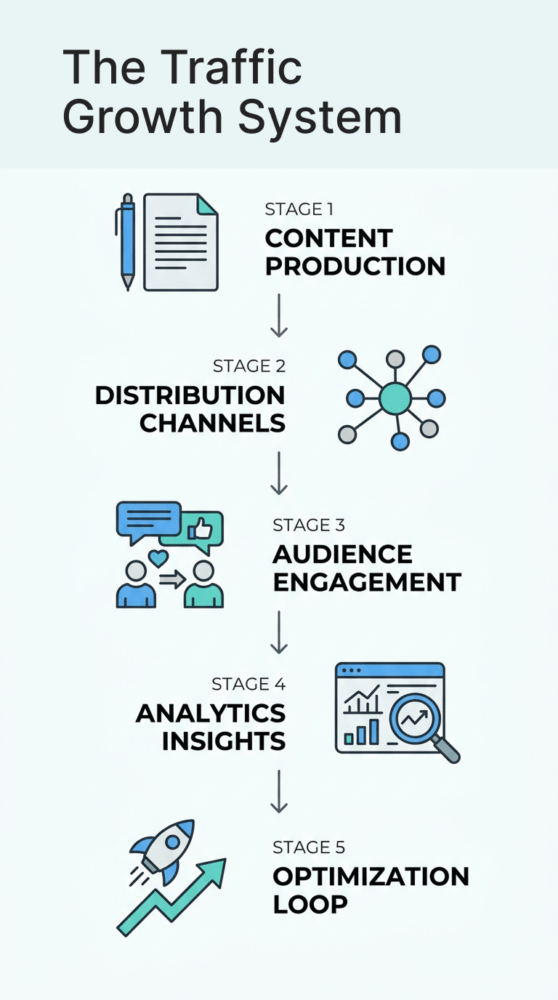
For organizations trying to increase site traffic in 2026, publishing occasional blog posts or targeting a handful of keywords is no longer sufficient. Sustainable traffic growth now depends on structured systems that combine search optimization, AI-assisted production, multi-channel distribution, analytics feedback loops, and continuous experimentation.

Startups that treat traffic generation as a repeatable growth process — not a collection of isolated tactics — are better positioned to attract qualified visitors and build long-term marketing momentum. The strategies below outline practical ways to build that system.
1. Align Content With AI-Driven Search Behavior
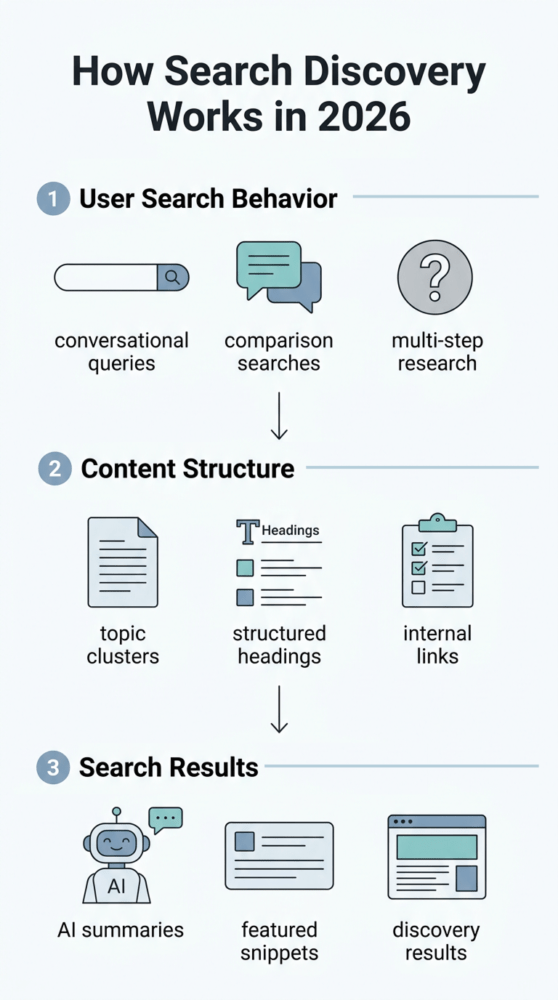
Search queries are becoming increasingly conversational and intent-driven. Users often ask full questions, compare alternatives, or research a topic through multiple searches before reaching a decision.
Search engines also rely more heavily on AI models that synthesize answers from multiple sources. As a result, content must demonstrate topical depth and clear structure in order to appear in summaries, featured snippets, and conversational search results.
Why this works
Content aligned with real user intent has a higher chance of appearing in:
- AI-generated search summaries
- featured snippets
- conversational search results
- multi-step research journeys
These placements often drive highly qualified traffic.
Implementation workflow
Step 1 — Identify real user questions
Tools that help discover search intent:
- Ahrefs Keywords Explorer
- SEMrush Keyword Magic Tool
- AlsoAsked
Focus on:
- comparison queries
- long-tail questions
- decision-stage searches
Step 2 — Build topic clusters
Rather than publishing isolated articles, create interconnected content hubs.
Example structure:
Pillar article:
How to Increase Site Traffic in 2026

Supporting articles:
SEO trends for startups
AI marketing workflows
Traffic analytics strategies
Content distribution methods
Internal linking between these pages helps search engines understand topical authority.
Step 3 — Structure content for machine readability
Use:
- descriptive headings
- concise paragraphs
- lists and tables
- FAQ sections
Search systems extract structured information more easily when content is clearly organized.
Industry research frequently highlighted by organizations like Search Engine Journal shows that well-structured content performs better in AI-generated search summaries.
2. Maximizing Brand Visibility in Zero-Click Results
The Reality of Zero-Click Search
In 2026, a significant portion of search queries ends without a click because AI summaries provide the answer immediately. While this may seem like “lost” traffic, it is actually an opportunity for Brand Impression SEO.
How to Optimize for Brand Mentions
- Be the Definitive Source: Use clear, declarative sentences that AI models can easily attribute to your brand.
- Optimize for ‘Entity’ Recognition: Ensure your brand name is consistently associated with core topics in your cluster to build topical authority.
- Leverage Structured Data: Use schema markup to help search engines identify your brand as the primary author of specific data or insights.
- Create Branded Assets: Include unique diagrams, calculators, or infographics that AI summaries are likely to cite or display as a source.
Why it matters
Even if a user doesn’t click, appearing as the cited source in an AI summary builds “mental availability,” making them more likely to search for your brand directly in the future.
3. Build a Scalable AI-Assisted Content Engine
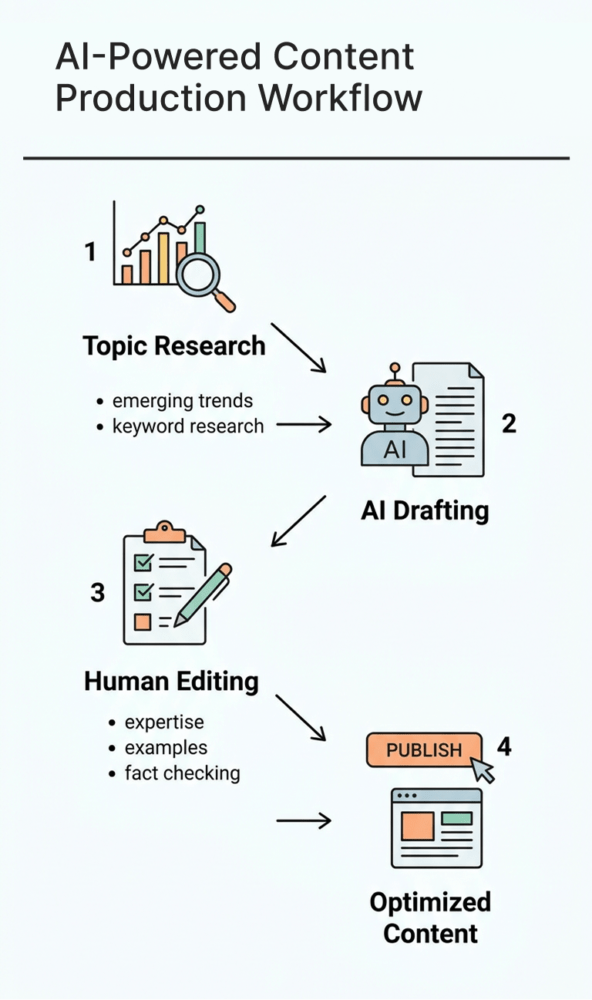
Content velocity is now a primary competitive advantage in 2026. Sites that consistently publish comprehensive topic clusters build authority faster and capture a larger share of search discovery.
AI tools allow small teams to accelerate research, outlining, and drafting while maintaining editorial oversight.
Why this works
Consistent publishing improves:
- indexing frequency
- topical authority
- internal link networks
- opportunities for backlinks
However, AI tools work best when combined with human expertise and editorial review.
Implementation workflow
Step 1 — Identify emerging topics
Use research tools such as:
- BuzzSumo
- Exploding Topics
- SparkToro Trending
These tools reveal emerging discussions and industry trends.
Step 2 — Generate structured outlines
AI writing assistants such as ChatGPT, Jasper, or Frase can produce detailed outlines quickly.
Example prompt:
Generate a structured outline for an article about startup traffic acquisition strategies.
Include SEO considerations and practical examples.
Step 3 — Optimize content while writing
Optimization tools like Surfer SEO or Clearscope analyze high-ranking pages and suggest improvements for:
- topic coverage
- semantic keywords
- heading structure
- ideal article length
Step 4 — Add a human editorial layer
Editors should enhance AI drafts with:
- original examples
- case studies
- practical experience
- verified statistics
This step transforms generic drafts into authoritative content.
4. Human Expertise Still Matters in AI-Driven Content
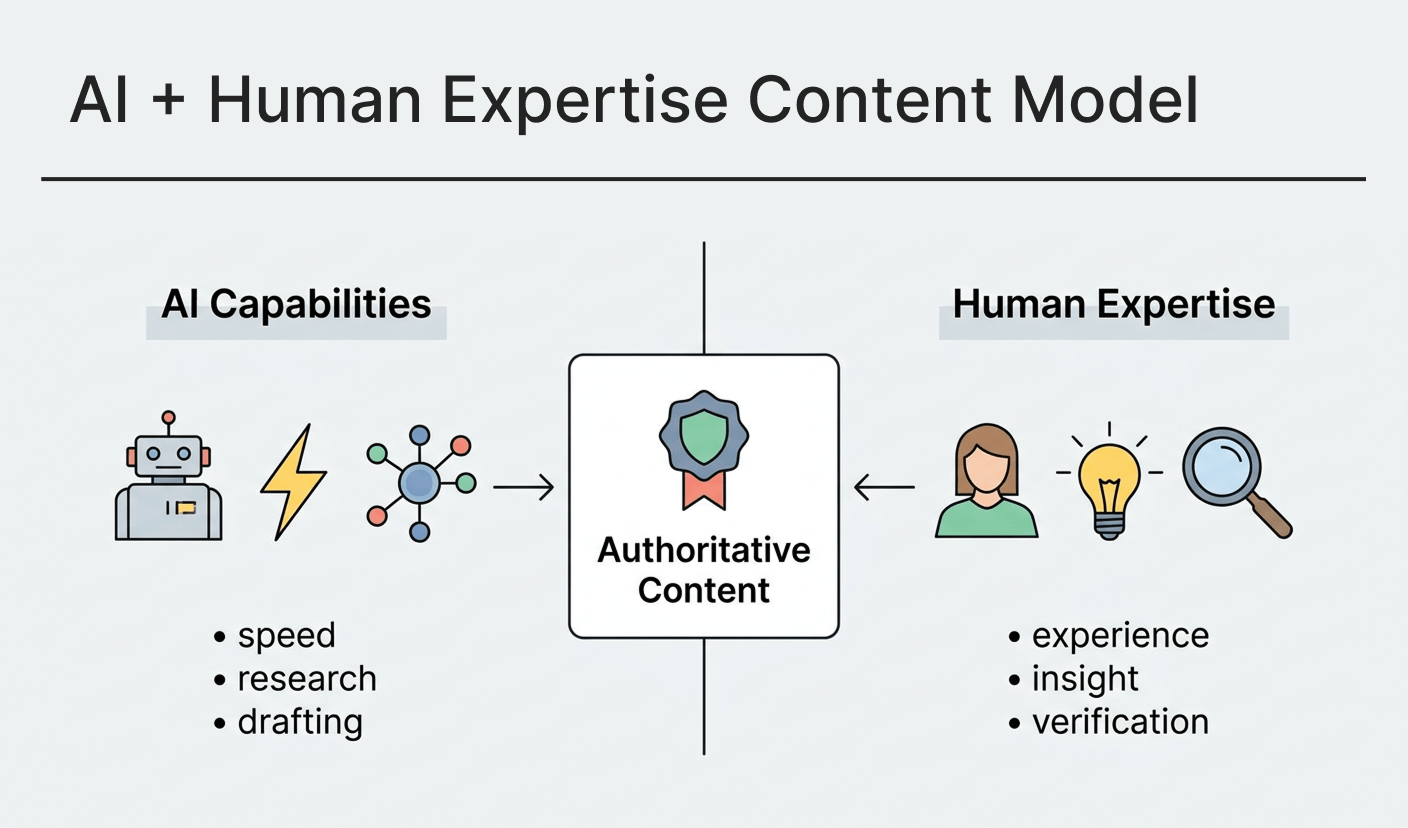
AI tools accelerate production, but they cannot replace domain expertise. Search engines increasingly prioritize signals associated with experience, expertise, authoritativeness, and trustworthiness (EEAT).
Why this matters
AI-generated content often struggles with:
- factual inaccuracies or hallucinations
- overly generic explanations
- lack of original insights
Content that combines AI efficiency with human expertise consistently performs better in search results.
Practical workflow
Step 1 — Use AI for research acceleration
AI tools can summarize reports, identify topic clusters, and generate initial outlines.
Step 2 — Add expert insight
Human editors should contribute:
- real-world examples
- practical recommendations
- industry observations
- original analysis
Step 3 — Verify facts using trusted sources
Cross-check data using credible organizations such as:
- Content Marketing Institute
- Search Engine Journal
- Google search documentation
This hybrid workflow ensures content is both scalable and trustworthy.
5. Turn Every Article Into a Distribution System
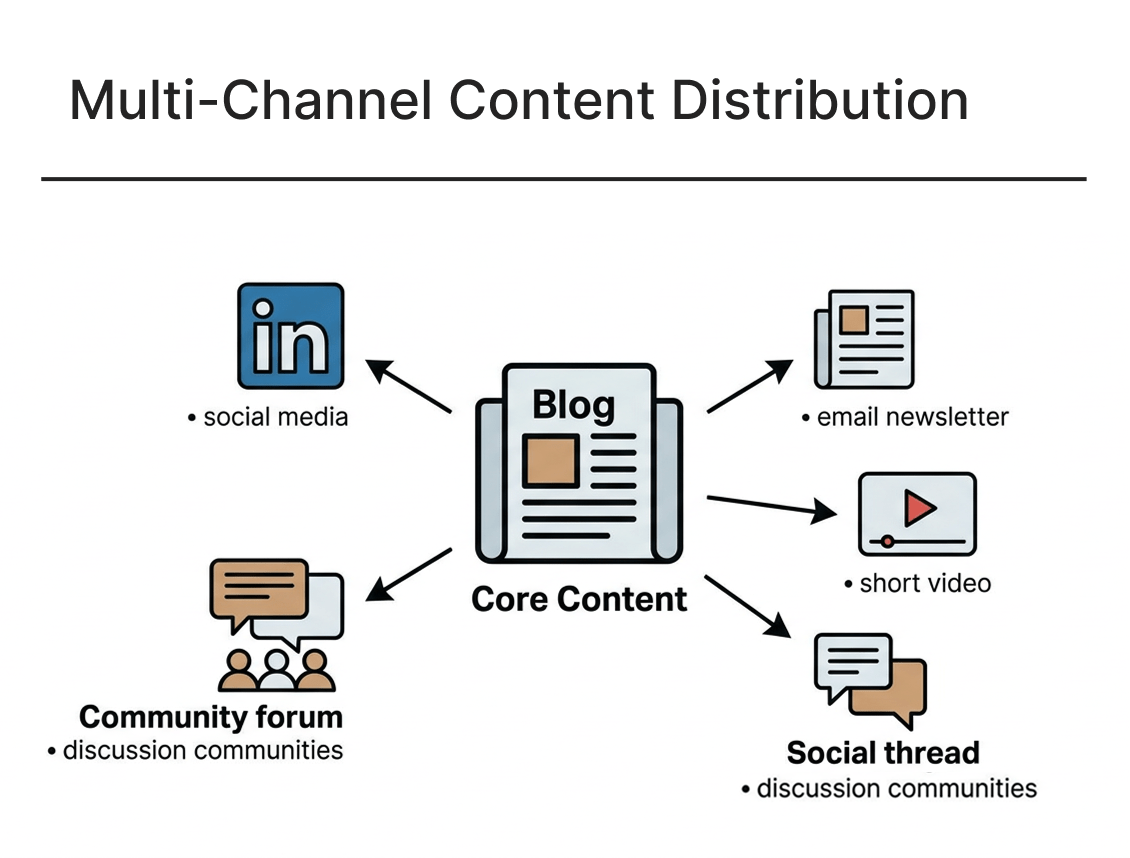
Publishing an article is only the first step. Distribution determines whether content actually reaches an audience. High-performing marketing teams treat each article as a central asset that feeds multiple channels.
Why this works
Multi-channel promotion increases visibility and extends the lifespan of a single article.
Instead of a single traffic spike, content generates recurring visits over time.
Distribution workflow
Step 1 — Repurpose content
One article can produce several derivative assets:
- LinkedIn posts
- email newsletters
- Twitter/X threads
- short-form videos
- infographics
Step 2 — Schedule distribution
Social media scheduling platforms such as Buffer, Hootsuite, or Later allow teams to automate publishing schedules.
Example distribution cycle:
Week 1 — LinkedIn summary
Week 2 — newsletter feature
Week 3 — social thread
Week 5 — short explainer video
Step 3 — Engage with communities
Share insights (not just links) in:
- industry forums
- professional communities
- niche discussion groups
Consistent participation builds credibility and attracts referral traffic.
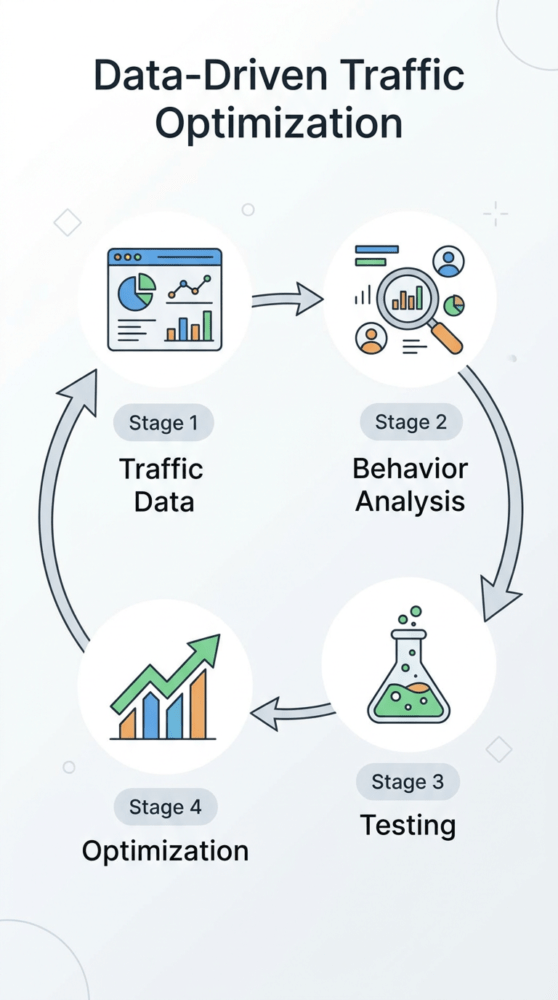
6. Use Analytics to Identify High-Leverage Traffic Opportunities
Traffic growth becomes predictable when marketing decisions are guided by behavioral data rather than intuition.
Many teams track pageviews but overlook deeper engagement signals that reveal which topics actually resonate.
Why this works
Data analysis helps identify:
- which channels drive qualified visitors
- which articles generate engagement
- which topics deserve deeper coverage
Key metrics to monitor
Important indicators include:
- organic traffic growth
- engagement time
- returning visitors
- conversion rate from traffic
Extended engagement, such as longer session duration or deeper scrolling, often correlates with stronger search performance because useful content encourages backlinks, sharing, and repeat visits.
Useful analytics tools
Common tools include:
- Google Analytics 4
- Mixpanel
- Hotjar
These platforms help marketers analyze user journeys and identify high-performing content.
Practical workflow
- Identify pages generating the most organic traffic
- Analyze how users navigate from those pages
- expand related content around successful topics
For example, if an article about AI marketing tools receives strong engagement, you might expand the cluster with articles covering:
- AI marketing automation
- AI analytics platforms
- AI content workflows
7. Build Interactive Content Assets That Attract Engagement
Interactive content often generates stronger engagement than static articles because it invites users to actively participate.
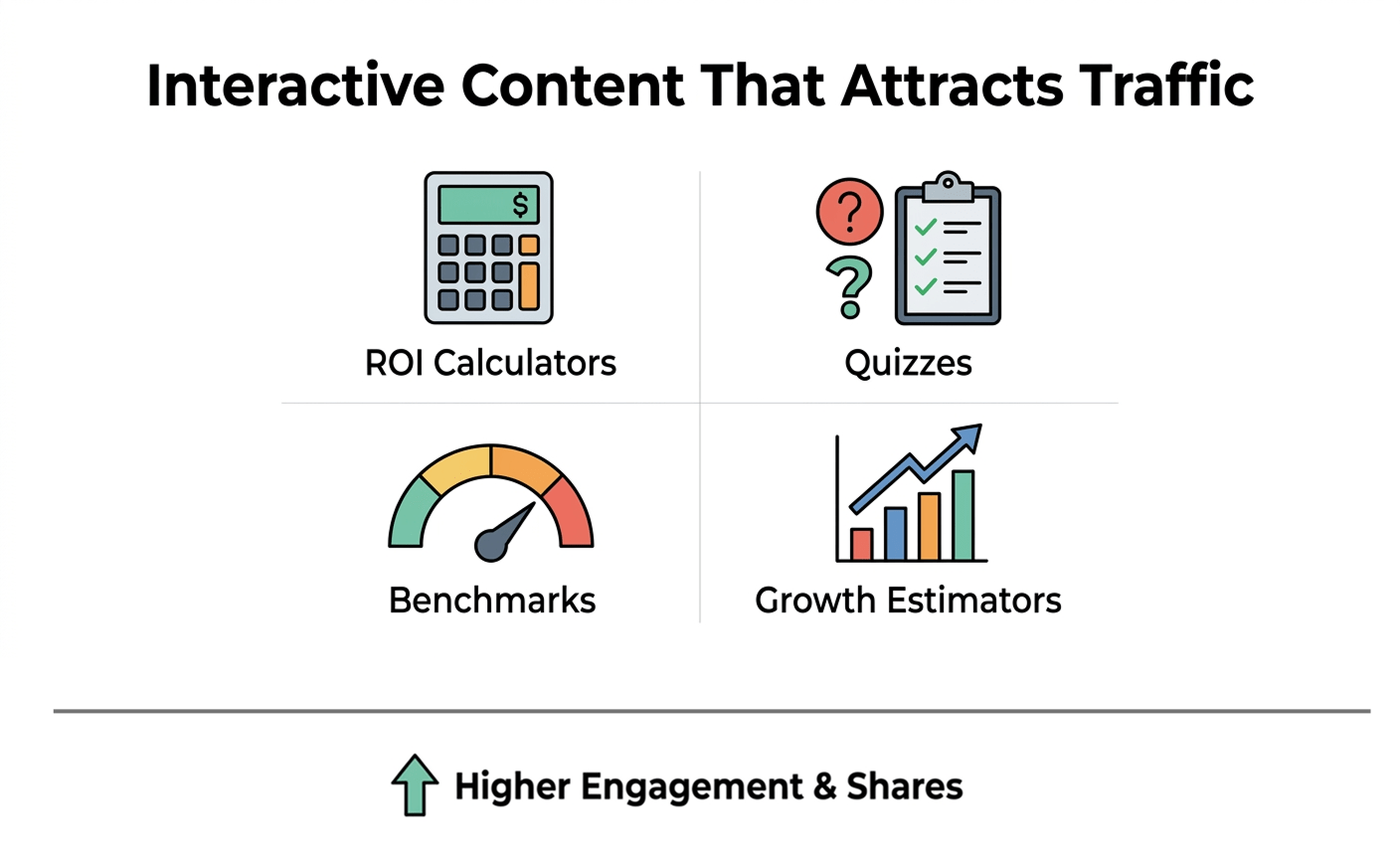
Examples include:
- calculators
- quizzes
- benchmarks
- ROI estimators
- diagnostic tools
Why this works
Interactive assets encourage visitors to:
- spend more time on a page
- share the resource
- return later
- link to the tool
These behaviors support stronger organic visibility.
Tools for creating interactive content
Platforms that enable non-technical teams to create tools include:
- Typeform
- Outgrow
- Interact
Example idea:
A startup could create a Website Traffic Growth Calculator where users input their current metrics and receive estimated growth projections.
Interactive tools often attract backlinks from blogs and industry publications.
8. Develop Strategic Partnerships for Traffic Expansion
Partnerships remain one of the most underutilized traffic acquisition strategies.
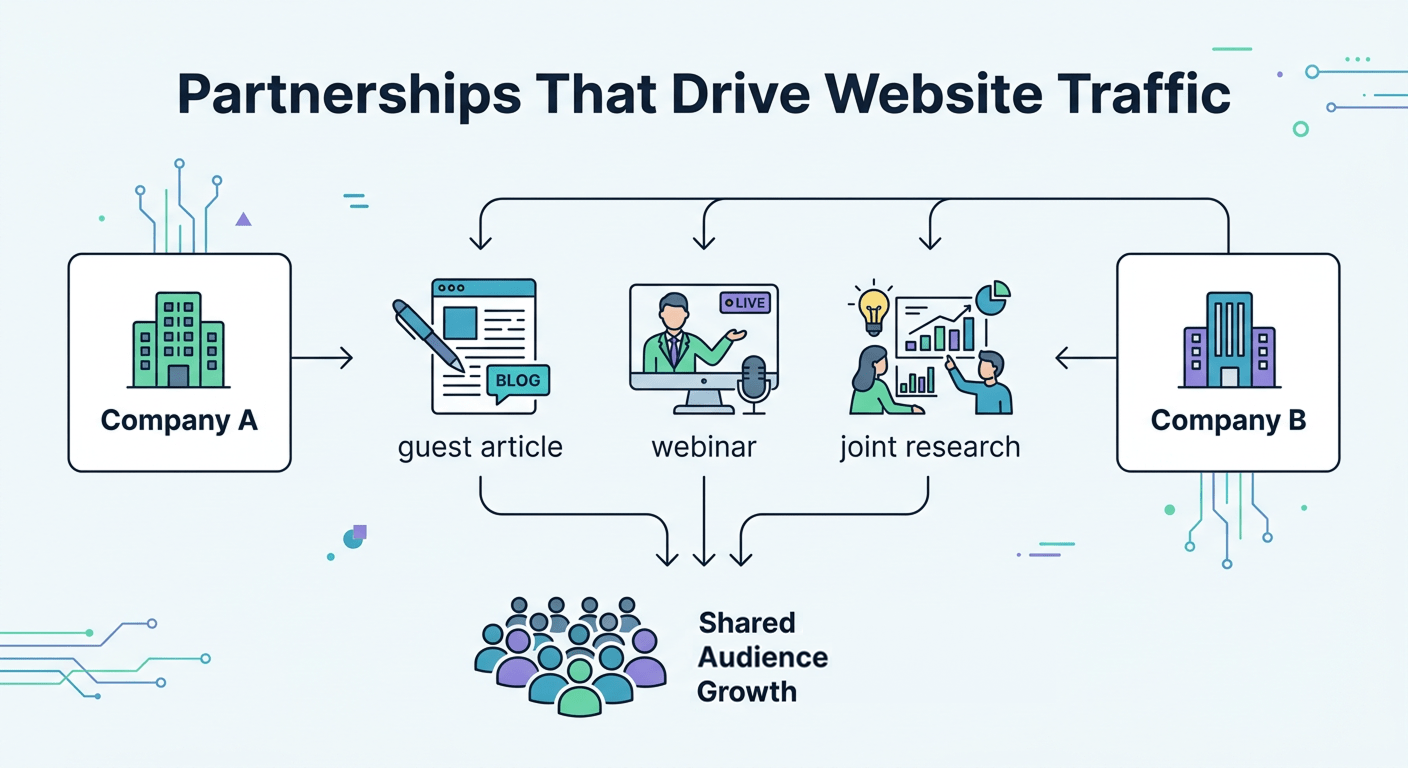
Collaborating with complementary brands allows startups to access new audiences while building credibility.
Why this works
Partnerships can generate:
- referral traffic
- high-quality backlinks
- expanded brand visibility
Common collaboration formats
Effective partnership activities include:
- guest articles
- co-created research reports
- webinars
- newsletter swaps
- podcast interviews
Example scenario
A marketing analytics startup might collaborate with a CRM company to publish a joint industry report on marketing data trends. Both companies promote the report to their audiences, doubling exposure.
Tools like BuzzSumo and SparkToro can help identify potential partners and influencers.
9. Experiment With Emerging Traffic Discovery Platforms
Audience attention shifts rapidly as new platforms emerge. Early adopters often gain a visibility advantage before competition increases.
Why this works
New platforms typically offer:
- lower competition
- higher algorithmic reach
- strong early audience growth
This makes them ideal environments for testing new distribution strategies.
How to experiment effectively
- Test a small amount of content on a new platform
- track referral traffic to your website
- scale efforts on channels that perform well
Monitoring trend resources such as Exploding Topics or Product Hunt can help identify emerging platforms worth testing.
10. Common Mistakes When Trying to Increase Site Traffic in 2026
Many organizations struggle with traffic growth because they rely on isolated tactics instead of building a cohesive system.
Common mistakes include:
- publishing content without a distribution strategy
- relying entirely on AI-generated articles without human editing
- ignoring analytics insights
- targeting overly competitive keywords
- failing to build topic clusters
Avoiding these pitfalls significantly increases the chances of sustainable traffic growth.
Conclusion
Organizations aiming to increase site traffic in 2026 must approach growth as a structured system rather than a single marketing tactic.
Successful strategies combine several components:
- search optimization aligned with evolving user behavior
- AI-assisted content production
- human expertise and editorial oversight
- multi-channel distribution
- analytics-driven decision making
- interactive content that encourages engagement
- partnerships that expand reach
When these elements operate together, traffic growth becomes predictable and scalable. Instead of chasing short-term spikes, startups and marketing teams can build a sustainable engine that continuously attracts qualified visitors and converts them into long-term customers.
⸻
FAQ: Increasing Website Traffic in 2026
How can startups increase site traffic in 2026?
Startups can increase site traffic in 2026 by combining several strategies: optimizing content for evolving search behavior, using AI tools to scale content production, distributing articles across multiple channels, analyzing traffic data to identify opportunities, and building partnerships that expose the brand to new audiences. Treating traffic growth as a structured marketing system rather than isolated tactics leads to more consistent results.
Does SEO still matter for website traffic in 2026?
Yes. Search engine optimization remains one of the most reliable long-term sources of website traffic. However, modern SEO focuses less on individual keywords and more on topical authority, structured content, and user intent. Websites that build comprehensive topic clusters and publish consistently tend to achieve stronger organic visibility.
Can AI tools help increase website traffic?
AI tools can help increase website traffic by accelerating research, generating content outlines, identifying emerging trends, and assisting with optimization. When combined with human expertise and editorial review, AI-supported workflows allow marketing teams to produce high-quality content more efficiently.
What marketing channels drive the most website traffic today?
The most effective traffic channels typically include organic search, content marketing, social media distribution, partnerships with other websites, and email newsletters. The best strategy is usually a multi-channel approach that ensures content can be discovered through several platforms rather than relying on a single traffic source.
Why is content distribution important for traffic growth?
Publishing content alone rarely generates significant traffic. Distribution ensures that articles reach audiences through channels such as social media, email campaigns, and industry communities. Effective distribution can extend the lifespan of content and create recurring traffic rather than a single short spike in visits.
What metrics should marketers track when trying to increase site traffic?
Important metrics include organic traffic growth, user engagement time, returning visitors, and traffic-to-conversion rates. These indicators help marketers understand which content topics and acquisition channels are driving meaningful engagement and should be expanded further.
Is interactive content useful for increasing website traffic?
Yes. Interactive assets such as calculators, quizzes, and benchmarks often attract more engagement and social sharing than static content. These resources can also earn backlinks from other websites, which can improve organic search visibility.
How long does it take to see traffic growth from content marketing?
Traffic growth from content marketing usually takes several months because search engines need time to crawl, index, and evaluate new content. Websites that publish consistently, build topic clusters, and promote their content effectively typically see steady growth over time.
Schema Tip (Optional)
If you want this section to appear in rich search results, you can implement FAQ schema markup recommended in documentation from Google.
⸻ Author Bio ⸻
Eve Cichon specializes in marketing strategy and brand development, with a focus on digital growth and audience engagement. At Futuramo, she leads marketing initiatives that connect product value with user needs, leveraging data-driven insights and creative execution. Her expertise includes campaign management, positioning, and building scalable marketing frameworks.