




The features built into an e-commerce website often decide how far an online business can go. The most successful stores make it easy for visitors to move smoothly from browsing to buying, removing friction at every step and focusing on what customers actually expect when shopping online.
Today’s shoppers demand fast, intuitive, and visually appealing experiences. Around 90% of websites now use responsive design, making it the established standard in web development and helping sites adapt smoothly to different screen sizes. Research also shows that users who have a poor experience are far less likely to return, with 88% of online shoppers reporting they are unlikely to revisit a site after a bad user experience. On visual appeal, 38% of users say they will leave a website if they find it visually unappealing, underlining how quickly design issues can undermine engagement.
These insights are echoed by professionals working directly with online brands. Specialists in Hereford web design, who collaborate closely with growing businesses on usability, performance, and conversion strategy, see firsthand how these trends shape customer expectations and business performance.
That is why this list brings together seven essential features supported by real-world design and development experience. From responsive layouts to smarter loyalty programs, each one plays a role in creating smoother shopping journeys, building trust, and turning casual visitors into loyal customers.
Responsive Web Design
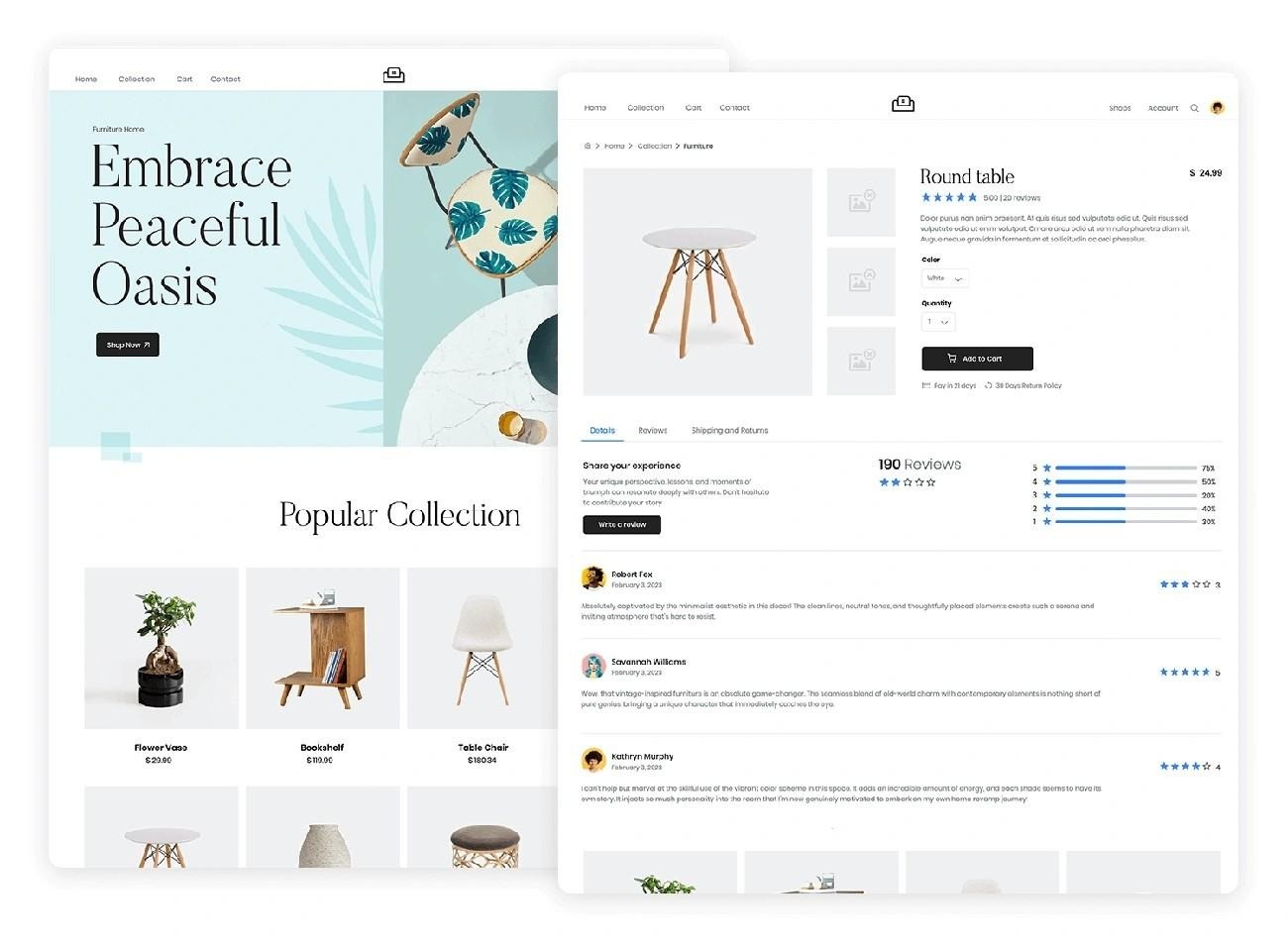
Mobile behavior has intensified even further, with recent research suggesting that Americans check their phones more than 200 times per day on average, underscoring how central mobile devices have become to everyday online activity and shopping behavior.
Responsive web design lets your website adapt automatically to any screen size or device. You won’t need separate websites for different devices because responsive design uses one flexible codebase. The code adjusts intelligently based on screen dimensions, orientation, and resolution. Your e-commerce store will give users a consistent, optimized experience on all devices — smartphones, tablets, and desktop computers.
Mobile devices generate about 62% of website traffic in 2026, while desktops account for 36%. Though mobile browsing dominates, many users complete purchases on larger screens. Research shows higher conversion rates when users start browsing on mobile and finish buying on desktops or laptops. This multi-device shopping experience makes responsive design vital to capturing sales.
Three primary components form responsive design’s technical foundation:
- Fluid grids and layouts that use relative units (percentages) rather than fixed pixels
- Flexible images that resize within their containers without distorting
- CSS media queries that apply different styles based on device characteristics like viewport width
Responsive design brings substantial SEO benefits, which is why it always stays on top of any list of ecommerce tips for beginners starting a store. Google uses mobile-first indexing to rank and index sites. Poor mobile experience hurts rankings even with excellent desktop versions. A responsive design protects your SEO performance by maintaining consistent content, internal links, and structure across devices.
E-commerce sites see direct conversion rate improvements with responsive design. Users convert more often when they can easily guide through your store, find products, and complete purchases on any device. Better usability results in:
- Brand confidence increases
- Cart abandonment rates drop
- Contact and purchase actions become simpler
- Brand consistency improves across touchpoints
Clear Calls to Action
CTAs serve as vital decision points that turn browsers into buyers on e-commerce websites. These strategic elements do more than guide users—they transform passive visitors into active customers. A study showed that adding one focused CTA to an email campaign made clicks soar by 371% and boosted sales an incredible 1,617%.
Your e-commerce store needs these key CTA features to thrive in 2026:
- Action-oriented language — Use strong, active verbs that spark immediate action such as “Buy Now,” “Shop,” “Find,” or “Get Started”
- Strategic placement — Put CTAs where customers naturally look for next steps, usually above the fold where they can see without scrolling
- Visual distinction — Make buttons pop with high-contrast colors and plenty of whitespace around them
- Clear value proposition — Show benefits like “Free Shipping” or discounts to make offers irresistible
- Mobile optimization — Buttons should work flawlessly on all devices, especially smaller screens
Your CTA’s effectiveness depends on where customers are in their buying process. New visitors who are just getting to know your brand respond better to soft CTAs like “Learn More” or “Explore Collection”. Customers who are thinking it over prefer buttons like “Add to Wishlist” or “Read Reviews”. Ready-to-buy shoppers click more on direct CTAs such as “Buy Now” or “Checkout Securely”.
Your CTA’s design elements shape how well they perform. Buttons need to be easy to spot without being too big. Best practices suggest leaving plenty of whitespace around CTAs so they stand out naturally from other page elements. Mobile users need CTAs that span the screen’s width to pass the “thumb test,” since most people use phones one-handed.
Optimized Shopping Cart
Shopping cart optimization marks a vital threshold between browsing and buying. Statistics show 70-78% of online shoppers abandon their carts before completing their purchase. These numbers express why businesses need optimized shopping carts as one of the most important features of e-commerce websites for 2026 and beyond.
Your checkout success depends on a simple flow. US checkouts typically contain more than 23 elements and nearly 15 form fields. Usability tests prove forms work better with just 12-14 elements and 7-8 fields. A single-page payment process boosts conversions more effectively than multi-page checkouts.
Trust grows with transparency. Hidden fees kill conversions fast. Your customers should see shipping costs, taxes, and extra charges right from the start of their shopping experience. Specific delivery dates like “Delivery on April 4th” or “Delivery April 4th–8th” work better than vague promises of “2 Business Days”. Customers grasp shipping details better this way.

These elements will make your cart work better in 2026:
- Guest checkout options — Don’t force account creation. Required registration drives away 25% of shoppers. Let customers buy without signing up — you can invite them to create accounts after purchase.
- Multiple payment methods — Digital wallet adoption has increased rapidly in recent years, with many shoppers now preferring wallets and “buy now, pay later” options over traditional card payments.
- Mobile optimization — Your cart must work flawlessly on mobile, as smartphones have become a primary shopping device for a large share of consumers, particularly among younger demographics.
- Visible progress indicators — Progress bars help customers see their checkout milestones clearly. These visual guides show how far they’ve come and what steps remain.
- Trust signals — Security badges, SSL certificates, and payment icons need prominent display. About 18% of shoppers leave because they don’t trust websites with their card details.
Abandoned carts don’t mean lost sales. Recovery tactics like personalized emails with special discounts bring customers back. Window shoppers who planned to buy later respond well to these gentle nudges.
Personalized Product Recommendations
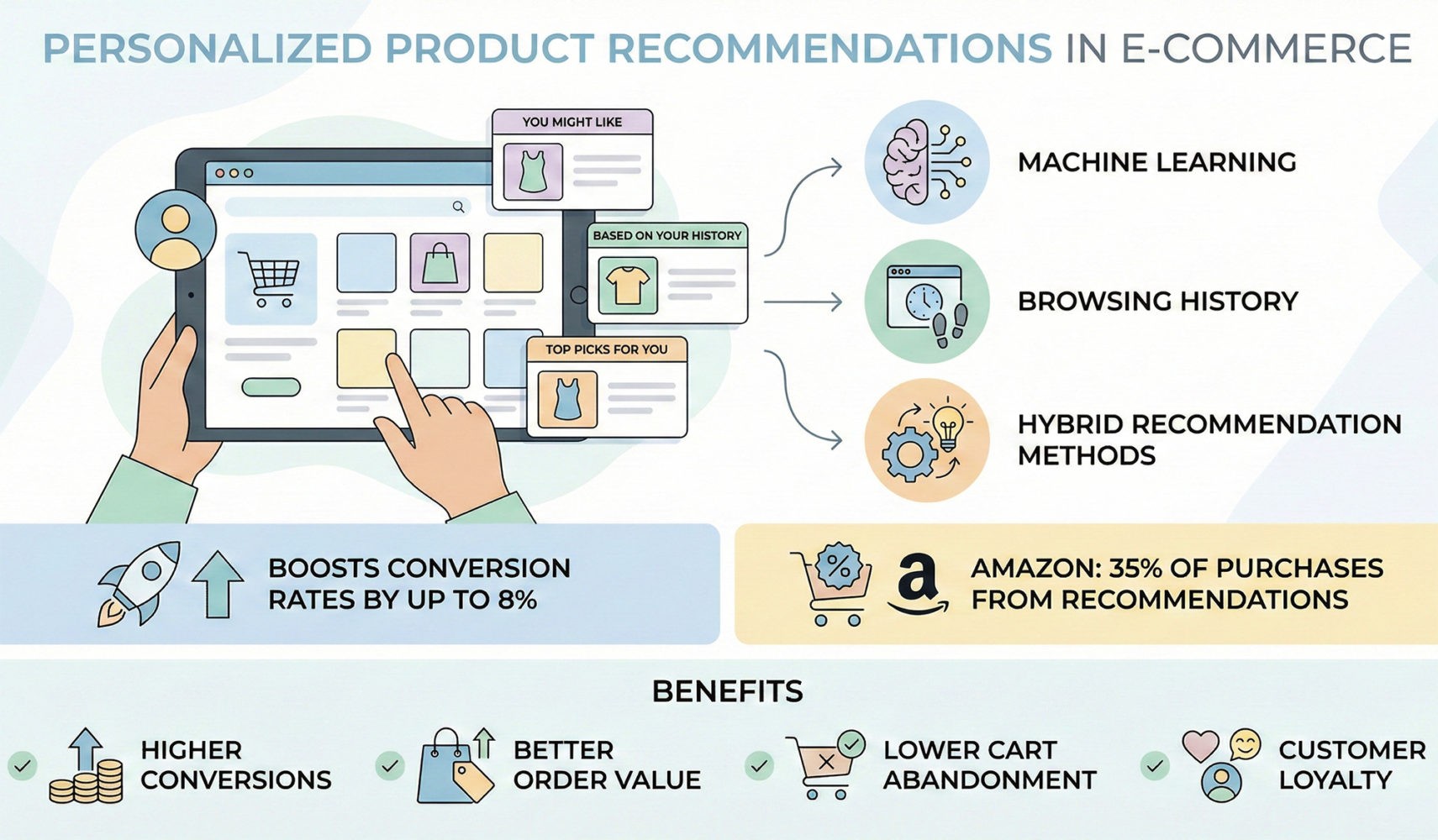
Product recommendations tailored to individual shoppers have become crucial to e-commerce success. Data shows they can boost conversion rates by up to 8% when used properly. These individual-specific experiences create a shopping process that strikes a chord with customers based on their unique priorities and behaviors.
Sophisticated data analytics and machine learning algorithms track individual behavior patterns and suggest items based on these patterns. Modern recommendation systems use first-party data as their foundation. They capture browsing history, buying priorities, past purchases, and sales channel interactions. The system also uses contextual signals like location, time of day, and device type to build a richer data profile.
The implementation methods vary based on business needs:
- Collaborative filtering identifies patterns in what similar customers browse and buy
- Content-based filtering suggests products with attributes matching previous interests
- Hybrid approaches combine both methods for maximum relevance
- Image recognition technology identifies visually similar items
The business benefits make a strong case. Tailored recommendations directly affect key performance metrics:
- Higher conversion rates (up to 8%) through more relevant product suggestions
- Better average order value through smart cross-selling and upselling
- Lower cart abandonment as customers find desired products faster
- Better customer lifetime value as personalization builds long-term loyalty
Major retailers have seen impressive results. Amazon reports that 35% of their purchases come from product recommendations. END, a global retailer, saw conversions increase by 2% after using AI recommendations.
Tailored product recommendations have become more than just a feature—they represent a fundamental change in how online stores connect with customers. This technology turns regular browsing into curated experiences, creating a store that knows exactly what each customer wants, often before they realize it themselves.
Secure and Transparent Data Policies
Customer trust in e-commerce depends heavily on data security. Studies show 25% of shoppers abandon their carts because they don’t trust websites with their credit card information. Personal information has become increasingly valuable, making secure and transparent data policies both a legal requirement and business necessity.
E-commerce websites collect various types of personal information during normal operations:
- Names, email addresses, and physical addresses
- Payment and credit card details
- IP addresses and browsing behavior
- Purchase history and priorities
Multiple privacy regulations create legal requirements for this data collection. The General Data Protection Regulation (GDPR) covers businesses handling European user data. California Privacy Laws (CPRA) and Virginia’s VCDPA protect residents of these states. Breaking these regulations can lead to huge penalties — up to €20 million or 4% of global turnover under GDPR.
A detailed privacy policy serves as the life-blood of transparent data practices. This legally required document must explain how you collect, process, store, and protect customer information. Your privacy policy will give a better result when it is:
- Available — Placed in your website footer or directly linked during checkout
- Clear and concise — Free from complex legal jargon that confuses customers
- Regularly updated — Reflecting any changes in your data handling practices
Security measures must go beyond policy statements. SSL or Transport Layer Security (TLS) encryption creates a protected connection between your server and customers’ browsers. This keeps sensitive information confidential during transmission.
Customers have specific rights regarding their personal information. Your privacy policy must cover:
- Right to access their data
- Right to correct inaccuracies
- Right to delete their information
- Right to opt out of data sharing
Secure and transparent data policies build trust that boosts all other e-commerce features. When combined with responsive design and optimized checkout processes, strong data protection creates a complete security ecosystem that today’s online shoppers just need.
Social Media Integration
Social media platforms have grown beyond marketing channels into powerful e-commerce tools. About 65% of people worldwide now have social media accounts. They spend almost 19 hours each week on platforms like TikTok, Instagram, and YouTube. Adding these platforms to your e-commerce website will expand your reach and reshape how customers find and buy your products.
Social commerce creates a buying experience that goes beyond traditional websites. Customers can find, decide, and buy products all in one place. The numbers tell an impressive story — social media platforms will generate $2.90 trillion in sales by 2026. This makes platform integration crucial for e-commerce websites to stay competitive.
Social media integration works best in several ways:
- Shoppable content — Tag products directly in social posts, allowing users to tap for instant product details
- Native checkout — Enable purchasing without leaving the app, compressing the buying process to seconds
- Live shopping events — Combine interactivity of in-person shopping with e-commerce convenience (nearly half of global consumers express interest in this format)
- User-generated content — Showcase posts, mentions, and photos created by actual customers to demonstrate authenticity
Social sign-ins make things easier. Visitors can register using their existing social media accounts. This reduces checkout friction and boosts registration rates substantially.
The connection between social media and e-commerce will grow stronger through 2026. New technologies like AR “try-on” features and AI shopping assistants that turn natural language into customized product suggestions will lead the way. These breakthroughs create smooth paths from inspiration to purchase. Social media integration has become essential for forward-thinking e-commerce websites.
Loyalty and Rewards Programs
Research shows 85% of consumers stick with brands that run loyalty programs. These programs turn regular shoppers into brand supporters through rewards and tailored experiences. They also play a crucial role in broader business growth strategies, helping brands strengthen customer retention and boost lifetime value through consistent engagement.
People’s response to loyalty programs comes from basic human nature. New members who get “welcome points” are more likely to stay involved. This happens because customers feel they’ve already made progress toward their goal. The IKEA Effect tells us that customers value rewards more when they help pick or customize them.
Today’s e-commerce loyalty programs usually come in four types:
- Points-based programs let customers collect points when they buy things or take certain actions. They can use these points later for discounts or products. Starbucks’s star system shows how this works.
- Tiered programs create different membership levels based on how much people spend or how active they are. Better perks come with higher levels. Sephora’s Beauty Insider program is a perfect example.
- Paid membership programs ask for regular fees in exchange for premium benefits. Amazon Prime started this model, which builds stronger customer relationships and usually results in customers spending more over time.
- Value-based programs connect with customers emotionally by supporting causes that appeal to their audience.
Gamification has changed how loyalty marketing works. Progress bars, badges, challenges, and surprise rewards create habits that keep customers coming back. Domino’s “Piece of the Pie Pursuit” mobile game gives players points toward free pizza after they complete pizza-themed mini-games. This campaign contributed to measurable sales growth and stronger customer engagement.
Loyalty programs do much more than just offer discounts. Studies show that keeping just 5% more customers can increase profits by 25% to 95%. Customers who use their points even once spend 6.3 times more than non-members.
Wrap Up
E-commerce is no longer just about having a website that works. It is about creating an experience that feels effortless, relevant, and trustworthy at every stage of the customer journey. Each feature covered in this comprehensive ecommerce guide plays a specific role, yet their real power appears when they operate together.
Preparing an e-commerce platform for 2026 means thinking beyond design trends and short term tactics. It means investing in systems that support clarity, speed, security, and relevance. Brands that commit to these principles create stores that people enjoy using, remember positively, and return to often. In a crowded digital marketplace, that kind of experience is what separates stores that simply exist online and stores that truly grow there.