


The days of ‘tables-on-concrete’ are over. Diners nowadays aren’t just stepping outside for the fresh air. But they are choosing restaurants based on how the patio feels. The ambiance, the greenery, the lighting, and the little design details that say someone actually thought about this.
This matters as the restaurant industry is projected to reach $1.55 trillion in sales by 2026. So, the competition for consumer spending is fierce.
Fortunately, a well-designed patio can increase your seating capacity, turn one-time visitors into regulars, and give your brand a memorable edge over the competition down the street.
Here, we’ll walk you through some design tips that will help you create a patio that guests want to linger in and come back to.
#1. Layer Lighting for Atmosphere and Function
One design element that can single-handedly transform a restaurant patio from forgettable to unforgettable after the sun dips below the horizon is the lighting.
Avoid using just one bright light. Instead, use different layers to create depth. This approach is called layered lighting. It mixes three main types of light.
The main layer of light for any space is ambient lighting. It makes the space visible without being too harsh on the eyes.
String lights are a top choice for this layer. They cast a soft, diffused glow that feels festive without being harsh. Drape them overhead in a canopy arrangement, weave them through pergola beams, or hang them in parallel rows at varying heights for a more modern look.
Layer in task lighting, like subtle path lights along walkways or under-bench strips. This helps prevent trips and makes navigation easy, especially important for families or older guests.
Finally, add accent lighting to highlight architectural details, planters, or menu boards. Low-voltage spotlights or uplighting fixtures can do the job subtly and effectively. Recessed step lighting along stairs and pathways adds both safety and a polished, architectural feel.
#2. Use Greenery to Define Space
Plants do something remarkable to outdoor dining spaces. They soften hard edges, introduce natural color and texture, filter noise, provide privacy, and create the kind of organic warmth that no piece of furniture can replicate.
Beyond aesthetics, greenery signals to your guests that care and attention have been put into this space.
To achieve this effectively, use high-quality commercial planters to house your botanical elements. Unlike residential pots, these are built to withstand heavy foot traffic and extreme weather while providing a clean, professional silhouette.
You can use tall hedges or shrubs as natural fences. Boxwood, yew, and privet are classic choices for this. Their dense foliage provides natural privacy. For a softer look, you can use ornamental grasses. These grow tall and sway in the breeze. They provide privacy but still let some light through.
Line them along a patio perimeter to establish a clear boundary or cluster them between tables to carve out intimate seating pockets. You can even stack them vertically against a bare wall for a living, breathing backdrop.
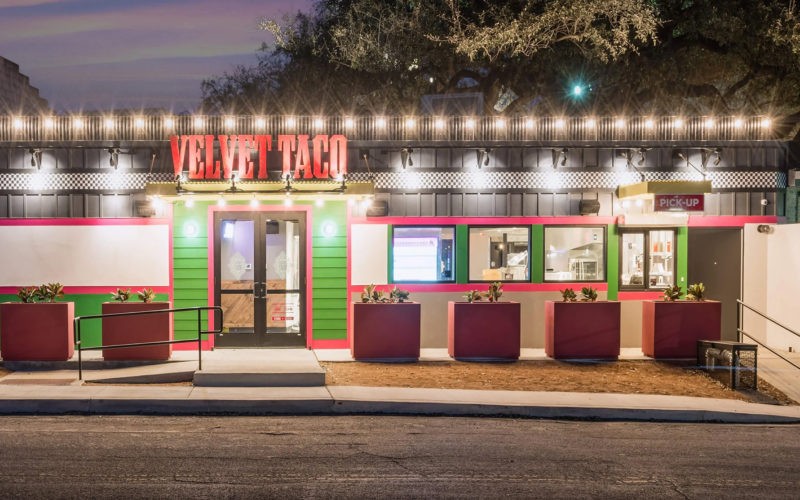
Velvet Taco Restaurant pulled this off successfully. PolyMade notes that it creates a warm first impression using custom-finished planters that pay homage to cultural traditions. In one of its locations, the planters serve as stylish partitions, giving urban diners a private oasis right on the sidewalk.
#3. Build in a Focal Point
Every great patio needs a focal point that draws guests in and gives them something to talk about.
Whether it’s a crackling fire pit, a bubbling water feature, or an eye-catching sculpture, this element anchors the space and creates an emotional connection. In U.S. dining culture, where experiences trump transactions, a strong focal point turns casual seating into memorable outings.
A central fire feature is a popular option. The booming outdoor fire pit and fireplace market confirms that. In 2024, it was worth $2.1 billion, and it’s expected to more than double to $4.3 billion by 2033.
Gas fire pits or tables are clean, controllable, and work in most climates. In chilly mountain towns like Aspen or Flagstaff, these features turn chilly spring and fall evenings into comfortable outdoor seasons.
Position the fire feature centrally, so tables circle it like a campfire. That makes it perfect for sharing plates and stories. Many operators add built-in seating around it for a lounge vibe.
Water features are equally magical. A small fountain or bubbling wall masks street noise and creates a soothing soundtrack. In dry Southwest deserts, they add humidity and cool the air naturally. Keep them low-maintenance with recirculating pumps and easy-access filters.
Bringing Your Outdoor Vision to Life
The most beautiful restaurant patios aren’t the result of a single grand gesture. They are the cumulative effect of many thoughtful decisions.
Adopt these tips, and you can create a space that guests will return to season after season.
Putting this much thought into your outdoor space turns a basic sidewalk or deck into a place people actually want to visit. Your efforts signal to guests that the patio is not a secondary, makeshift space. But it’s a deliberately crafted extension of the dining experience you are proud to offer. So, take the time to get it right, and the space rewards you for years.