



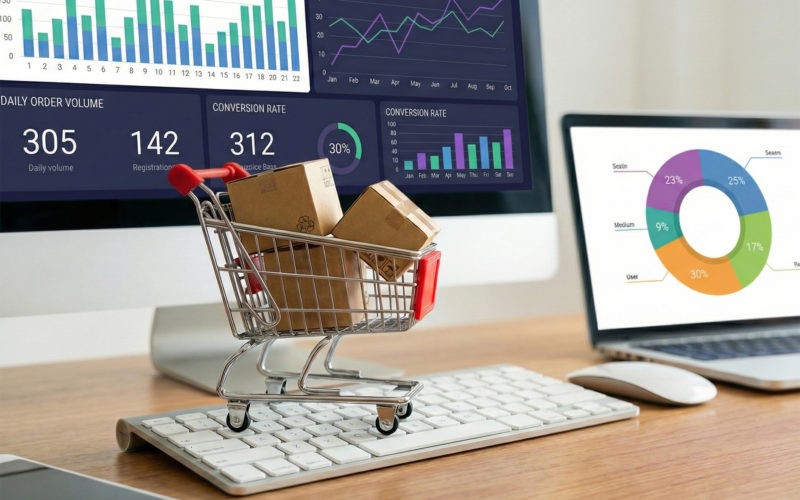
As the SaaS market matures, growth no longer comes solely from feature velocity or expanding sales teams. Instead, leading platforms are unlocking a powerful new lever: productized e-commerce data.
As digital commerce expands across marketplaces, direct-to-consumer brands, and omnichannel retail, vast amounts of structured and unstructured data are generated daily — including product listings, pricing changes, reviews, inventory signals, promotions, search rankings, and consumer behavior trends. For SaaS companies, this data is no longer simply a byproduct of operations. It is a strategic asset that can be packaged, monetized, and embedded directly into core product offerings.
The productization of e-commerce datasets transforms SaaS platforms from workflow tools into intelligence engines. The outcome? Higher customer retention, new revenue streams, and stronger competitive positioning.
The Shift from Software Tools to Data Platforms
Traditional SaaS companies focus on enabling workflows — CRM systems manage relationships, marketing tools automate campaigns, and analytics dashboards visualize performance.
Modern SaaS leaders, however, are evolving beyond workflow enablement. They integrate external data streams into their platforms to provide proactive insights rather than reactive reporting.
Instead of asking customers to upload and interpret their own data, SaaS platforms increasingly offer:
- Competitive pricing intelligence
- Real-time market trend analysis
- Consumer sentiment signals
- Category-level demand forecasting
- Market visibility insights
By embedding e-commerce datasets directly into the product experience, SaaS companies elevate their value proposition from “tool provider” to strategic decision partner.
What Does “Productizing” E-Commerce Data Really Mean?
Productizing data means transforming raw datasets into structured, accessible, and revenue-generating product features.
This can include:
- Analytical Visualization (Dashboards & Modules): Transforming raw metrics into high-fidelity visual interfaces that allow users to spot market anomalies and trends at a glance.
- Programmatic Intelligence (API-as-a-Product): Enabling enterprise customers to ingest structured e-commerce signals directly into their internal ERP or BI tools for automated decision-making.
- Tiered Data Architecture (Membership Tiers): Segmenting data access by depth, frequency, and granularity—allowing for lower-entry points for SMBs while reserving real-time, global datasets for enterprise tiers.
- Proactive Monitoring (Automated Alerts & Forecasting): Moving from reactive reporting to predictive triggers that notify users of competitor price drops or stock-out risks before they impact the bottom line.
- Strategic Industry Intelligence (Premium Benchmarking): Offering high-margin, aggregated industry reports that allow brands to measure their performance against anonymized category leaders.
Instead of selling access to software alone, SaaS companies increasingly sell access to intelligence.
For example:
- A pricing SaaS platform integrates competitor product prices across key markets and provides automated repricing recommendations.
- A retail analytics SaaS platform delivers category-level demand trends using aggregated e-commerce signals.
- A logistics SaaS solution integrates inventory and sell-through data to optimize shipping and fulfillment decisions.
In each case, the data becomes the differentiator — not just the interface.
Why E-Commerce Data Is a Unique Opportunity
E-commerce data has several characteristics that make it particularly valuable for SaaS monetization:
1. It is high-frequency and dynamic
Prices, stock availability, reviews, and search rankings change constantly. Real-time updates create ongoing reliance on the platform.
2. It is market-wide
Unlike internal company data, e-commerce datasets reflect the broader competitive landscape — making them ideal for benchmarking and strategic planning.
3. It fuels AI models
Machine learning systems thrive on large, structured datasets. E-commerce data can power recommendation engines, demand forecasting models, and anomaly detection systems.
4. It is difficult to replicate
Building reliable pipelines to collect, clean, and structure e-commerce data at scale requires infrastructure, compliance awareness, and engineering expertise. This creates defensibility.
For SaaS companies seeking long-term differentiation, this combination is powerful.
5. Data Network Effects
As more customers utilize the productized data, the platform gathers more usage signals. This creates a feedback loop where AI models become increasingly accurate, widening the competitive ‘moat’ and making it nearly impossible for new entrants to provide the same level of predictive accuracy.
New Revenue Streams Through Data-as-a-Service
Productized e-commerce data enables SaaS companies to expand monetization models beyond traditional subscription plans.
Tiered Data Access
Basic customers receive limited insights, while enterprise customers gain full market visibility, advanced analytics, and API access.
Premium Benchmarking Reports
Quarterly or annual industry reports derived from aggregated datasets can be offered as premium add-ons.
API Monetization
Structured datasets can be exposed via APIs, allowing customers to embed intelligence directly into their workflows.
Usage-Based Pricing
Real-time data feeds and API calls can be billed based on consumption, aligning pricing more closely with delivered value.
This shift effectively turns SaaS companies into hybrid software-and-data businesses — often increasing average revenue per user (ARPU).
Strengthening Customer Retention and Competitive Moats
When SaaS platforms provide unique, proprietary intelligence, churn tends to decrease.
Why?
Because customers are no longer paying only for workflow tools — they are paying for insights that are difficult to replicate elsewhere.
Consider the difference:
- A basic analytics tool displays internal performance metrics.
- A data-rich SaaS platform displays internal metrics alongside competitive performance, pricing gaps, shifts in demand, and emerging market trends.
Workflow tools can be replaced. Embedded intelligence platforms are far harder to substitute.
Data-driven SaaS platforms become deeply integrated into customer decision-making processes, increasing stickiness and long-term contract value.
AI Acceleration Through Structured Datasets
Artificial intelligence is increasingly central to SaaS product differentiation. However, AI systems require clean, labeled, and consistent datasets to perform effectively.
E-commerce data provides rich training material for:
- Dynamic pricing algorithms
- Demand forecasting systems
- Product recommendation engines
- Fraud detection models
- Trend forecasting tools
By productizing e-commerce datasets, SaaS companies create a feedback loop:
- Collect structured market data
- Train predictive models
- Deliver automated insights
- Refine models using usage data
This virtuous cycle increases product intelligence over time, creating a sustainable competitive advantage.
Infrastructure Considerations for Productizing Data
Successfully transforming raw e-commerce data into scalable SaaS features requires:
Robust Data Pipelines
Reliable ingestion, normalization, validation, and deduplication processes are essential.
Legal Resilience & Compliance
Scaling a data product requires more than just ‘awareness.’ Companies must implement rigorous frameworks to navigate GDPR, CCPA, and SOC2 standards. This includes ensuring that web-scraping or data-aggregation methods comply with marketplace Terms of Service (ToS) and that any PII (Personally Identifiable Information) is scrubbed to maintain a ‘privacy-by-design’ architecture.
Real-Time Processing Capabilities
Latency matters. Outdated pricing or inventory data reduces trust and diminishes value.
Scalable Storage and Query Systems
Large datasets require efficient indexing and fast retrieval to support dashboards and APIs.
Companies that invest early in data engineering infrastructure are better positioned to scale intelligence offerings effectively.
Vertical SaaS: The Largest Opportunity
Vertical SaaS platforms — those focused on specific industries — are particularly well-positioned to benefit from productized e-commerce data.
For example:
- Retail SaaS platforms can integrate marketplace trend data.
- Fintech SaaS platforms can use transaction-level e-commerce signals for credit modeling.
- Supply chain SaaS platforms can monitor shifts in inventory and demand across online channels.
- Marketing SaaS platforms can analyze product reviews and sentiment trends.
By tailoring e-commerce intelligence to specific verticals, SaaS companies can build specialized and defensible solutions.
Challenges to Address
Although the opportunity is significant, SaaS companies must address:
- Data accuracy and signal noise
- Rapid marketplace changes
- Legal and compliance considerations
- Infrastructure cost management
- Trade-offs between refresh frequency and operational cost
Companies that treat data as a core product pillar — rather than a side feature — are more likely to overcome these challenges through disciplined investment and governance.
The Future: Intelligence-First SaaS
The SaaS market is maturing. Feature parity is increasingly common. Pricing competition is intensifying. In this environment, intelligence becomes the differentiator.
Productizing e-commerce data enables SaaS companies to:
- Deliver predictive insights instead of static dashboards
- Expand monetization models
- Build defensible data advantages
- Increase customer lifetime value
- Accelerate AI-driven innovation
The next generation of SaaS leaders will not simply build better software. They will build intelligent platforms powered by structured, real-time, productized data.
For SaaS founders, product leaders, and growth-focused teams — including any SaaS SEO company operating in competitive markets — the message is clear:
If data is not treated as a product, a meaningful growth opportunity may remain unrealized. E-commerce datasets are not merely operational inputs. They are strategic assets capable of transforming SaaS companies into intelligence platforms. In a digital economy shaped by measurable signals, structured intelligence drives durable growth.