


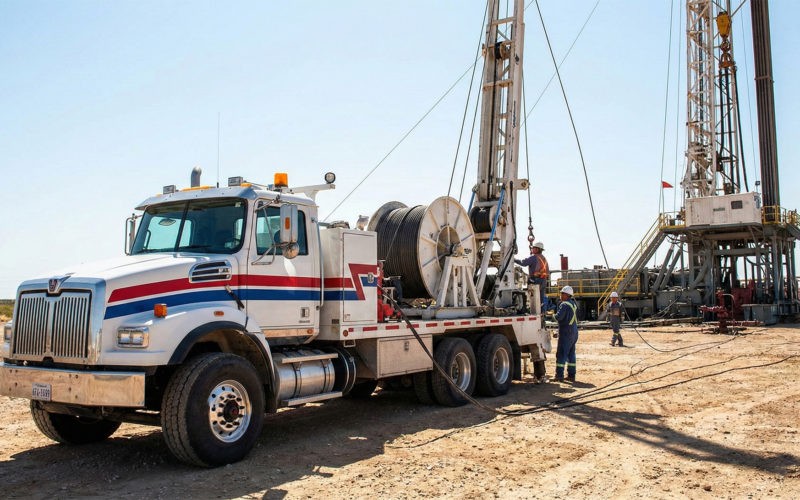
Well performance extends beyond drilling alone; precision, data accuracy, and real-time diagnostics are equally vital in sustaining long-term productivity. As reservoirs become more complex and operational margins tighten, operators rely heavily on advanced downhole technologies to make informed decisions. Among these technologies, electric-line (E-line) wireline logging systems have become an essential component of modern well management.
These tools provide high-resolution formation data, support perforation accuracy, and enhance intervention efficiency — all of which directly impact well output and lifespan. But how exactly does E-line wireline logging equipment improve well performance? Below is a closer look at the operational advantages that make these systems indispensable in contemporary field operations.
1. Real-Time Data Enables Smarter Decision-Making
One of the most significant advantages of E-line systems is their ability to transmit real-time data from downhole tools directly to surface units. This immediate communication allows engineers to evaluate formation characteristics, casing integrity, fluid presence, and mechanical conditions during operations.
With real-time logging capabilities, operators can:
- Adjust perforation depths instantly
- Identify productive zones with greater accuracy
- Detect mechanical irregularities before they escalate
- Optimize completion and intervention strategies in real time
Delayed or inaccurate data often leads to inefficient perforation, reduced reservoir contact, or costly remedial interventions. In contrast, precise diagnostics from E-line diagnostics reduce uncertainty and enable immediate corrective action.
However, in high-pressure and high-temperature well environments, even minor interruptions in electrical transmission can compromise data accuracy. Operators working in these conditions typically source equipment from specialized providers — Versa-Line, for example, offers E-line wireline logging solutions built to maintain depth correlation and signal integrity under extreme downhole conditions.
When dependable surface-to-downhole communication is established, decision-making becomes proactive rather than reactive — a distinction that can significantly influence productivity from the outset of a well’s lifecycle.
2. Improved Perforation Accuracy Maximizes Reservoir Contact
Perforation is one of the most critical stages in well completion. Even slight inaccuracies in depth or orientation can reduce reservoir contact and limit production potential. E-line systems enhance perforation operations by delivering:
- Accurate depth correlation
- Controlled detonation sequencing
- Real-time verification of perforation zones
- Reduced misfire risk
Precise depth control ensures perforations are placed within productive intervals rather than non-productive formations. By maximizing effective reservoir contact, operators can improve:
- Initial production rates
- Flow efficiency
- Long-term output sustainability
This level of operational control reduces the likelihood of costly re-entry operations. In high-value wells, perforation accuracy directly translates into measurable financial performance.
3. Increased Safety and Risk Mitigation
Safety remains a top priority in oilfield operations. E-line systems contribute to safer working environments by reducing uncertainty and increasing operational control.
Advanced E-line wireline logging solutions are designed with:
- High tensile strength cables
- Reliable insulation for electrical integrity
- Precise depth tracking
- Robust surface control systems
These features reduce the likelihood of equipment failure, stuck tools, or misfires — issues that can create hazardous conditions and unplanned downtime. Additionally, real-time monitoring enables operators to respond immediately to abnormal readings.
When risks are minimized and operational visibility improves, field activities proceed more predictably, protecting both personnel and assets.
4. Long-Term Reservoir Management Benefits
Well performance is not measured solely by initial production. It is evaluated across the entire lifecycle of the asset. E-line logging tools generate valuable data that supports long-term reservoir analysis, helping engineers assess:
- Flow distribution across zones
- Water breakthrough timing
- Reservoir depletion patterns
- Production efficiency trends
These insights inform decisions regarding recompletions, stimulations, and secondary recovery strategies. Without accurate logging data, operators risk overproducing certain zones while underutilizing others.
By supporting informed reservoir management strategies, E-line systems help maximize recovery while preserving long-term well health. Sustained production stability ultimately strengthens overall asset performance.
5. Adaptability Across Diverse Well Conditions
Modern wells vary significantly in depth, pressure, and geological complexity. Equipment adaptability is therefore critical.
High-performance E-line systems are engineered to function reliably in:
- Deep wells
- High-pressure, high-temperature (HPHT) environments
- Offshore platforms
- Horizontal and deviated wells
This versatility allows operators to deploy consistent technology across multiple projects without compromising data quality. Operational consistency reduces complexity, supports standardized procedures, and improves overall efficiency.
In demanding environments, reliability and precision remain central to sustained productivity.
Conclusion
Improving well performance requires more than drilling expertise — it depends on precise diagnostics, accurate perforation, efficient intervention, and continuous monitoring.
E-line wireline logging solutions support each of these functions by delivering real-time data, enhancing operational control, reducing downtime, and enabling proactive reservoir management. As reservoir conditions grow more complex and economic pressures intensify, electric-line systems continue to provide the technical foundation operators rely on to optimize both short-term production rates and long-term asset value.