




Semrush, Ahrefs, and HubSpot are all reinventing themselves for AI search and what they’re becoming tells you more about marketing’s future than any trend report.
Semrush spent 17 years being the SEO tool. Rank tracking, backlink analysis, keyword research: work that assumed a user would type something into Google, get a list of blue links, and click one. Then, in March 2026, the company announced a full brand transformation, officially positioning itself as “the leading brand visibility platform” and introducing something called Agentic Search Optimization (ASO) as a new marketing discipline. Weeks later, Adobe completed its $1.9 billion acquisition of Semrush, slotting it in as the “visibility layer” inside a new agentic customer experience stack.
Ahrefs, historically Semrush’s closest rival, had already made its move. It introduced a $29/month Starter plan — a dramatic reduction from its previous $129 entry price and expanded Brand Radar, its AI visibility product, which now tracks brand appearances across ChatGPT, Perplexity, Google AI Overviews, Gemini, and Microsoft Copilot using a database of over 200 million prompts. Its tagline, once ”the SEO tool,” quietly became ”Make your business discoverable — in search, AI, and beyond.” Whether the underlying product has changed as much as the tagline is a fair question, monitoring where your brand appears in AI answers and understanding why it appears are different capabilities, and critics note that legacy crawl-based platforms are currently better at the former.
HubSpot, meanwhile, unveiled HubSpot AEO (Answer Engine Optimization) at its Spring 2026 Spotlight event on April 14 — a tool built specifically to help marketers optimize how their brand surfaces in AI answer engines. The backdrop was stark: according to HubSpot’s Spring 2026 Spotlight data, organic traffic across its customer base had fallen 27% year over year, while AI referral traffic had tripled. HubSpot hasn’t published full methodology for these figures, but the directional signal aligns with what other platforms are reporting — and it’s the number HubSpot itself chose to anchor its AEO launch around. Around the same time, HubSpot renamed its flagship annual conference from INBOUND to Unbound, reflecting a shift from a single-methodology identity to a broader growth philosophy built around AI agents and multi-channel discovery.
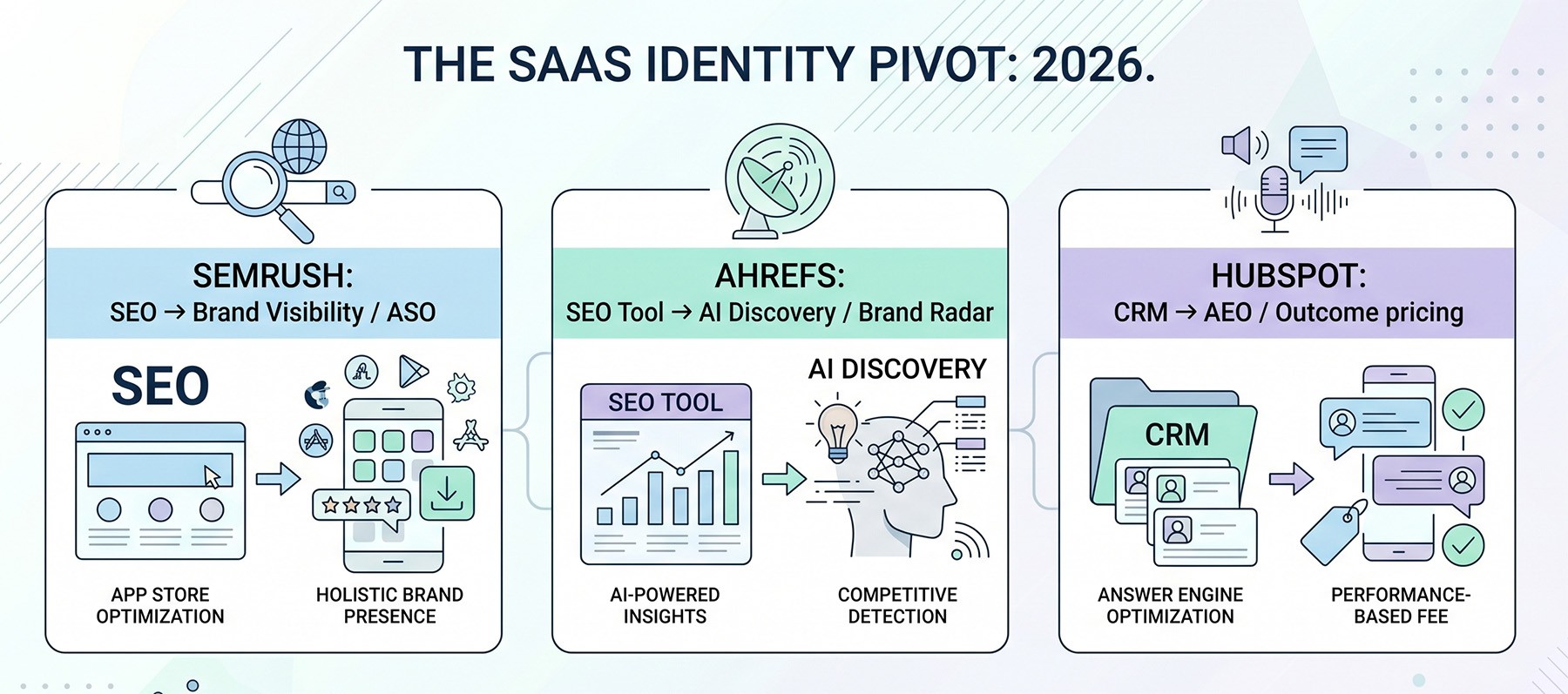
Three major platforms. Three major positioning shifts. All within the same four-month window. That is unlikely to be coincidence, but it raises a harder question the rebrands themselves don’t answer: have these tools actually changed, or just the language around them? The distinction matters, because marketing teams are being asked to restructure strategies and budgets around platforms that may be selling new positioning on old infrastructure.
Quick glossary, if these terms are new :
| Term | What It Means |
|---|---|
| SEO Search Engine Optimization | Optimizing pages to rank in traditional search engine results. |
| GEO Generative Engine Optimization | Optimizing content so it appears in AI-generated answers and summaries. |
| AEO Answer Engine Optimization | A form of AI optimization focused on direct-answer formats and AI response visibility. |
| ASO Agentic Search Optimization | Optimizing brand presence for AI agents that search, evaluate, and shortlist options on behalf of users. (Note: ASO has long been used in mobile marketing to mean App Store Optimization. Semrush’s use of the same acronym for a different discipline is likely to cause confusion; this article uses it as Semrush defines it. |
| AI Visibility | A broad term describing how often and how accurately a brand appears across search engines, AI assistants, and answer platforms. |
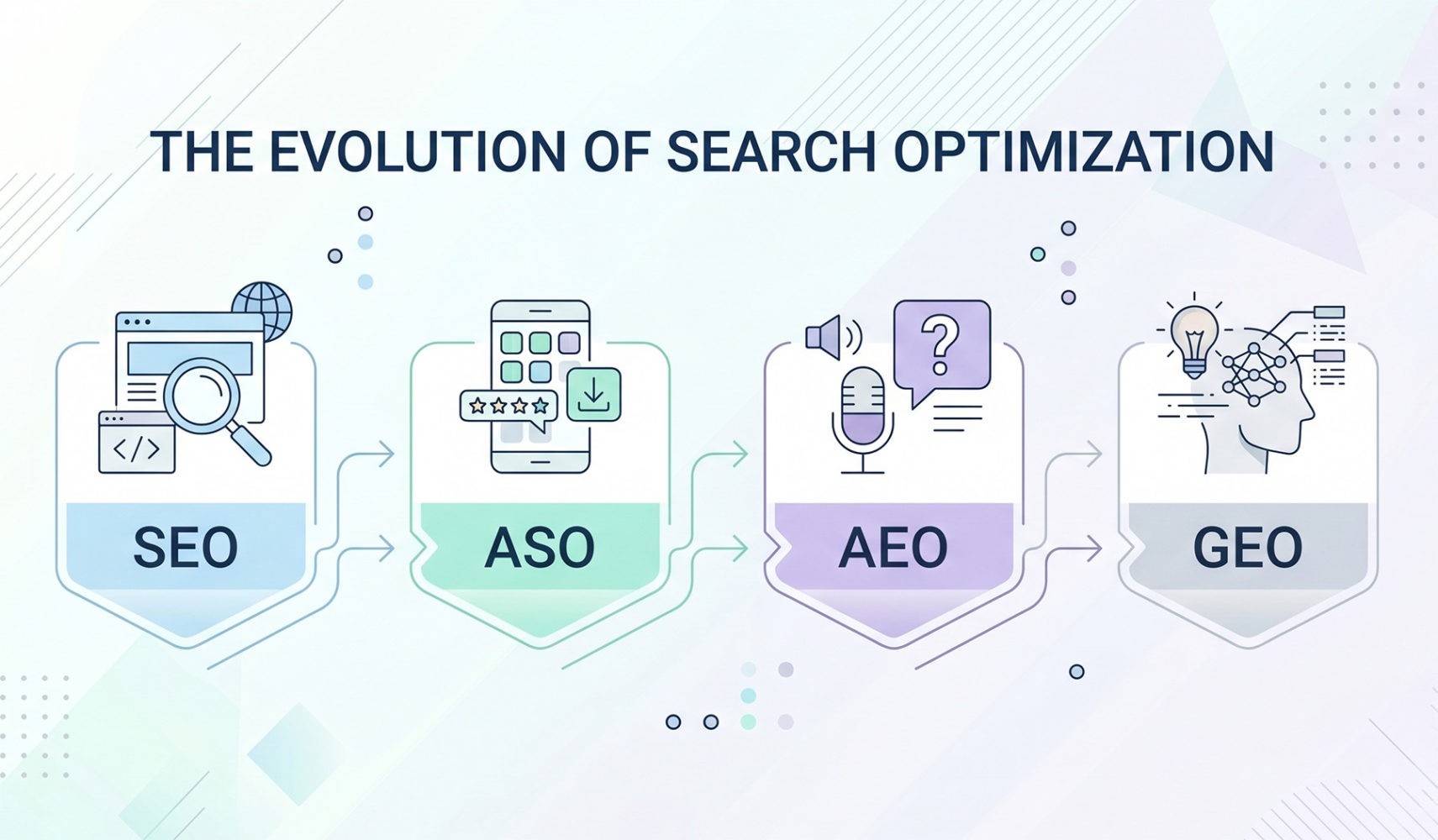
A New Vocabulary, Whether You’re Ready or Not
The terminology has accelerated as fast as the tools. SEO gave way to GEO, which is now being joined by AEO and ASO. Each term describes a slightly different layer of the same problem: how do you get your brand cited, recommended, or surfaced by a system that does not show the user a list of options?
Semrush’s definition of ASO is worth examining closely. Agentic search, as they define it, is built for a world in which an AI agent evaluates brand relevance on behalf of the user, then increasingly narrows the user’s consideration set before a human ever weighs in. The user asked an AI to book a hotel, compare vendors, or shortlist contractors; the AI did the filtering. Your brand either survived that filtering or it did not and the user may never see what was cut.
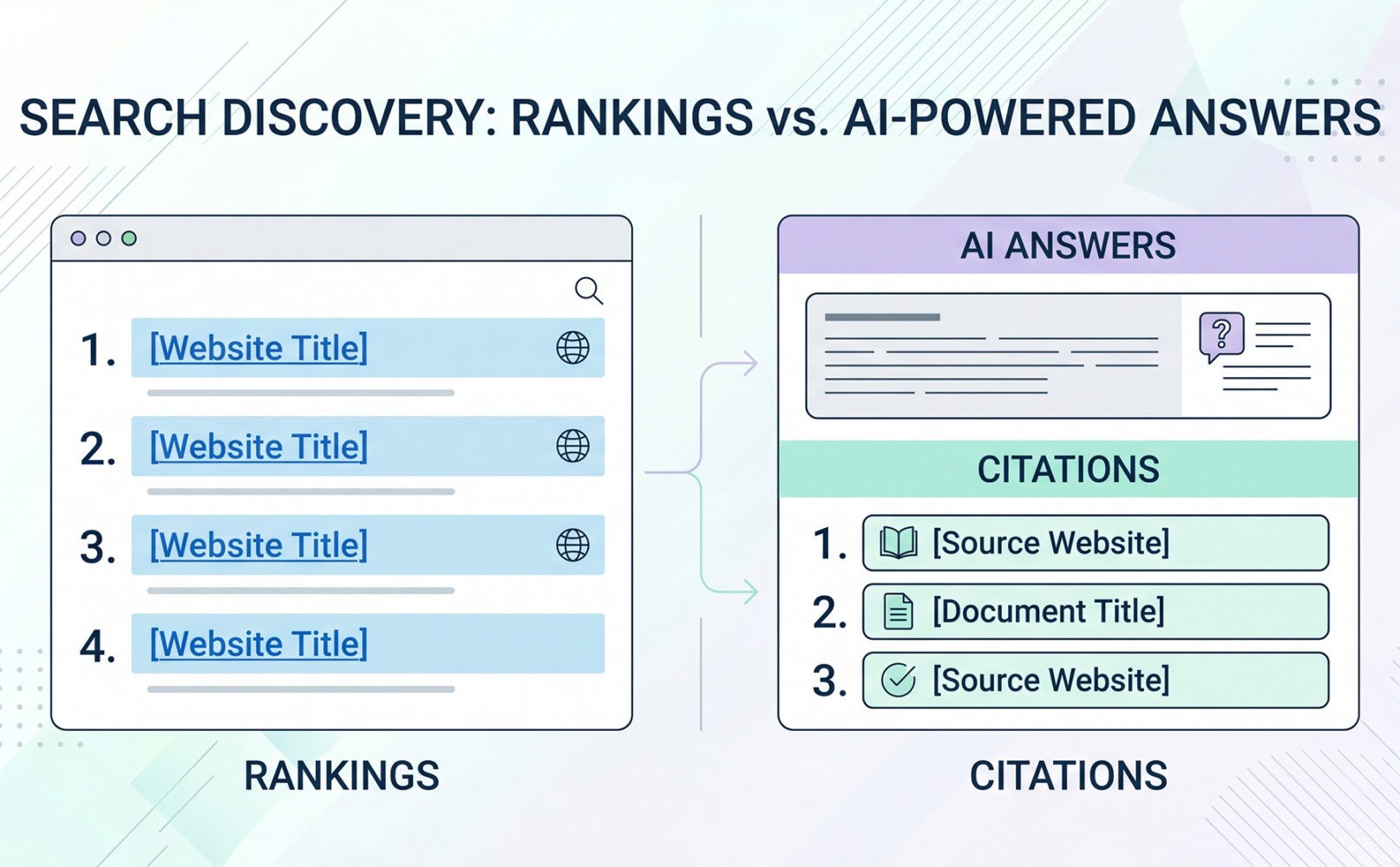
Andrew Warden, Semrush’s CMO, put the underlying logic plainly in the March 2026 announcement: ”The reality is simple: you’re either the answer AI provides, or you’re invisible.”
That framing matters not because it is a new insight — marketers have been watching zero-click search rates climb for years — but because of who said it. When the company that made its fortune selling keyword ranking tools tells you keyword rankings are no longer the game, the conversation has changed.
The Pricing Models Are Changing Too
The repositioning would be interesting enough on its own. What makes this moment more significant is that the business models underneath these tools are shifting alongside the positioning.
Ahrefs’ decision to introduce a sub-$30 entry tier is not a gesture toward accessibility. It is a signal that the market of teams paying $129 or $249 a month purely to track blue-link rankings is compressing, and the only way to replace that demand is to lower the acquisition barrier while betting on higher-value add-ons like Brand Radar.
HubSpot went further. Its Spring 2026 Spotlight introduced outcome-based pricing for two of its Breeze AI agents: the Prospecting Agent, priced at $1 per recommended lead, and the Customer Agent, priced per resolved conversation. This is a fundamental departure from SaaS convention. The standard model has always been: pay monthly, use what you use, absorb the cost whether the tool delivers or not. Outcome-based pricing inverts that. It bets that a customer will actually deploy an AI agent if they only pay when it does its job — and it puts the vendor on the hook for performance.
For marketing teams evaluating these platforms, this shift matters practically. The tools are no longer just software subscriptions. Some are beginning to look more like performance contractors.
Consolidation Is the Subtext
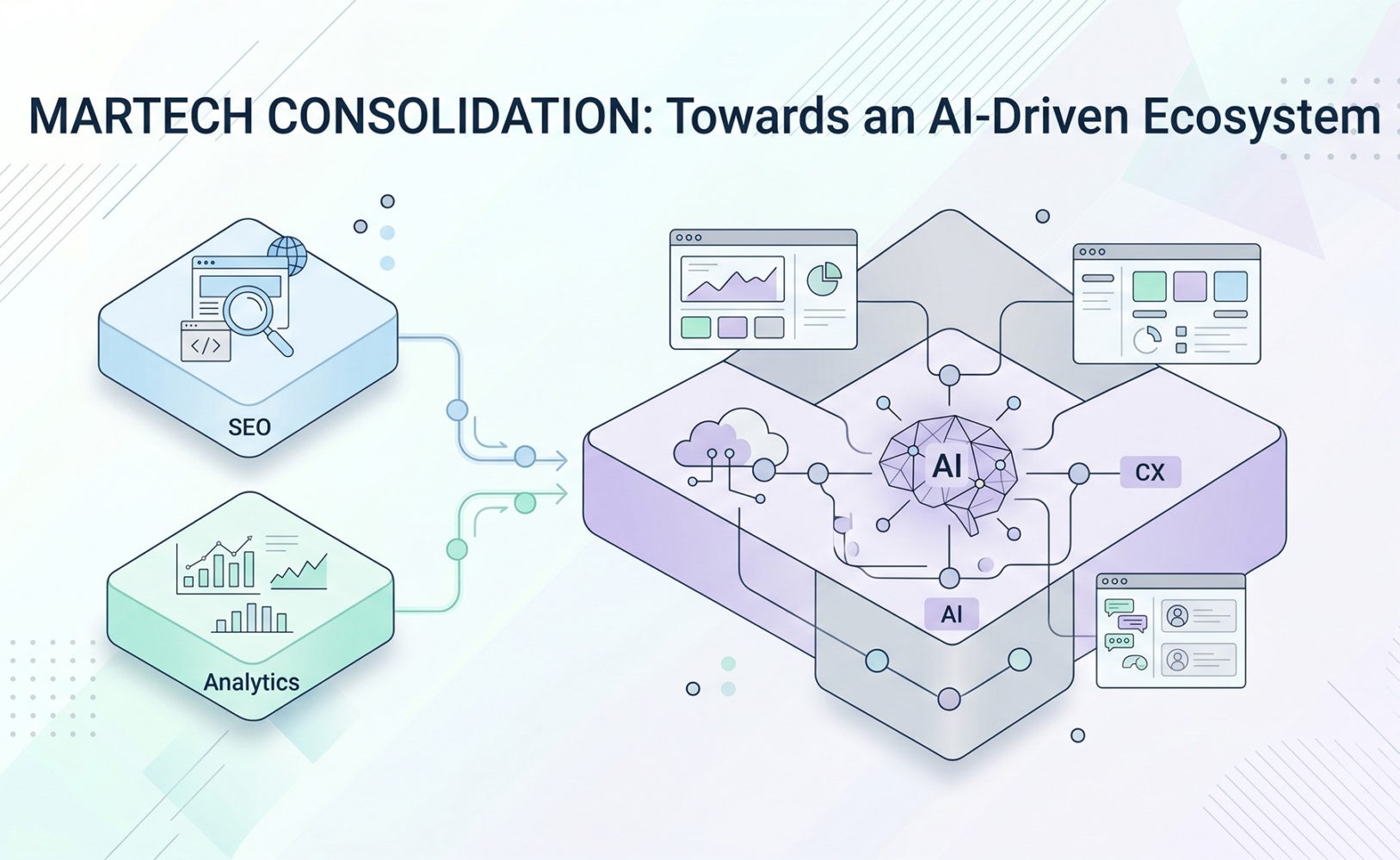
The Adobe/Semrush deal is the most visible signal of a trend that will likely continue: standalone visibility tools getting absorbed into larger platforms.
Adobe paid $1.9 billion to acquire a company whose core function was tracking where websites ranked in Google. Two readings of that price are possible. The optimistic one: Adobe is buying genuine AI infrastructure and a discoverability intelligence layer for its agentic CX stack. The skeptical one: it is a defensive acquisition of 28 million users before a competitor got them, with the AI narrative as justification. The truth is probably both — but which reading dominates will determine whether Semrush’s new positioning delivers real capability or just better marketing for a legacy product. Adobe’s own internal data showed AI traffic to U.S. retail sites increased 269% year over year as of March 2026; the argument for a dedicated visibility engine inside Adobe Experience Cloud becomes much easier when the traffic shift is that dramatic.
The implication for marketing teams: the standalone SEO tool category as it existed in 2022 is likely not where this ends — particularly for mid-market teams that want integrated AI analytics and workflow tooling rather than a separate point solution for every job. Budget decisions made now about which platform ecosystem to commit to will carry more lock-in consequences than equivalent decisions did two years ago.
The Skeptic’s Corner (Which Is Worth Visiting)
Not everyone is convinced this represents genuine transformation rather than a feature refresh with a new name.
Some analysts have pointed out that tools built on keyword databases and crawl indexes are not natively designed to monitor brand accuracy in AI, that bolting an AI-tracking module onto a legacy SEO platform produces a different, often shallower product than building for that use case from the ground up. The criticism is not that the new features are useless; it is that monitoring where your brand appears in AI answers and understanding why it appears (or does not) are two different capabilities, and the legacy tools are currently better at the former.
There is also a sampling problem. Every AI citation tracking tool — including Ahrefs Brand Radar and HubSpot AEO — works by sampling a fixed set of prompts at regular intervals and aggregating results. AI responses are variable by design; the same query can produce different outputs at different times, for different users, in different contexts. Brand visibility scores across these platforms are probabilistic, not definitive. They are useful directional signals, not precise measurements.
Knowing this does not make the tools less worth using. It does mean the dashboards should inform strategy, not substitute for it.
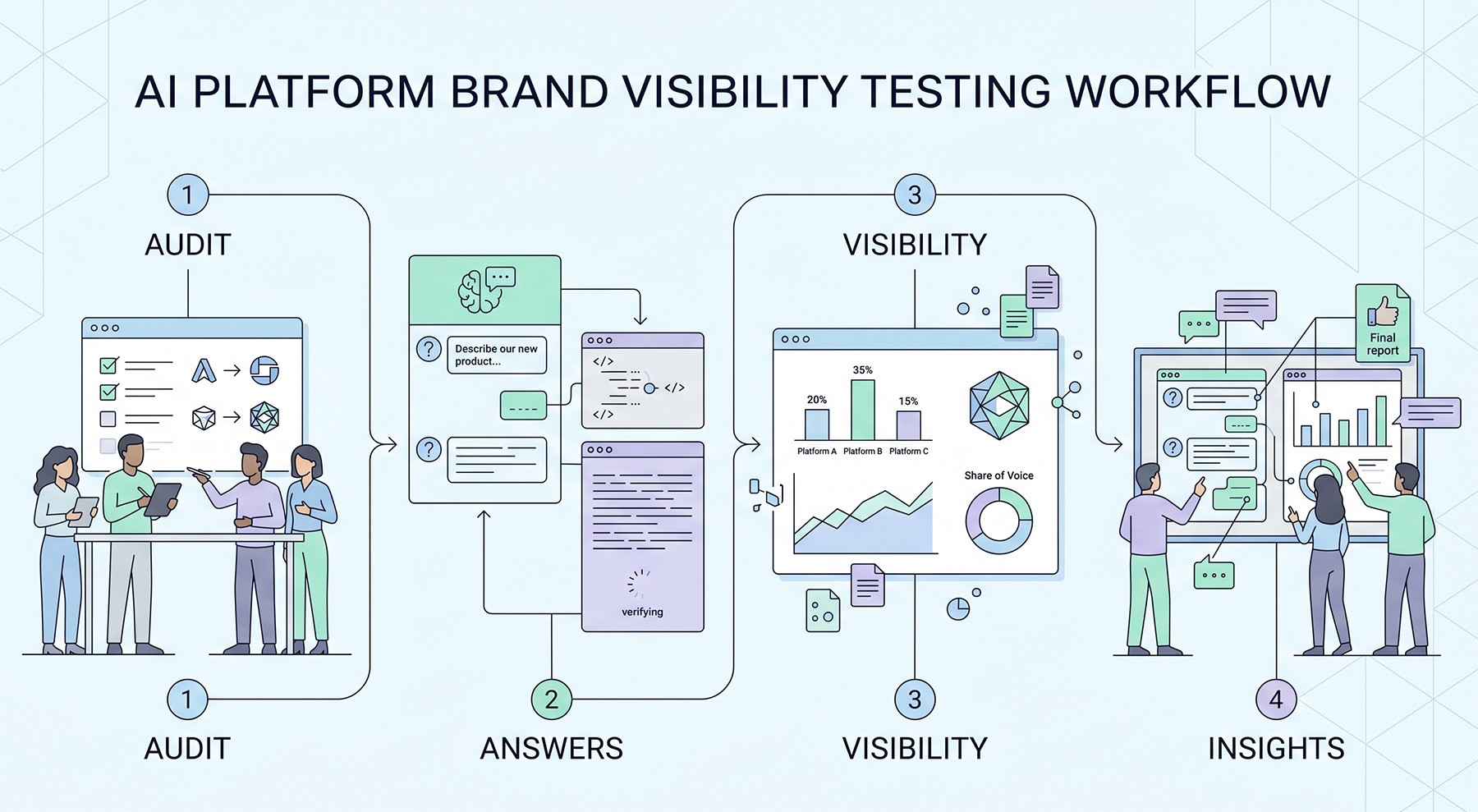
What Marketers Should Do Right Now, Including Your Whole Team
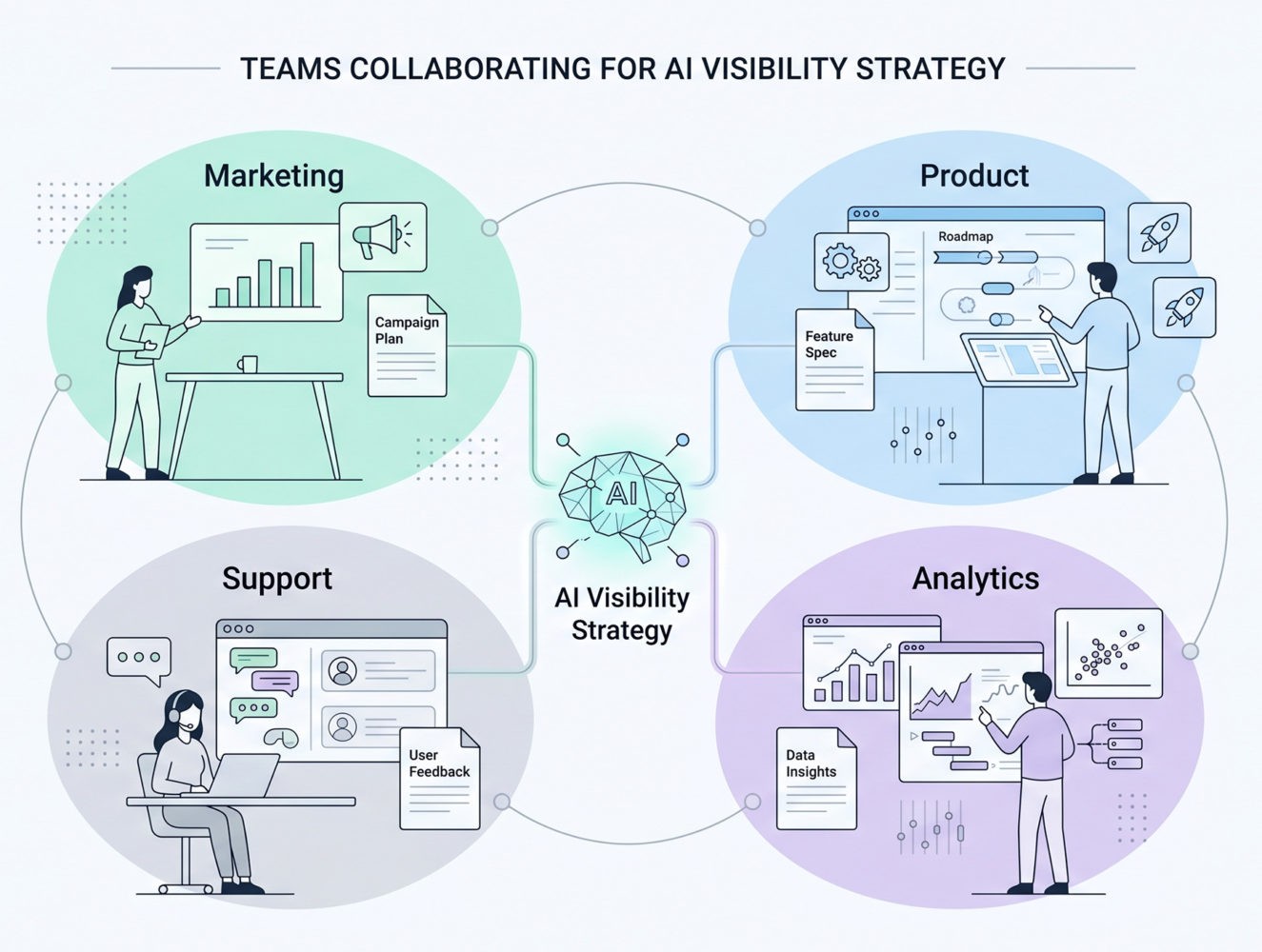
Preparing for an AI-era brand presence is no longer a marketing department problem in isolation. The following five moves require coordination across functions — and that cross-functional dimension is precisely what makes them actionable rather than theoretical.
Run your brand through an AI engine audit, as a team, not solo
Ask ChatGPT, Perplexity, or Google AI Mode the kind of category-level question your ideal buyer would ask: ”What’s the best [your product category] for [your use case]?” Do this with colleagues from product, sales, and customer support present. Each function notices different things — product spots inaccuracies, sales recognizes objection language, support recognizes the gaps that generate the most tickets. Start with raw output before paying for a platform to track it.
Separate citation from ranking and involve your web and data teams
Appearing in an AI citation depends partly on how well AI crawlers can read and extract your content. Structured data (schema markup), clean site architecture, and accessible APIs all matter here, which makes this a product and development conversation, not just a content one. A page that does not rank on page one in Google can still get cited in an AI overview if it is technically accessible and contains structured, directly answerable content.
Audit your content for extractability, not just rank
Research on AI citation patterns suggests cited pages tend to be longer, more structured, and semantically specific — rich in definitions, comparisons, numerical facts, and procedural steps. A practical example: if your product page currently answers ”What does X do?” in flowing prose buried three paragraphs down, restructure it so the question appears as an explicit H2 and the answer follows in the first two sentences — self-contained, specific, no preamble. That format change, applied consistently to FAQ and documentation pages, is what AI crawlers can most readily extract. The ranking on Google may not move. The citation rate in AI overviews often does. The prioritization is an editorial decision, but it should be driven by data from your analytics team.
Understand what you are buying before committing to a platform.
If you are evaluating HubSpot AEO, Semrush’s AI Visibility Toolkit, or Ahrefs Brand Radar, be clear about the distinction: monitoring versus optimization guidance. Most of these tools currently do the former well and the latter partially. Decide internally which team owns the action items that come out of the data — otherwise you will pay for a dashboard nobody acts on.
Watch consolidation carefully, and loop in procurement and IT early
If your current stack includes a standalone visibility or analytics product, it may be acquired in the next 18 months. The Adobe/Semrush deal is a template, not an outlier. Decide which platform ecosystem you would want to be inside if your current vendor is absorbed — and make sure the people who handle contracts and tech stack decisions are part of that conversation before it happens, not after.
What This Signals
The tools matter less than the behavior driving them.
What Semrush, Ahrefs, and HubSpot are doing simultaneously — at speed, with real money behind it — is responding to something their customer data has been telling them for several quarters: the surface where brand discovery happens has shifted, and the shift is accelerating. Adobe cited a 269% year-over-year increase in AI-driven traffic to retail sites. HubSpot’s customers saw a 27% drop in organic traffic in a single year. These are not rounding errors in an otherwise stable market.
The marketers who will get the most from this moment are not the ones who adopt every new acronym. They are the ones who notice what these pivots have in common: every one of them assumes that brand discovery is no longer a single department’s job. Semrush’s ASO framework requires product and dev to make content extractable. HubSpot’s AEO guidance requires analytics to identify what AI engines are actually citing. Ahrefs Brand Radar requires someone to own the action items the dashboard surfaces. The tools are useful. But they are being built for organizations that have already decided brand visibility is a company-wide problem — not a marketing team’s side project. If that conversation hasn’t happened in your organization yet, that’s the more urgent gap to close.
The tools will keep pivoting. Your job is to give them something worth tracking.
About the author:
Eve Cichon specializes in marketing strategy, brand development, and digital growth. Working as a freelancer, she helps businesses connect product value with audience needs through data-informed strategy and creative execution. Her expertise spans brand positioning, campaign management, audience engagement, and building scalable marketing systems that support long-term growth.