

Most people assume the hardest part of running a commercial cleaning company is the cleaning itself. The chemicals, the equipment, the square footage. They’re wrong.
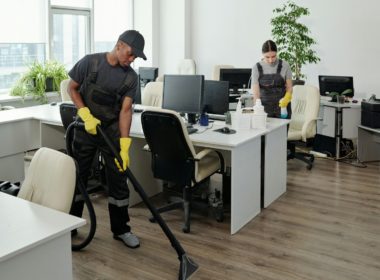
The real challenge is invisible. You are deploying people across dozens of sites, often at night or in the early morning hours, with zero direct supervision. Every single one of them has to perform at the same standard whether a manager is watching or not. The work happens when the client is not there, which means your entire quality control system depends on culture and character, not observation. That is a management problem most industries never have to solve at this scale.
After building RamClean into an Inc. 5000 company with over 300 field employees, here is what that process actually taught me.
Is High Turnover in Commercial Cleaning an Industry Reality, or a Sign That Something Is Being Managed Wrong?
It is almost always a sign that something is being managed wrong. The industry treats turnover as a cost of doing business. That framing lets companies off the hook for a problem that is largely within their control.
The first thing to get right is where turnover sits in the organization. Most companies treat it as an HR problem. It is actually an operations problem. That distinction matters because it changes who owns the solution and how seriously it gets taken.
The second thing to get right is speed at the front end. If someone clearly is not going to meet the standard, move on within the first three days. Carrying the wrong person longer than that does not just cost money. It affects the people around them who are doing the job right. So the HR team keeps hiring until the right person is found, and the standard does not get lowered in the meantime just to fill a slot.
For the employees who stay, the insight that changes everything is this: when someone leaves, it is almost never about pay. It is about feeling invisible. Structured check-ins at 30, 60, and 90 days address this, but only if the purpose is right. The check-in is not to evaluate the employee. It is to ask them what is working and what is not. That is a different conversation and people respond to it differently.
Consistent site assignment matters more than most owners realize too. When employees are floated across locations constantly, they never develop ownership over anything. When someone is assigned to the same facility consistently, they learn it, they take pride in it, and they clean it better over time because they understand the ins and outs of that space in a way a rotating employee never will. That said, a blanket no-floating rule is an oversimplification. A better structure is to have a dedicated group hired specifically as Leads, where floating between sites is part of the role from day one. Those employees know what they are signing up for. The remaining 95% of cleaning staff stay at a consistent location and build the kind of familiarity that drives both retention and quality.
If an employee makes it 30 days, retention climbs significantly. And experienced employees deliver better results for clients every single time.
When Hiring a Commercial Cleaning Employee, What Qualities Actually Predict Whether They Will Last?
Not cleaning ability. Anyone can be taught to clean. The real question is whether someone will show up, night after night, without anyone standing over them.
What actually predicts long term performance is evidence of self-direction. The ability to meet a standard because they hold themselves to it, not because someone is watching. That quality does not show up on a resume. It shows up in behavior.
Did they hold a job for more than a year? Did they arrive to the interview on time? Did they follow the application instructions exactly as written? These details are not trivial. They are previews. Small things tell you big things about how someone operates when the conditions are not ideal.
How a candidate talks about past employers is equally revealing. Someone who blames every job they have ever had is showing you something important about how they process accountability. Someone who can reflect honestly on what did not work and what they would do differently is someone who can grow. That distinction matters a lot in a role where self-management is the whole job.
Can You Actually Predict Whether a Commercial Cleaning Hire Will Be Reliable Before They Ever Step on a Job Site?
Yes. The hiring process itself is the most accurate signal you have, and most companies are not paying attention to it.
The hiring process is a preview of the employment relationship. Every interaction before someone starts tells you something about how they will behave after they start. If a candidate reschedules an interview twice, they will call out on a Friday night. If they do not return a message within a reasonable window, they will not flag a problem at a job site. If they do not complete onboarding paperwork on time, they will not complete their checklist at 2 AM.
None of that is about being rigid or setting impossible standards. It is about understanding what reliability actually requires in this industry. One no-call no-show does not just inconvenience a manager. It affects an entire client relationship. The cost of discovering that someone is unreliable after they are already on the schedule is far higher than the cost of paying attention during the hiring process.
Every interaction before day one is real data. Treat it that way.
Does a Commercial Cleaning Employee Actually Need Different Training Depending on the Type of Facility They Are Assigned To?
Completely, and getting this wrong creates serious operational and safety risks that most people in this industry underestimate.
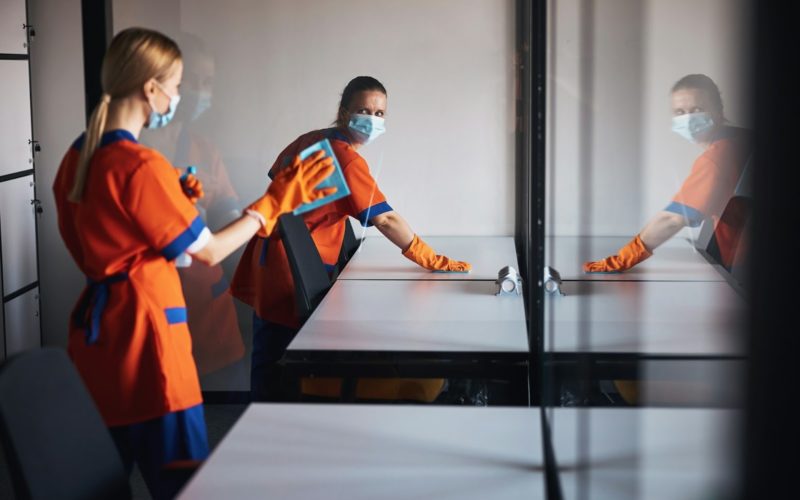
A corporate office and a manufacturing plant are not versions of the same job. They require a fundamentally different understanding of why the work matters. A corporate office is about appearance, discretion, and surface-level detail. The fingerprint on the glass, the scuff mark on the floor, the way a lobby smells when the first employee walks in at 8 AM.
A manufacturing facility is something else entirely. Some industrial environments use materials where improper cleaning is not just a quality issue, it is a safety issue. A powder used in plastic manufacturing that is not cleaned correctly can combust. In that context, the person doing the cleaning is not a janitor walking the hall with a mop. They are a critical operational piece responsible for the safety of a facility that may be worth billions of dollars.
That context changes everything about how someone approaches the work. Generic onboarding cannot create that understanding. Site-specific onboarding can. Walking an employee through their actual facility before they ever touch equipment, explaining the client’s business, what they make, who works there, what matters to them, changes how that employee thinks about what they are doing. When someone understands that cleaning residue near certain equipment at a biotech facility could contaminate a product, they treat that surface with a completely different level of attention than if they were just told to clean it.
What Is the Single Biggest Workforce Management Mistake That Holds Commercial Cleaning Companies Back?
Managing from the exception. Only making contact with employees when something has gone wrong.
When the only time a manager interacts with an employee is to address a problem, the entire management relationship is built on problems. Employees experience their company as a source of criticism, not support. They stop seeing their supervisor as someone who is invested in them and start seeing them as someone who shows up to deliver bad news. You cannot build loyalty, accountability, or retention on that foundation.
The shift that actually changes behavior at the supervisory level is proactive presence. Training supervisors to make contact specifically when things are going right, not just to check in generally, but to acknowledge good work in concrete terms. That sounds like a small change. In an industry where it almost never happens, it is not small at all. When employees feel seen for what they are doing well, how they talk about their work changes. And how long they stay changes with it.
How Should a Commercial Cleaning Company Handle an Underperforming Employee Without Making the Situation Worse?
Separate the behavior from the person, come with specifics, and follow up on what was said.
The conversation that actually works is specific. The bathroom on the third floor has had complaints three weeks in a row is a real conversation. You are not doing a good job is a dead end. The difference is not just tone. It is that one gives the employee something concrete to change and the other just makes them feel judged. Document issues as they happen so that by the time a formal conversation is necessary, there is a clear record of dates, locations, and what was observed.
The structure of the conversation matters too. Here is what we observed. Here is why it matters to the client and to the team. Here is what needs to change by a specific date. That is it. The follow-up is where most companies fail. The conversation happens and then nothing is tracked. If the behavior corrects, acknowledge it. If it does not, the documented follow-up supports whatever the next step needs to be. Without that follow-up, the conversation was just noise.
How Do You Build Consistent Accountability Across a Commercial Cleaning Workforce Spread Across Hundreds of Job Sites?
You build it into the structure, because at scale you cannot rely on individual manager judgment to carry it.
Accountability that depends on a manager being present to enforce it is not accountability. It is supervision. Real accountability means the standard is clear, the feedback loop is fast, and people meet the expectation because they understand it, not because someone is watching.
The mechanics matter here. Each site needs a clear checklist that employees self-report against. Those reports should be spot-checked by supervisors on a rotating basis, not every time, but consistently enough that everyone knows the standard is real. On top of that, clients should have a direct feedback channel, and that feedback needs to be tied back to the specific individual responsible for that space, not just the regional team. When accountability is that specific, people take it seriously in a way they simply do not when feedback lands on a group.
That starts with making sure every employee knows exactly what done right looks like at their specific site. Not a general standard. The standard for that facility. When that clarity exists and the feedback loop is tied directly to the individual, most people meet it. Accountability becomes far less adversarial when it is built into the workflow rather than applied after something has already gone wrong.
The workforce challenge in commercial cleaning is not a labor problem. It is a systems and culture problem. The companies that understand that, and treat their people as operational assets rather than interchangeable parts, win on retention, on quality, and on client satisfaction. Everything else follows from that.
⸻ Author Bio ⸻
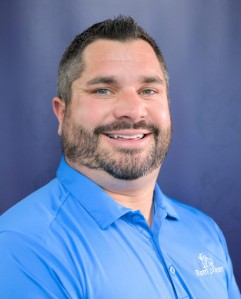
Charlie Ramshaw is the Founder and CEO of RamClean, a commercial cleaning company recognized on the Inc. 5000 list, serving mid-to-large facilities across multiple states. He writes about the operational systems behind scaling commercial cleaning operations.
⸻
Cover photo courtesy of the author.