




Children experience emotions with intensity, even when their lives look simple from the outside. What feels small to an adult can feel overwhelming to a child. A minor disappointment can feel like loss. A new situation can feel threatening. A change in routine can feel destabilizing.
Understanding your child’s emotional world does not require perfect insight or constant intervention. It requires attention, patience, and a willingness to see things from their point of view.
Emotional understanding is not about controlling feelings. It is about helping children learn that their feelings make sense and that they can handle them.
Children Feel Before They Explain
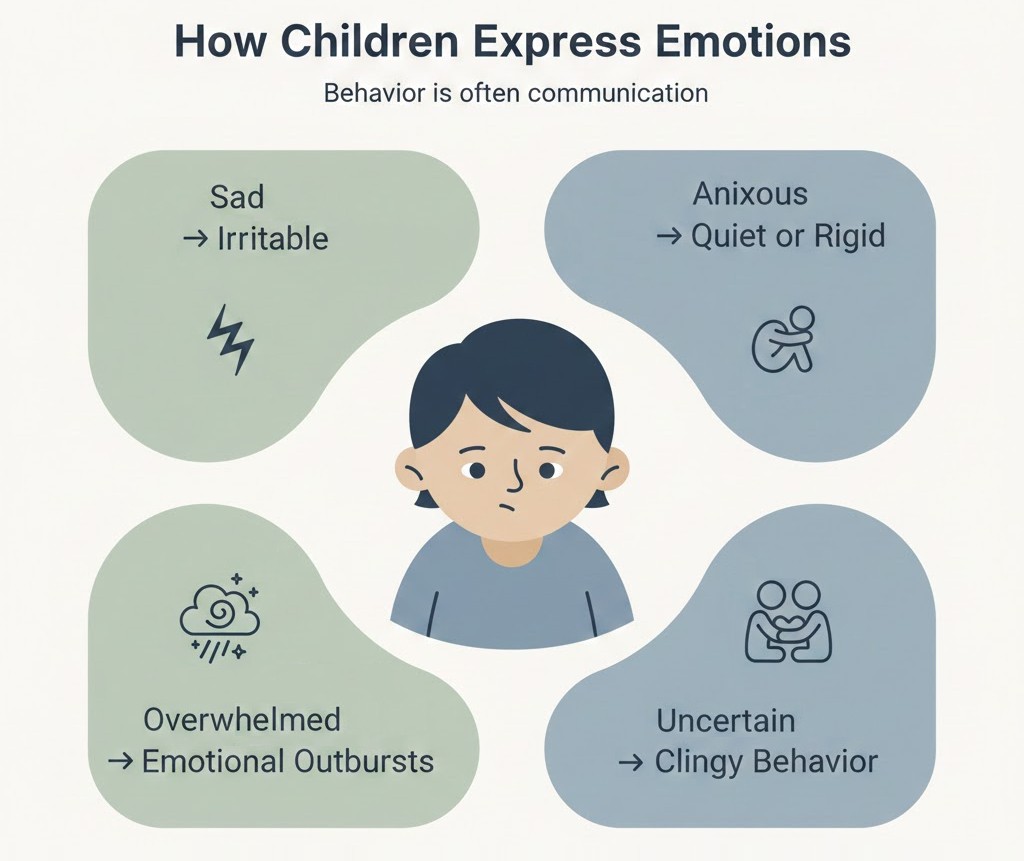
Adults often expect children to explain what they are feeling. Many children cannot do that yet. Emotions often show up through behavior first. A child may act out, withdraw, cling, or complain of physical discomfort. These are not attempts to manipulate or avoid responsibility. They are signals.
A child who cannot name sadness may show irritability. A child who feels anxious may become quiet or rigid. A child who feels overwhelmed may lose patience quickly.
Understanding emotional signals means looking past the behavior and asking what feeling might be underneath it.
Emotional Development Is Ongoing
Children are not born knowing how to regulate emotions. Emotional skills develop slowly over time. Early on, children rely on adults to help them calm down, make sense of feelings, and recover from stress. Over time, they begin to internalize these skills.
Setbacks are part of the process. Emotional growth is not linear. A child may seem emotionally steady one week and reactive the next. This does not mean something is wrong. It means development is happening.
Safety Comes Before Solutions
When a child is emotionally overwhelmed, their brain is focused on safety, not learning. Trying to reason, explain, or correct behavior too quickly often makes things worse. The child feels misunderstood or pressured, which increases distress.
Emotional safety comes first. That means calm presence. That means acknowledging feelings without judgment. Phrases like “I see you are really upset” or “That looks hard” help the nervous system settle. Once calm returns, problem solving becomes possible.
Validation Does Not Mean Agreement
One common misunderstanding is that validating a child’s emotions means agreeing with their behavior. Validation simply means acknowledging the feeling. You can validate frustration without allowing disrespect. You can acknowledge anger without allowing harm. You can recognize sadness without removing all limits.
Clear boundaries and emotional validation can exist at the same time. In fact, they work best together. Children feel safest when emotions are accepted and boundaries are consistent.
Emotions Are Shaped by Environment
Children’s emotional worlds are influenced by more than personality. Sleep, nutrition, school demands, social relationships, and family stress all play a role. Emotional reactions often reflect accumulated strain rather than a single cause.
A child who is overtired may seem defiant. A child who feels socially excluded may seem disengaged. A child who senses tension at home may become anxious without knowing why. Understanding emotions means considering context, not isolating moments.
The Role of Attachment
Attachment refers to the emotional bond between a child and their caregivers. This bond shapes how children experience emotions and relationships. Secure attachment helps children feel safe expressing emotions. They trust that support will be available when needed. This does not require perfection. It requires responsiveness.
Repair matters more than getting things right the first time. Apologizing, reconnecting, and trying again teach children that relationships can recover from emotional strain.
That lesson stays with them.
Why Some Children Struggle More Than Others
Children differ in temperament. Children’s emotional reactions often reflect basic temperament traits, including sensitivity and intensity, which shape how they respond to the world around them. Some feel things more intensely. Some adapt quickly. Some need more support to regulate emotions.
A sensitive child is not a weak child. A reactive child is not a difficult child. These differences reflect nervous system wiring, not character flaws. Understanding your child’s temperament helps you respond appropriately. What calms one child may overwhelm another. There is no one-size-fits-all approach to emotional support.
Emotional Expression Looks Different at Every Age
Young children express emotions through play and behavior. Older children may use words but still struggle with insight. Adolescents often hide emotions or express them indirectly. Expecting adult-style communication from children leads to frustration on both sides.
Instead, watch patterns. Notice shifts. Listen when they speak, even if the message is incomplete. Emotional understanding means meeting children where they are, not where we wish they were.
When Emotions Interfere With Daily Life
All children experience emotional ups and downs. Concern arises when emotions consistently interfere with daily functioning. This may show up as ongoing anxiety, persistent sadness, frequent emotional outbursts, sleep disruption, or withdrawal from activities.
These patterns do not mean something is broken. They mean the child may need more support than the family system alone can provide. Seeking help is not a reaction to failure. It is a response to need.
The Value of Professional Perspective
Sometimes an outside perspective helps clarify what is happening emotionally. A trained professional can help identify patterns, teach coping skills, and support emotional regulation in age-appropriate ways.
Working with a children’s psychologist can also help parents understand how to respond more effectively at home. The goal is not to pathologize emotions, but to support healthy development. Professional support often strengthens, rather than replaces, family involvement.
Supporting Emotional Growth at Home
Daily habits shape emotional resilience.
Simple practices matter more than formal interventions.
- Listening without rushing to fix
- Maintaining predictable routines
- Naming emotions in simple language
- Modeling calm responses to stress
- Allowing space for emotional expression
These actions teach children that emotions are manageable and acceptable. Children learn emotional regulation through experience, not instruction alone.
Avoiding Emotional Overcorrection
In an effort to help, adults sometimes overcorrect emotional experiences. They distract too quickly. They minimize feelings. They reframe before the child feels understood. This can teach children to doubt their emotional responses or hide them altogether.
Allowing children to experience manageable discomfort helps build resilience. Support does not mean eliminating all emotional pain. It means guiding children through it.
Emotional Literacy Is a Life Skill
Children who understand emotions develop stronger relationships, better coping skills, and greater self-awareness. They learn how to express needs, manage frustration, and recover from setbacks. These skills support mental health across the lifespan.
Emotional literacy does not prevent difficulty. It prepares children to handle it. That preparation happens slowly, through everyday interactions.
Trust the Process
Understanding your child’s emotional world is not a checklist. It is an ongoing relationship. There will be moments of clarity and moments of confusion. Both are part of the work. What matters most is staying curious instead of reactive. Asking questions instead of making assumptions. Being present instead of perfect.
Children do not need flawless emotional guidance. They need consistent, compassionate support. That foundation allows them to grow into emotional awareness at their own pace, with confidence that they are not navigating it alone.