



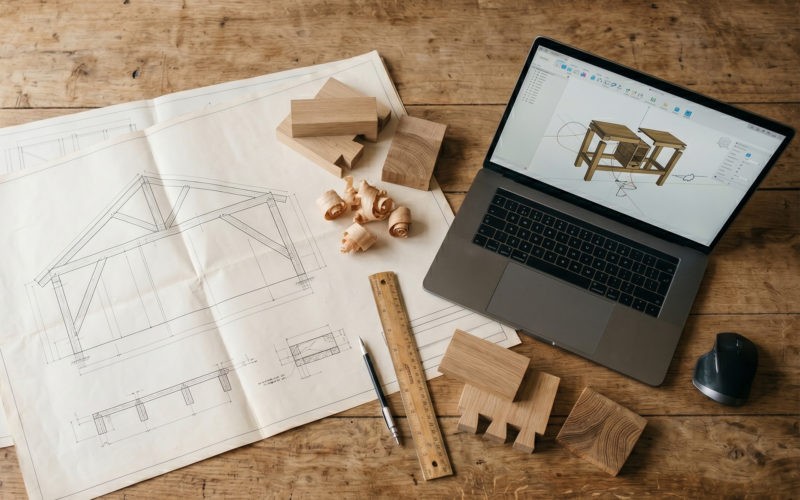
Walk into a well-run woodworking shop today and you’ll notice something has changed. It’s still noisy, still tactile, still driven by the smell of fresh-cut lumber, but the work feels more coordinated, more deliberate, and increasingly data-driven. That shift traces back, in large part, to the growing adoption of smart manufacturing for woodworking. Connected, sensor-equipped machinery that has fundamentally changed how production floors operate.
At the center of this change is the CNC wood cutting machine, a tool that has evolved well beyond basic automation. Modern systems are now connected, adaptive, and capable of integrating with other technologies across the shop floor. Rather than operating as standalone machines, they function as part of a broader production ecosystem — one that prioritizes efficiency, repeatability, and measurable output.
From Manual Workflows to Connected Systems
Traditional woodworking relied heavily on operator skill and manual adjustments. Craftsmanship still matters, but modern workshops are reducing variability by standardizing processes through smart equipment.
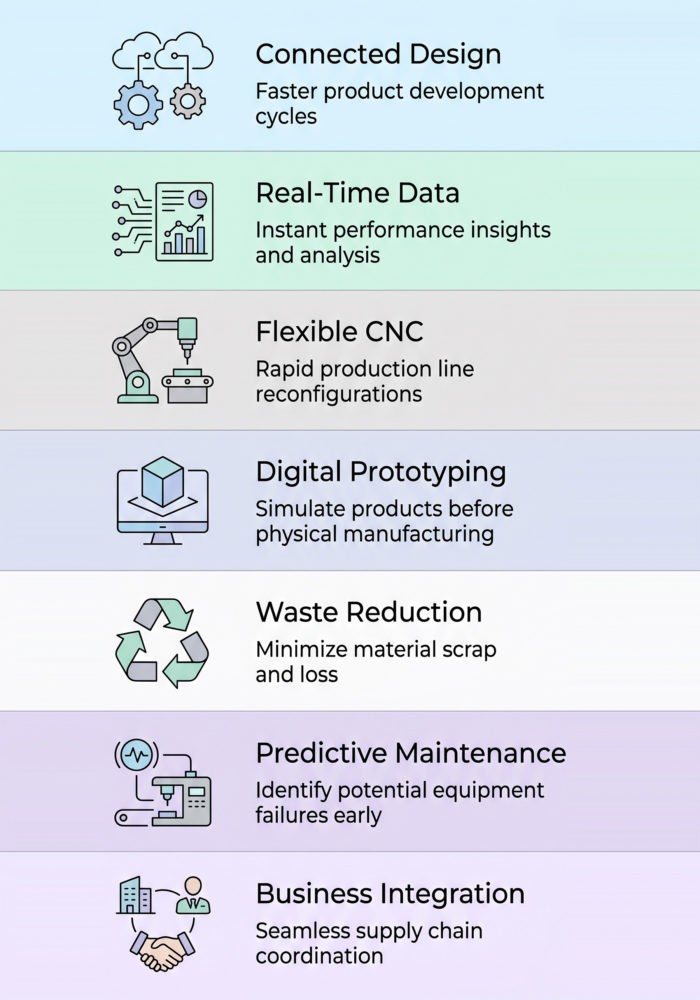
Connected machines now communicate with design software, inventory systems, and scheduling tools. A design created in CAD can move directly into production with minimal translation, cutting down on errors and setup time. According to a 2023 Deloitte manufacturing survey, manufacturers that integrated connected equipment into their workflows reported measurable reductions in setup time and material rework. In practice, this level of integration helps workshops:
- Eliminate redundant measurements and manual recalibration
- Maintain tighter tolerances across production runs
- Reduce material waste through optimized cutting paths
The result is not just faster production, it’s more predictable output, which matters as much to project managers as it does to operators.
Real-Time Data Is Changing Decision-Making
One of the most valuable aspects of smart equipment is its ability to generate and interpret data in real time. Sensors embedded in machines track performance metrics including spindle load, cutting speed, and tool wear.
Rather than waiting for problems to surface, operators can respond proactively. If a machine detects increased resistance during a cut, it can automatically adjust feed rates or alert the operator before a tool fails. Over time, this data builds a clearer picture of how materials, designs, and machines interact — something that used to live only in the memory of experienced operators.
Workshops are using this information to refine processes in ways that weren’t previously possible. Production decisions grounded in live sensor data tend to be more consistent and easier to defend, whether you’re explaining a delay to a client or justifying a capital purchase to ownership.
Automation Without Losing Flexibility
There’s a common concern that automation limits customization. In practice, the opposite tends to be true. Smart woodworking equipment allows workshops to handle both high-volume production runs and one-off custom jobs with the same level of precision.
Modern CNC systems can switch between projects quickly, often with minimal manual intervention. Tool changes, program adjustments, and calibration can be handled automatically or through streamlined interfaces. This flexibility is especially valuable for shops that serve a mix of residential, commercial, and bespoke clients — markets that don’t always move on the same timelines or tolerances.
Efficiency and creativity no longer have to compete. The same machine that runs 200 identical cabinet doors in the morning can be reprogrammed for a custom architectural detail by the afternoon.
Digital Prototyping and Faster Client Approvals
Before any wood is measured or cut, workshops are increasingly using digital prototyping tools to validate designs and streamline client approvals. This front-end investment often saves significant time and cost downstream.
Advanced simulation software allows teams to create accurate visualizations of finished products, complete with material textures, joinery details, and scale context. These previews can be shared with clients for feedback, reducing ambiguity and avoiding costly revisions mid-production. Some platforms also simulate the machining steps themselves, helping operators catch potential issues before a single board is touched.
CAD/CAM platforms have made this workflow accessible well beyond large-scale manufacturers — mid-sized shops are adopting digital prototyping as a standard part of their process, not an optional upgrade.
Smarter Material Handling and Waste Reduction
Material costs remain one of the most significant pressures in wood production. Smart equipment is helping workshops manage these costs more effectively by improving how raw materials are used from the moment they arrive on the floor.
Advanced nesting software, often integrated directly with CNC systems, optimizes how cuts are arranged on each sheet of wood. This reduces offcuts and ensures that every piece of material is used as efficiently as possible. Some systems track leftover materials and flag them for reuse in future projects. For high-volume operations, even incremental improvements in yield per sheet compound into real savings on raw material spend across a full production cycle.
Automated handling systems are also reducing physical strain on workers while improving positional consistency. Boards are loaded, positioned, and secured with precision, removing a common source of human error from the process.
Predictive Maintenance and Reduced Downtime
Unplanned downtime has always been costly in woodworking. Smart equipment is addressing this directly through predictive maintenance — a shift from fixed service schedules to condition-based monitoring.
Machines now track their own wear, detecting early signs of misalignment or component fatigue before a breakdown occurs. Rather than reacting to failures after the fact, operators can schedule repairs during planned downtime windows, keeping production on schedule and avoiding the ripple effect that an unexpected stoppage creates across an entire project timeline. For workshops running tight delivery commitments, that kind of operational reliability often proves to be one of the most tangible returns on the investment in smart equipment.
The practical benefits are straightforward:
- Maintenance can be scheduled during planned downtime rather than crisis windows
- Tools and components last longer with less aggressive wear cycles
- Production output stays consistent, which keeps project timelines intact
Workforce Evolution in the Modern Workshop
As equipment becomes more advanced, the role of the operator is evolving alongside it. Today’s workforce is less focused on repetitive manual tasks and more engaged in programming, oversight, and process optimization.
Training is shifting toward digital skills — software operation, data interpretation, and machine calibration — but this doesn’t replace traditional woodworking knowledge. It builds on it. An operator who understands grain direction and wood movement brings something to CNC programming that pure software training cannot replicate. The World Economic Forum’s Future of Jobs Report consistently identifies this kind of hybrid skill set — technical knowledge combined with hands-on domain expertise — as among the most valuable in any manufacturing environment.
Shops that invest in cross-training are seeing the results in output quality, not just machine efficiency.
Integration with Broader Business Systems
Smart equipment is no longer confined to the shop floor. Increasingly, it connects to broader business systems including order management, client communication, and supply chain tools.
When a new order is placed, production schedules can update automatically. Material requirements calculate in real time. Lead times can be communicated to customers with greater accuracy. This kind of end-to-end visibility reduces the friction that often builds up between the production floor and the front office — missed handoffs, stale estimates, surprise delays.
Manufacturing ERP tools are increasingly being adopted by mid-sized woodworking operations to bridge this gap, connecting machine output data with inventory, billing, and customer-facing timelines, turning the shop floor and the front office into a single, coordinated system.
A Few Honest Considerations
Smart equipment adoption is not without its challenges. The capital investment required for connected CNC systems and integrated software platforms can be significant, particularly for smaller independent shops. Implementation takes time, and there is a real learning curve involved in getting teams comfortable with new workflows.
Cybersecurity is also a growing concern. Connected shop-floor equipment introduces network vulnerabilities that traditional woodworking operations never had to consider. Shops integrating these systems should work with IT partners to establish basic network security protocols — something that is often overlooked in the early stages of modernization.
None of this negates the value of smart equipment, but it’s worth going in with a realistic picture.
Looking Ahead
Workshops that have invested in connected, data-driven systems are already better positioned to handle increased demand without sacrificing quality. The gap between traditional and modernized operations continues to widen, not because older approaches lack craftsmanship, but because the business case for efficiency and consistency becomes harder to ignore as production volumes grow.
For workshop owners and operators, the more useful question is no longer whether to adopt these tools, but how to phase the transition in a way that makes sense for the size, budget, and client mix of a specific operation. That answer will look different for every shop and that’s exactly the kind of problem good data helps solve.
About the author:
Rob Teitelman is an avid blogger and digital marketing enthusiast with years of experience creating content for businesses and brands. His work has been published in major publications and blogs across North America, covering a variety of niches from tech to real estate. Music producer, amateur photographer and fan of all things technology and gadgets.