




Teams today have more tools for internal collaboration than at any point in the history of work. Task management, sprint planning, time tracking, asynchronous communication, real-time collaboration on documents. There are well-designed tools for all of it, and most teams have figured out how to use them.
But all of that investment is pointed inward. The tools are about how the team works together, how tasks get assigned, how projects get tracked, how information moves between teammates.
Very few teams have given the same level of thought to how they communicate outward. Specifically, how they reach the journalists, podcast hosts, newsletter authors, and media contacts who could help them grow their visibility, build credibility, and bring their work to audiences they would never reach through internal effort alone.
That gap is not accidental. External outreach has always been messy, manual, and hard to systematize. But that is changing, and teams that notice it early tend to have a real advantage.

The Inward vs Outward Communication Problem
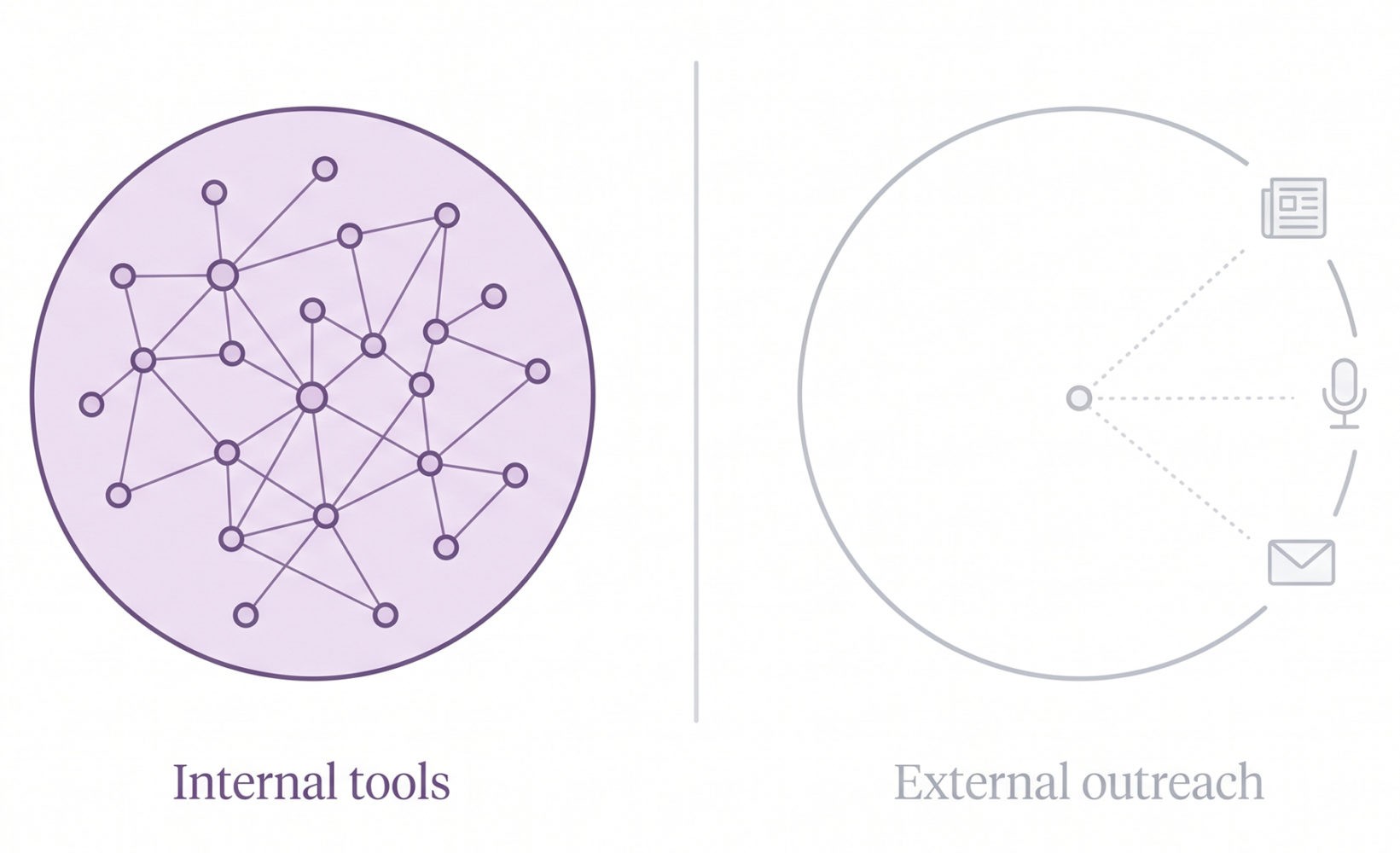
Think about how much structure the average digital team puts into internal communication. Dedicated tools for task management. Clear processes for sprint reviews. Documented workflows for how decisions get made and communicated.
Now think about how the same team handles external outreach. In most cases, it is someone sending a few emails from their personal inbox when they remember to, with no consistent process, no tracking, and no real strategy behind who they are reaching or why.
The gap is not trivial. According to Nielsen’s Global Trust in Advertising study — conducted across 58 countries — 84 percent of consumers say recommendations from people or publications they follow are the most trustworthy source of information, far ahead of any form of paid or owned media. The Edelman Trust Barometer has reinforced this picture consistently, finding that earned media is among the most important factors in both gaining and losing brand trust. Yet most teams treat earned media as an afterthought rather than a deliberate workflow.
The reason most teams leave it unaddressed is that doing it well has always required manual effort that does not fit into a normal sprint or project cycle. Finding the right contacts, researching what they cover, writing something personalized for each person, following up reliably. None of that has a natural home in a standard task board or delivery pipeline.
What Good External Outreach Actually Requires
For teams that have not thought systematically about media outreach before, it helps to understand what the process actually involves when it is done properly.
Finding the right contacts
Not every journalist or podcast host is relevant to what your team is building. The ones worth reaching cover your specific space, their audience overlaps with the people you want to reach, and they are actively producing content in your category. Building that list manually takes real research time.
Understanding what each contact cares about
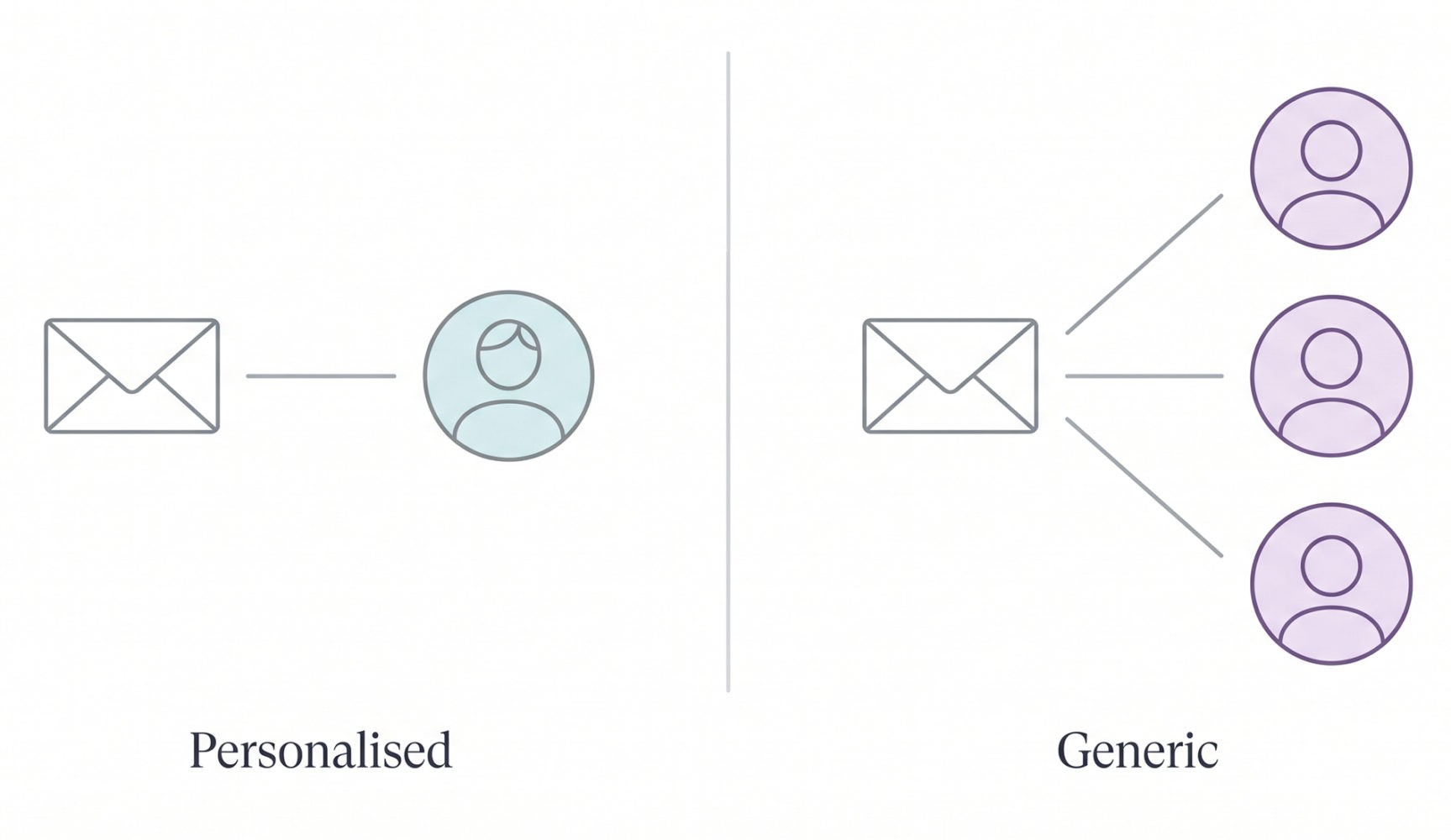
A pitch that lands is one that connects your news or perspective to something the recipient has been working on recently. That means knowing their recent articles, recent podcast episodes, recent newsletter issues. Without that research, your outreach reads as generic and gets ignored.
Writing something that feels personal
Most outreach breaks down at exactly this point. The difference between a pitch that gets a response and one that gets deleted is almost always specificity. Generic openers, generic value propositions, generic calls to action pattern-match to spam in the recipient’s brain within the first two sentences.
Following up without dropping the thread
Media contacts are busy. A first pitch that does not get a response does not necessarily mean disinterest. A well-timed follow-up that adds something new often converts contacts the first email did not. Managing that across multiple contacts without a system means most follow-ups simply never happen.
What This Looks Like in Practice
Consider the approach taken by teams that have grown primarily through earned media rather than paid acquisition. Rather than broad ad spending, they build deliberate contact lists of journalists and podcast hosts active in their specific space, keep those lists updated monthly, and send short personalized pitches that reference the contact’s recent work. The result — consistently across teams that do this well — is steady newsletter features and podcast appearances that build recognition in exactly the right audience, without a PR agency or a dedicated communications hire.
Their approach reflects what audience research consistently shows: people pay far more attention to sources they already follow than to direct brand messaging. SparkToro, an audience intelligence platform, is built on this premise, that the most effective marketing reaches people through the publications and personalities they already trust. Building relationships with those trusted voices is one of the highest-leverage things a small team can do.
A Tool Worth Looking At for Teams Ready to Systemize This
Once you have a clear sense of what good outreach requires, the next question is how to make it repeatable without it consuming disproportionate team time. Tools worth evaluating in this space include Prowly, Muck Rack, and Magic Pitch, among others. Magic Pitch in particular has gained attention from growth-focused teams for its combination of contact discovery and AI-generated pitch drafting.
Magic Pitch is a PR, podcast, and newsletter outreach platform that handles the parts of the process most teams find hardest to systematize: contact discovery, personalized pitch generation, and automated follow-ups. You describe who you want to reach in plain language and the platform searches a database of 700,000 plus journalists, 3.8 million podcasts, and Substack newsletter authors, then generates a personalized pitch for each contact based on their recent coverage.
What makes it useful for teams specifically is that it fits into a workflow rather than requiring one person to own the whole process manually. The research and drafting get handled by the platform. The team member responsible reviews the output, adds any context only they would know, and approves the send. Follow-ups run automatically after that.
It is not the only option in this space, and no tool replaces the judgment of someone who understands their story and audience well. But for teams that have the right narrative and want a more structured way to get it in front of the right people, it is worth exploring.
Fitting Outreach Into Your Team’s Existing Workflow
For teams already using project management and collaboration tools, external outreach does not need to be a completely separate activity. Here is how it tends to fit most naturally:
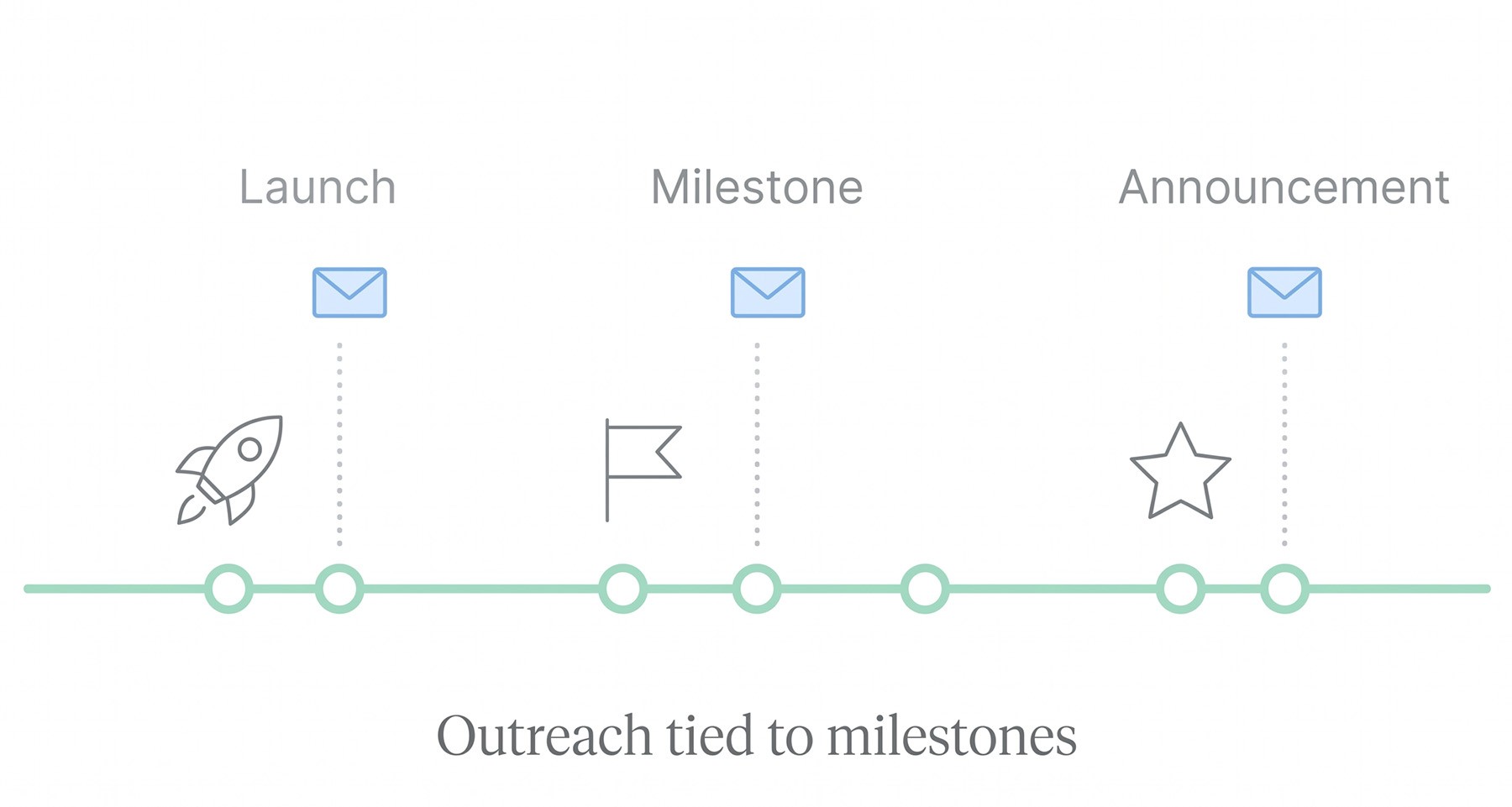
Tie outreach to project milestones
Product launches, new feature releases, funding announcements, significant customer milestones. These are natural triggers for media outreach. Building outreach tasks into the same project planning where the milestone lives means it does not get forgotten in the rush of delivery.
Assign clear ownership
Outreach falls through the cracks when it is everyone’s responsibility and therefore no one’s. Assigning a specific team member to own the outreach workflow for a given campaign, with tools handling the research and drafting, means someone is accountable without it becoming a full-time job.
Treat it as ongoing, not a one-off
The teams that get the most from media outreach do it consistently rather than in bursts around major launches. Regular outreach builds familiarity over time. A journalist who has seen your name a few times is far more likely to respond than one receiving a cold pitch with no prior context.
Review before sending
Even with AI handling research and drafting, the best results come when a team member reviews each pitch before it goes out. Adding a specific detail that only your team knows, a piece of traction data, a customer insight, a market observation, makes the difference between a pitch that reads as thoughtful and one that reads as automated.
The Productivity Case for Getting This Right
There is a productivity argument for systematising external outreach that often gets overlooked.
When outreach is unstructured, it creates invisible overhead. Research on knowledge work productivity supports this: a 2022 study cited by Harvard Business Review found that the average digital worker toggles between applications and tasks nearly 1,200 times per day, losing the equivalent of five working weeks a year to context-switching alone. Tasks without clear ownership or defined process create the same kind of fragmentation. They occupy mental bandwidth even when no one is actively working on them. Giving external outreach its own workflow and tooling reduces that overhead and makes the activity easier to improve over time.
What Changes When Teams Take This Seriously
Teams that build external outreach into their regular workflow rather than treating it as an afterthought tend to see a few things change over time.
Their products and projects get discovered by audiences they would never have reached through organic search or paid channels alone. Their brand credibility builds in a way that makes every other marketing activity more effective. And the relationships they build with journalists and podcast hosts grow more valuable over time — a journalist who has covered you once is far more likely to cover you again.
None of this requires a PR agency or a massive time investment. It requires a systematic approach and the right tools to make that approach repeatable.
Earned media and search visibility also reinforce each other in a way that’s worth planning for. Every press mention or newsletter feature that links back to your site contributes to domain authority, and teams that pair a consistent outreach program with an agency that specializes in SEO link building services tend to find that both efforts compound over time, making their content rank better and their brand harder to ignore.
Internal collaboration tooling has been a solved problem for digital teams for years. External outreach is the workflow that most teams have not solved yet. The tools exist, the approach is learnable, and the teams that build this habit now will have a meaningful visibility advantage over the ones that keep putting it off. Magic Pitch is one option worth adding to your evaluation list when you are ready to make that move.
About the author:
Ruhail Amin is a B2B marketing specialist with four years of experience helping SaaS teams and digital agencies build earned media programs. He has led PR and outreach campaigns for B2B companies and writes regularly about the intersection of marketing operations and team productivity.