



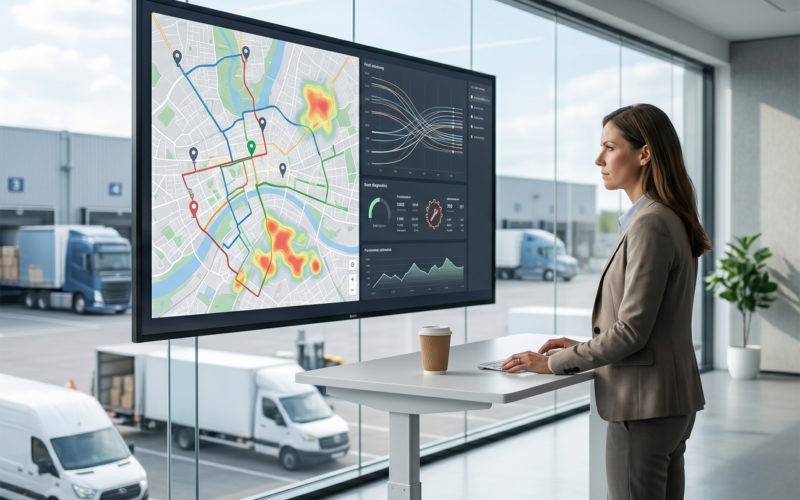
When a dispatcher has to call five drivers just to find out where they are, the day is already off track. Real-time fleet visibility gives dispatchers, supervisors and drivers a shared operational picture instead of scattered updates and guesswork. Location data, vehicle status and job progress flow automatically into one system, so teams stop relying on constant calls, texts and manual check-ins.
Fleet managers can track vehicles, optimize routes and reassign jobs in minutes rather than hours, reducing idle time and improving on-time performance. When paired with clear workflows, field teams gain enough context to make decisions on the spot without waiting for instructions. Fewer interruptions, faster response times and a more predictable workday follow naturally for both drivers and coordinators.
What Fleet Visibility Really Means
Live tracking is more than dots on a map. Modern systems combine GPS location, speed, ignition status and diagnostic data into one continuous operational feed. Dispatchers see where each vehicle is, how drivers are following routes and which jobs still need attention.
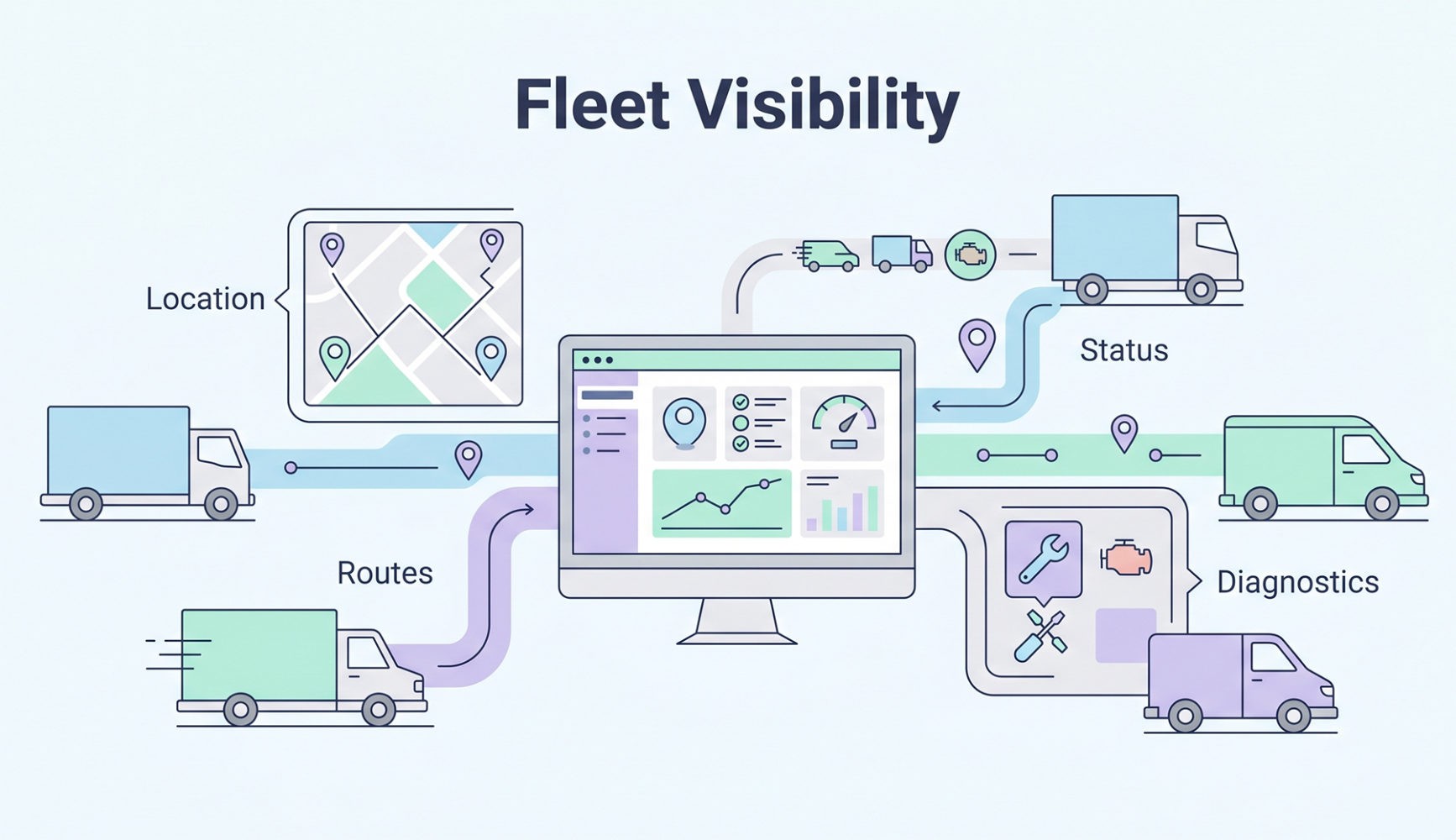
That creates a live record of the day’s activity. Managers can review route histories, stop durations and arrival times, giving them an accurate picture of how field teams actually work, not just how schedules look on paper. Rather than collecting updates manually, they are alerted to exceptions such as late arrivals, unexpected stops or vehicles running behind schedule, so they step in only when something genuinely needs attention.
It’s worth being clear about what visibility does and doesn’t fix. It will not correct unrealistic schedules, inefficient territories or inconsistent service processes on its own. What it provides is a reliable foundation for identifying problems earlier and responding to them with better information.
Why Constant Check-Ins Slow Teams Down
Manual check-ins exist to fill information gaps. When managers cannot see vehicles or job progress, they compensate with frequent calls, emails and texts. Those interruptions pull drivers and technicians out of their workflow and produce fragmented communication that nobody fully trusts later.
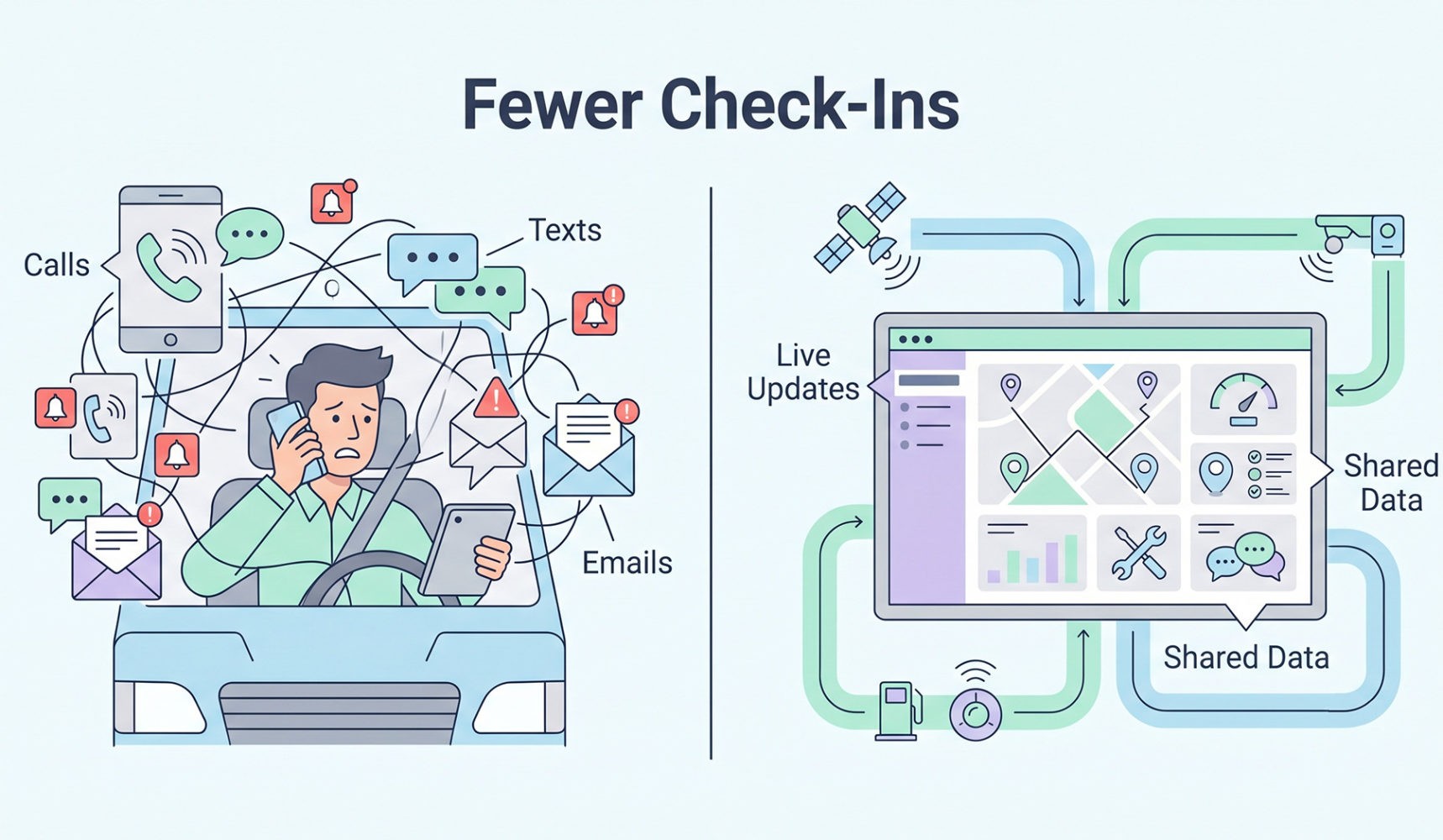
Constant check-ins also introduce inconsistency. Two supervisors might log the same issue in different spreadsheets. Messages go unread during busy periods, and details get lost during shift handoffs. Over time, these gaps lead to duplicated trips, missed appointments and reactive overscheduling. Fleet visibility addresses those gaps at the source by turning live data into a single operational record that every manager can reference.
How Real-Time Visibility Speeds Up Field Work
Fewer Status Calls, More Actionable Context
When dispatchers can see live locations and current job statuses, they no longer need to ask “Where are you?” or “Did you arrive yet?“ Dashboards show which tasks a driver has completed and which stops still need attention.
That context shifts communications toward decisions rather than status checks. Managers call only when they need to reprioritize jobs, handle a customer escalation or confirm a change in plans. Drivers spend more time driving and serving customers instead of answering questions they have already answered.
Faster, Smarter Routing Decisions
Live tracking also improves routing. When every vehicle is accounted for, dispatchers can assign new jobs to the closest qualified driver rather than guessing from a static schedule. When traffic or an incident slows a route, managers can reroute vehicles and update estimated arrival times before customers experience a delay.
Over time, historical route and stop data reveal useful patterns: recurring bottlenecks, locations that consistently take longer than scheduled, or territories that regularly run over capacity. Operations teams can use that information to redesign routes, reduce overlaps and cut unproductive mileage, all of which further reduces the need for mid-day coordination.
Better Alignment Between Office and Field
Fleet visibility tools help office staff and field teams stay aligned. Dispatchers can see when a vehicle arrives and departs, how long a stop takes and whether drivers are following planned routes. That shared record builds trust because both sides reference verified data rather than subjective recollections.
With that shared view, organizations move away from “prove what happened“ conversations and toward “how do we improve this process“ discussions. Managers use the data to refine time windows, adjust staffing and clarify service commitments, rather than increasing check-ins to chase information after the fact.
Reducing Check-In Delays Through Better Communication Design
Replacing Ad Hoc Updates With Structured Data
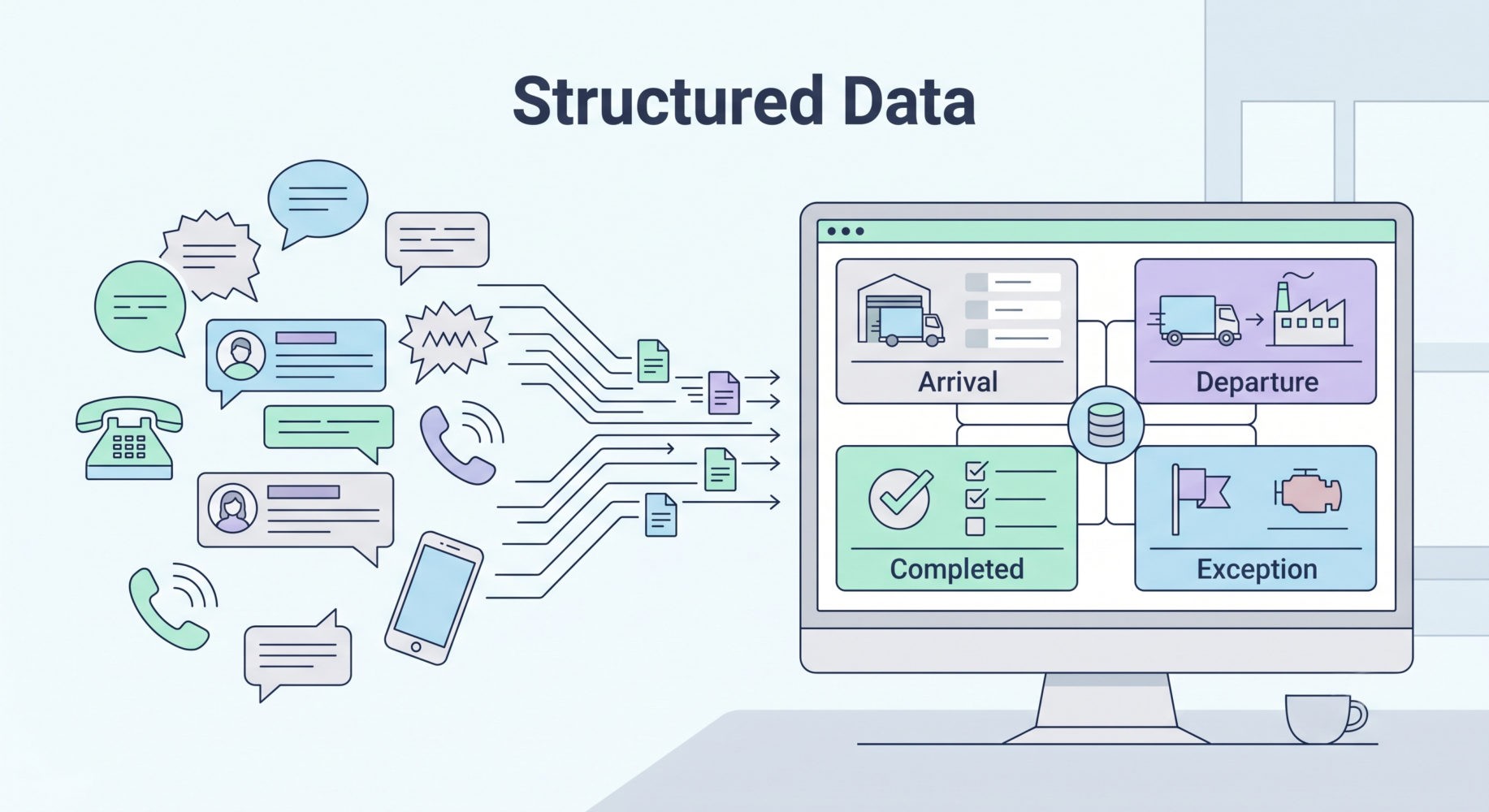
High-performing fleets replace informal status updates — calls, texts, group chats — with structured data entry: status codes, digital forms and standardized job-completion steps recorded directly in the platform. Arrival, departure, job completion and exception reasons all flow in as discrete fields, not free-text messages.
This structure lets teams filter and prioritize effectively. Dispatchers can quickly identify jobs at risk, vehicles running behind schedule or key customers still awaiting service. Instead of chasing general updates, they respond to specific issues flagged by the system.
Giving Field Teams the Information They Need Up Front
This kind of visibility also reduces interruptions when organizations push context to the field rather than pulling status from it. Before the day begins, drivers and technicians can access optimized routes, customer details, site-access notes and historical visit data.
When field teams start the day with reliable directions and clear instructions, they ask fewer clarifying questions mid-route. Real-time updates to schedules and assignments appear directly in their mobile apps, so they can pivot to new priorities without waiting for a call.
Data Insights Help Teams Stay Ahead of Delays
Tracking generates a continuous stream of operational data. When organizations analyze that data, they can identify the root causes of recurring delays. They may discover, for example, that certain customers routinely add unplanned work, or that traffic patterns in specific areas make some appointment windows unrealistic.
Operations teams can then adjust policies and workflows accordingly: refining service windows, redesigning routes or adding buffer time for high-variability stops. Teams that track metrics such as on-time arrival rate, average stop duration and idle time typically find that as those numbers improve, the need for manual check-ins drops, because everyone trusts the system to reflect reality.
The Role of Technology in Streamlining Check-Ins
Modern fleet visibility relies on a combination of software and hardware. Many organizations use GPS tracking devices that transmit vehicle location, movement and sometimes diagnostic data at frequent intervals. Mapping and fleet management software aggregates that information, overlays it on routes and triggers alerts when vehicles deviate from expected patterns.
These tools also integrate with dispatch, maintenance and work-order systems. When a dispatcher updates a schedule or assigns a new job, the change appears immediately for the driver. When a driver completes a task, the system records it automatically as part of the digital workflow. This closed loop of data and actions removes many of the manual touchpoints that previously required back-and-forth communication.
Practical Steps to Use Visibility to Reduce Check-Ins
Business professionals who oversee field operations can take several practical steps to turn fleet visibility into faster, less-interrupted workdays:
- Define the specific questions you want visibility to answer, such as “Which jobs risk late drivers?” or “Which routes run consistently over time?”
- Map your current check-in moments and identify which ones exist only to fill information gaps that technology can cover.
- Standardize how drivers report status through mobile apps or in-vehicle systems, using consistent codes and forms.
- Configure alerts and dashboards that surface only exceptions, so dispatchers focus on issues that truly need attention.
- Train teams to rely on shared dashboards as the primary source of truth for daily operations.
With these practices in place, check-ins become targeted problem-solving conversations instead of routine status updates.
Bringing It All Together
Fleet visibility transforms how field teams coordinate their work. When managers and drivers share a live picture of vehicle locations, route progress and job status, constant check-ins give way to focused, data-driven decisions. Dispatchers assign jobs more intelligently, drivers follow clearer routes with fewer interruptions and supervisors spend more time improving processes than collecting updates.
GPS tracking and integrated fleet management software are now within reach for most operations teams. The organizations getting the most from them are those that pair the tools with clear communication workflows, so the data actually changes how decisions get made, across every shift, not just in theory.
About the author
Robert Hall, Jr., leads Track Your Truck, Inc. as Vice President of Sales and Marketing. Hall’s commitment is to driving revenue growth and expanding the company’s market presence. He is passionate about helping companies optimize their operations with advanced fleet tracking software, while also providing friendly support and an easy user experience.