




For years, business software has followed a simple pattern: humans click buttons, software responds. Even the first wave of AI fit that model, you asked a chatbot a question, it generated text, and you copied the result somewhere else. The human stayed in the driver’s seat throughout. Agentic AI changes that.
Instead of simply answering prompts, agentic systems can make decisions, take actions, use tools, adapt to changing conditions, and complete multi-step tasks with limited supervision. In practical terms, AI is moving from assistant to operator.
That shift is already affecting how teams work. Marketing departments are experimenting with AI agents that run campaigns end-to-end. Customer support teams are deploying systems that resolve tickets without human intervention. Operations teams are using AI that monitors workflows and intervenes automatically when problems appear.
The hype around agentic AI is enormous. Some vendors describe it as the beginning of fully autonomous companies. Others dismiss it as old automation with a new label.
The reality is more specific, and more useful, than either extreme suggests.
Agentic AI is important, but not for the reasons most people assume. Its biggest impact will not come from replacing entire departments overnight but from quietly absorbing the hundreds of small operational decisions that currently consume human attention every day.
That distinction matters because it changes how businesses should adopt it, and how teams should prepare.
What ”Agentic AI” Actually Means
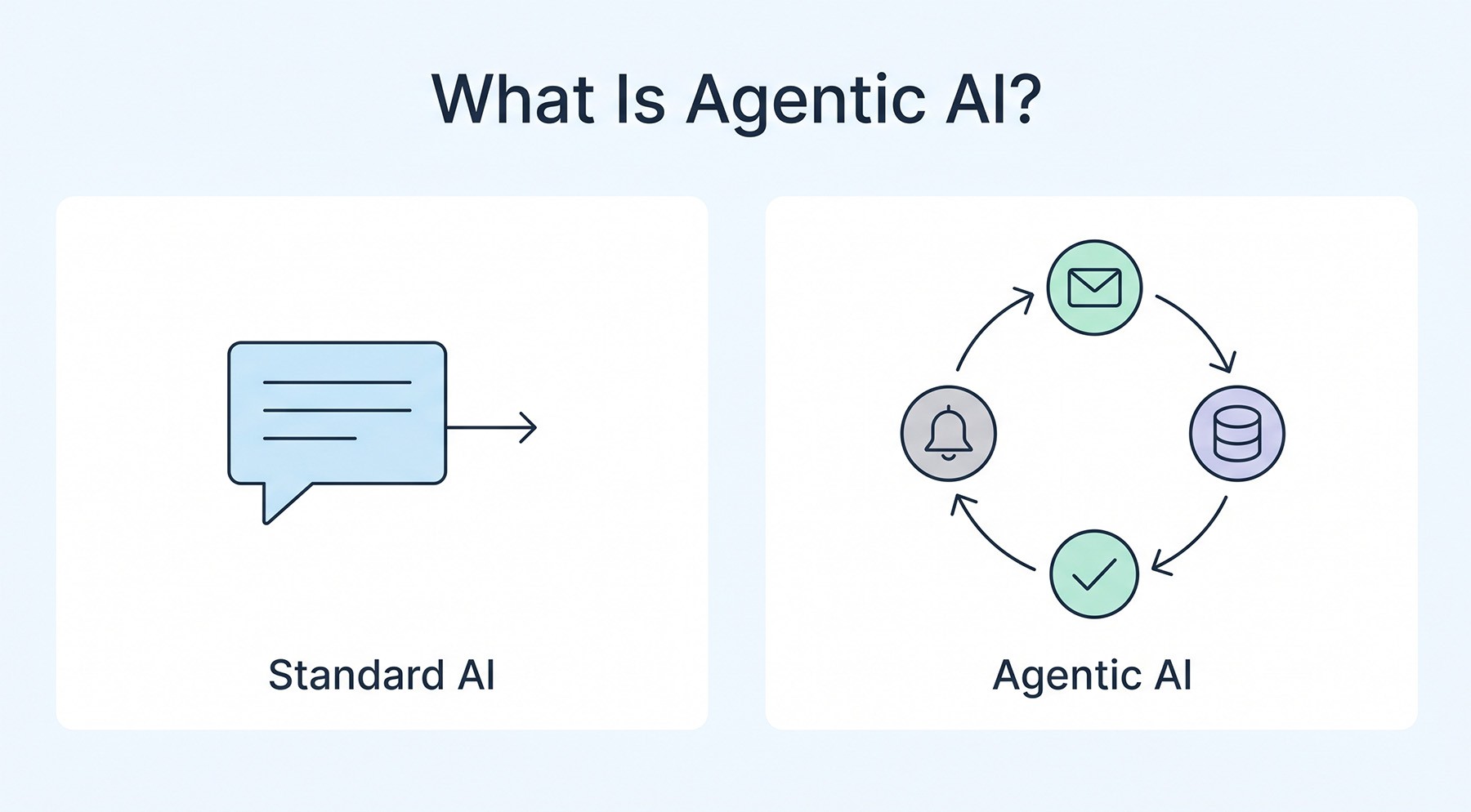
The term sounds more complicated than it is.
An AI system becomes ”agentic” when it can pursue a goal and take actions to achieve it without requiring constant human direction.
A traditional chatbot waits for instructions. An agentic system can plan, act, evaluate results, and continue working toward an objective.
Think of the difference this way:
- A standard AI assistant writes an email draft.
- An agentic AI system identifies overdue invoices, drafts reminder emails, sends them, tracks responses, escalates unresolved cases, and updates the CRM — automatically.
The key difference is autonomy. Not full autonomy in the science-fiction sense, but practical autonomy within defined boundaries.
Most agentic systems combine several capabilities:
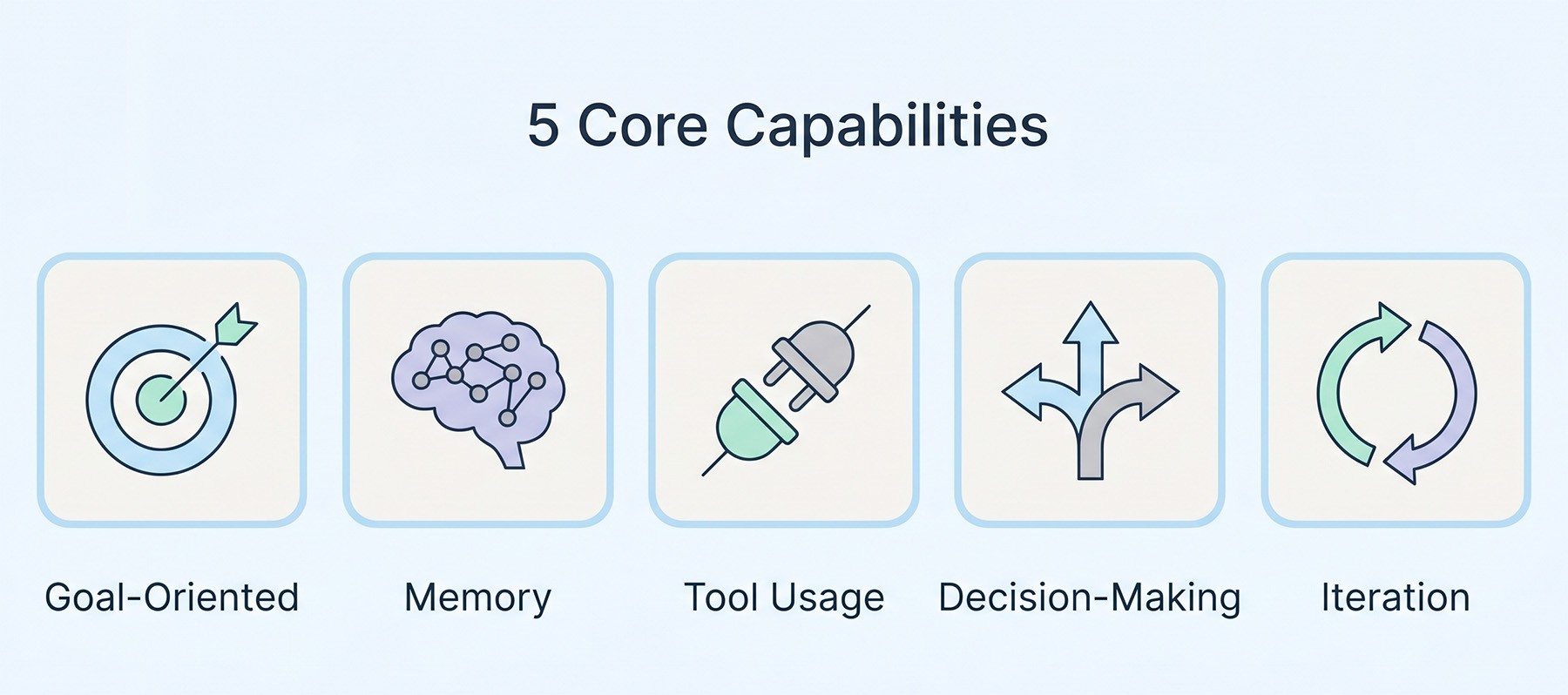
Goal-Oriented Behavior
The system works toward an outcome instead of responding to a single request. Instead of ”write a summary,” the objective might be ”reduce customer churn” or ”schedule qualified sales meetings.”
Memory and Context
Agentic systems retain information across tasks. They remember prior actions, outcomes, and constraints. That continuity allows them to handle complete workflows rather than isolated prompts.
Tool Usage
Modern AI agents can interact directly with external software — CRM platforms, email systems, project management tools, databases, analytics dashboards, APIs, and internal knowledge bases. This is what makes them operationally useful.
Decision-Making
Agents can evaluate options and choose actions based on rules, probabilities, or feedback loops. An AI sales agent, for example, might decide whether a lead should receive a follow-up email, a discount offer, or escalation to a human representative.
Iteration
Agentic systems can check their own outputs and revise actions when needed. Real business processes rarely succeed in a single step, and agentic AI is designed with that in mind.
Why Businesses Are Paying Attention Now
The concept itself is not entirely new. Businesses have used automation tools for decades.
What changed is the convergence of three developments: large language models became dramatically more capable; AI systems gained reliable access to external tools; and businesses accumulated massive amounts of operational data.
Earlier automation systems struggled outside rigid workflows. They broke when inputs changed slightly. They required expensive rule-based programming. Agentic AI is more flexible because language models can interpret messy human information — emails, support tickets, meeting notes, chat messages, documents, and spreadsheets. That flexibility expands the range of tasks AI can realistically handle.
The business interest is not driven by novelty alone. It is driven by operational pressure.
A May 2025 PwC survey of 300 senior executives found that 79% of organizations had already adopted AI agents at some level, with 66% of adopters reporting measurable productivity gains. Venture capital tells a similar story: a Prosus/Dealroom report found that agentic AI startups attracted $2.8 billion in global VC funding in the first half of 2025, with the category projected to account for roughly 10% of all AI funding rounds for the year.
Teams are overloaded, and that is the real driver. Most professionals spend a significant portion of their day coordinating work rather than doing high-value work: updating systems, chasing approvals, managing inboxes, routing information, checking status updates, and handling repetitive decisions. Agentic AI targets exactly those layers of friction.
The Insight Most Discussions Miss: It’s About Initiative, Not Intelligence
The breakthrough is not that AI suddenly became brilliant. The breakthrough is that AI can now initiate and execute tasks across systems.
That sounds subtle, but it reshapes what AI is useful for.
Businesses do not lose time because employees lack intelligence. They lose time because work fragmentation creates constant coordination overhead. A marketing campaign involves planning, approvals, asset creation, scheduling, analytics, reporting, revisions, and follow-ups. The problem is not knowledge scarcity. It is workflow complexity.
Agentic AI reduces the number of human handoffs required to keep work moving. That is why even relatively imperfect AI systems can still create significant business value. An AI agent does not need advanced reasoning to categorize tickets, schedule meetings, monitor inventory, route requests, generate reports, identify anomalies, trigger workflows, or send reminders. It just needs to operate reliably at scale.
In my work I have seen this play out consistently: the teams extracting the most value from AI agents are not the ones chasing maximum automation. They are the ones identifying narrow operational loops where AI can run reliably, and starting there.
This also explains why businesses deploying agentic AI successfully tend to automate specific processes first, rather than attempting fully autonomous departments from day one.
How Agentic AI Works in Practice
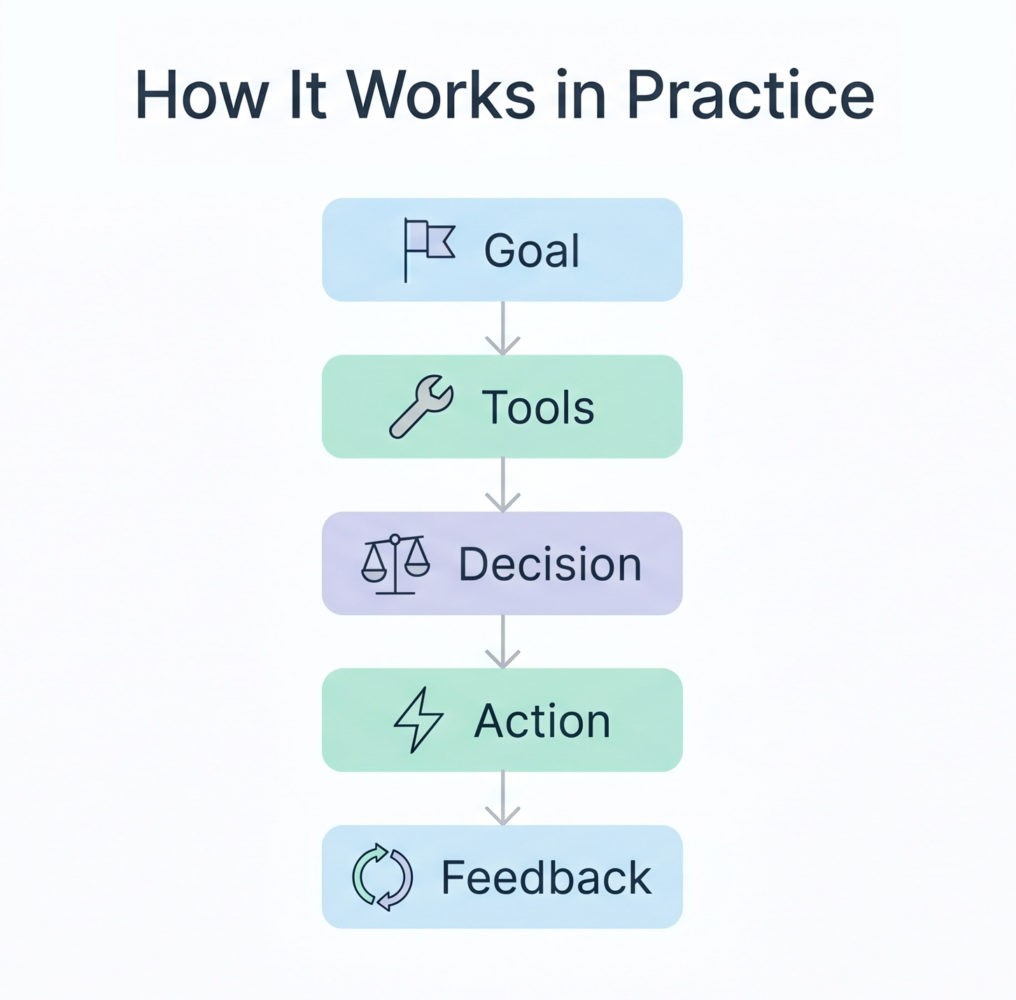
Most business teams interact with agentic AI through layered systems rather than standalone tools. A typical setup works like this:
| 1. A Goal or Instruction | Example: ”Reduce response time for customer support tickets.” |
| 2. Access to Tools | The AI connects to help desk software, internal documentation, communication platforms, and analytics systems. |
| 3. Decision Logic | The agent evaluates urgency, customer history, sentiment, issue category, and escalation thresholds. |
| 4. Action Execution | The system drafts replies, resolves simple requests, escalates complex issues, updates records, and notifies managers as needed. |
| 5. Feedback Loops | The AI monitors outcomes and adjusts future behavior accordingly. |
This matters because agentic AI is not just generating content. It is participating in workflows. That operational role introduces both opportunity and risk.
An Example: Customer Support Operations
Consider a mid-sized ecommerce company handling thousands of support tickets weekly.
The traditional workflow looks something like this: a customer submits a ticket; support staff categorize the issue; someone checks order history; another employee verifies refund eligibility; a response is drafted; and records are updated manually. Even efficient teams lose significant time through coordination alone.
Now imagine an agentic AI system integrated with the ecommerce platform, shipping data, CRM records, refund policies, and support documentation. The AI classifies the issue, verifies shipment status, determines refund eligibility, generates a compliant response, processes the refund, updates records, and escalates only exceptional cases.
The result is not necessarily fewer support employees. In most cases, it means support staff spend less time on routine processing and more time on edge cases, retention opportunities, and complex customer relationships. This is role reshaping rather than wholesale replacement, and it is the most realistic near-term effect of agentic AI for most teams.
Where Agentic AI Delivers the Most Value
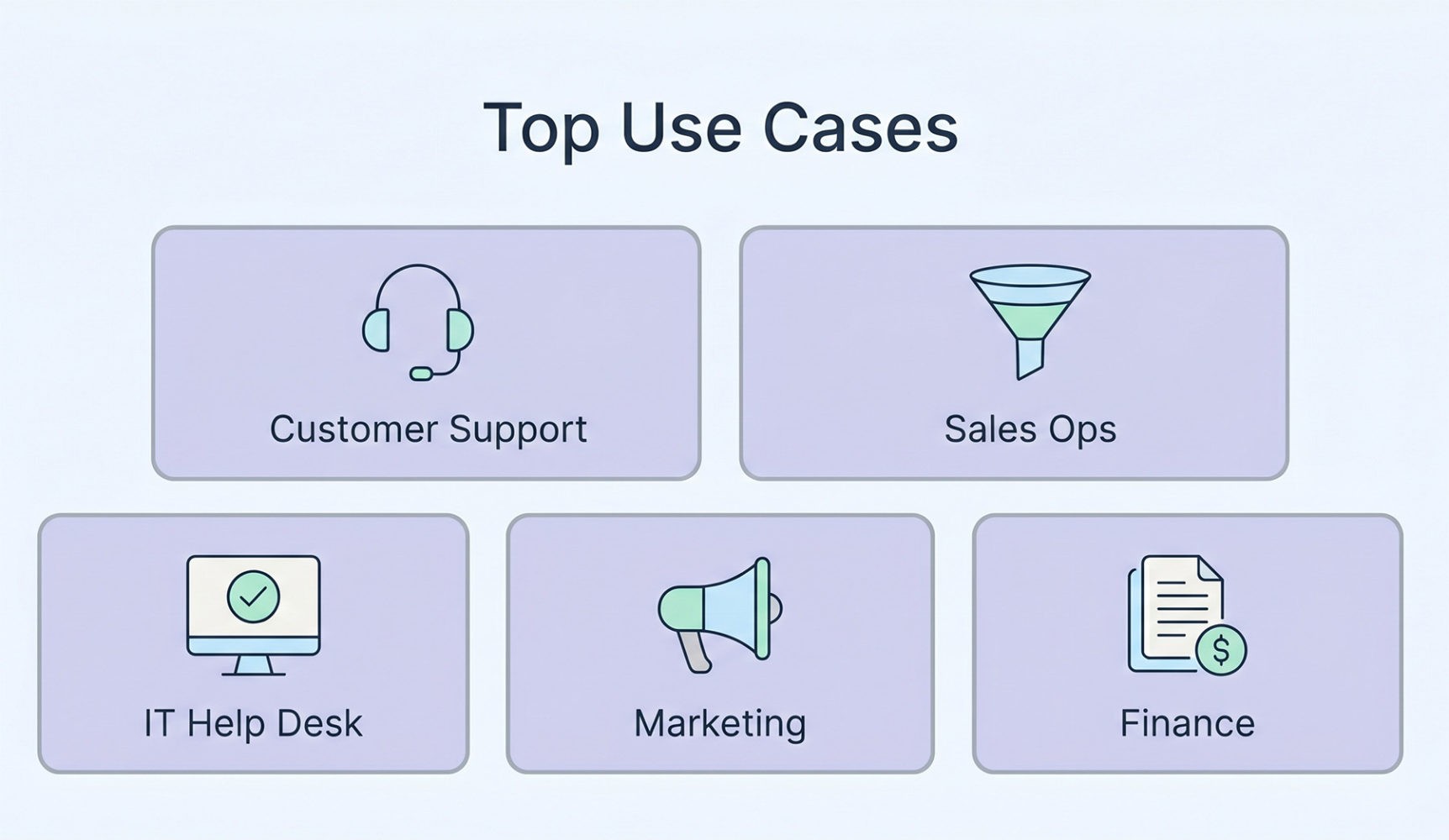
Not every workflow benefits equally. The strongest use cases tend to share three characteristics: repetitive decisions, structured goals, and high coordination overhead.
Customer Support
Triage tickets, resolve common requests, summarize conversations, escalate intelligently, and monitor service quality. This is one of the most mature adoption areas because the workflows are already highly structured. It is also where I see the clearest ROI in the shortest timeframe.
Sales Operations
Qualify leads, personalize outreach, update CRM records, schedule meetings, and monitor pipeline risks. The operational burden around sales is often larger than the actual selling itself.
Internal IT and Help Desks
Handle password resets, access requests, troubleshooting steps, ticket routing, and compliance checks. These workflows follow repeatable logic, making them strong automation candidates.
Marketing Operations
Coordinate campaigns, repurpose content, monitor performance, trigger follow-ups, and manage audience segmentation. The opportunity is less about replacing marketers and more about removing production bottlenecks. See how AI is already reshaping content workflows for a practical look at this in action.
Finance and Procurement
Invoice processing, expense validation, vendor communication, anomaly detection, and procurement workflows. Finance teams operating under heavy process constraints benefit particularly from this kind of structured automation.
The Risks Businesses Should Not Ignore
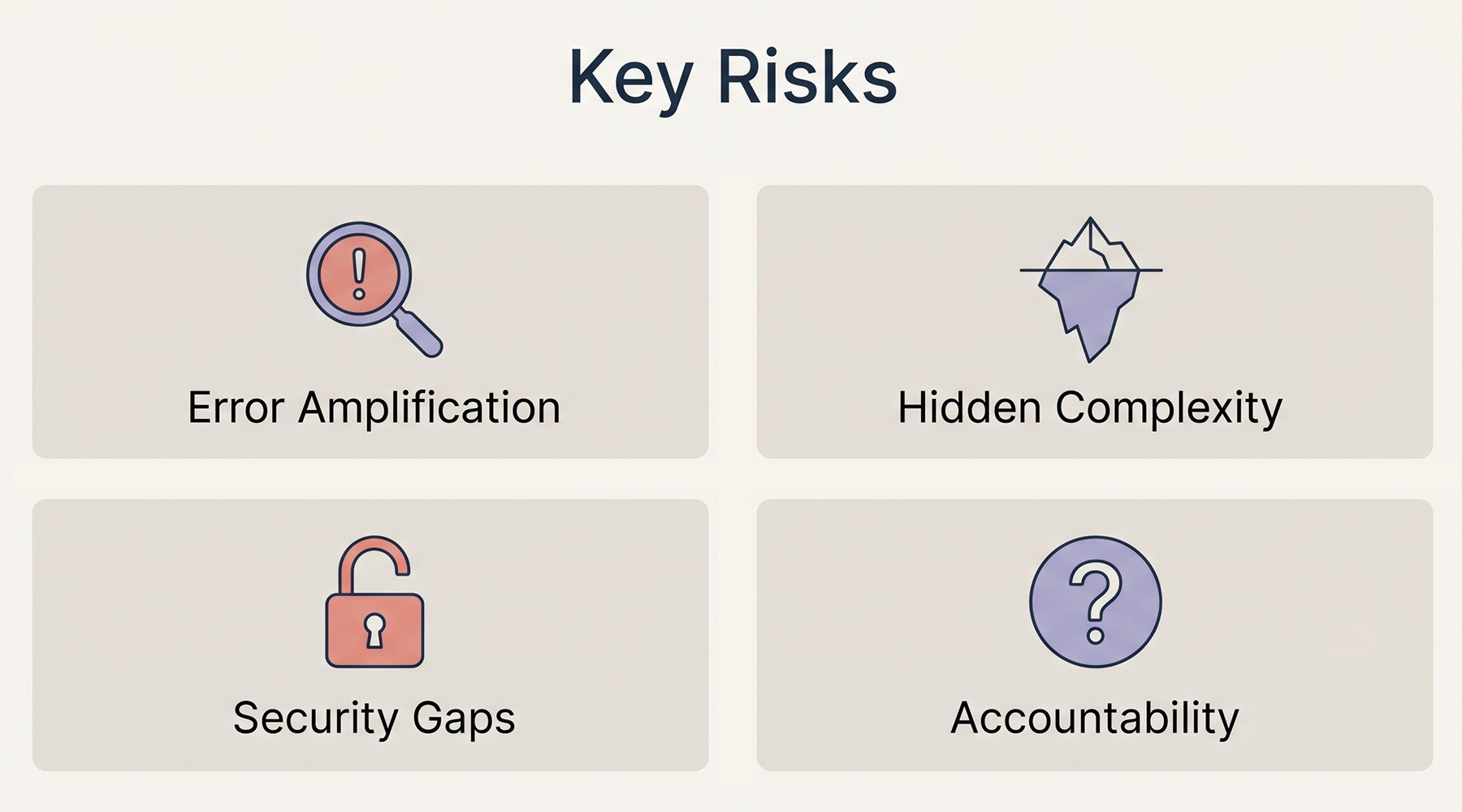
The biggest mistake companies make is treating agentic AI as simply a smarter chatbot. Once AI systems can act independently, the risk profile changes significantly.
Error Amplification
A mistaken AI-generated paragraph is annoying. A mistaken AI action can trigger refunds, send incorrect communications, alter records, or create compliance issues. The stakes rise considerably when systems gain operational authority.
Hidden Complexity
Many workflows appear simple until edge cases emerge. Businesses consistently underestimate how much informal human judgment exists inside ”routine” processes.
Security and Permissions
An AI agent connected to multiple business systems can become a significant security concern. Questions around access control, auditability, and oversight become critical rather than optional. McKinsey’s State of AI 2025 report found that cybersecurity and inaccuracy are among the most frequently cited AI risks as adoption expands, and that high-performing organizations stand out for the governance and human-in-the-loop controls they build around AI.
Compute and Token Costs
A single chatbot reply is one model call. An agentic workflow is often a chain of them — planning, tool invocations, intermediate reasoning, self-correction, and retries — and those tokens add up quickly. Teams that successfully deploy agents tend to monitor compute spend the same way they monitor cloud infrastructure: with dashboards, per-workflow cost ceilings, and a clear view of which tasks are worth the inference budget. Without that discipline, a “successful” pilot can become surprisingly expensive at scale.
Hallucinations Still Matter
Language models still generate incorrect information with confidence. That becomes more dangerous when outputs drive actions rather than drafts.
Accountability Problems
Who is responsible when an AI agent makes a poor decision? This is especially pressing in regulated industries. Businesses adopting agentic AI without clear governance structures are likely to create operational instability rather than efficiency.
Why Some Teams Will Benefit More Than Others
One overlooked reality is that agentic AI rewards organized businesses.
Messy companies struggle to automate messy processes. If workflows are undocumented, systems are disconnected, permissions are inconsistent, and data quality is poor, agentic AI often magnifies chaos instead of reducing it.
Companies that invested in operational discipline and structured workflows over the past decade may benefit disproportionately from AI agents because their systems are already structured enough for automation. Businesses with fragmented operations may discover that their real bottleneck is not AI capability. It is internal process maturity.
In other words, agentic AI often exposes organizational weaknesses before it solves them. Addressing those weaknesses first is not a detour. It is the prerequisite.
How Business Teams Can Start Using Agentic AI Today
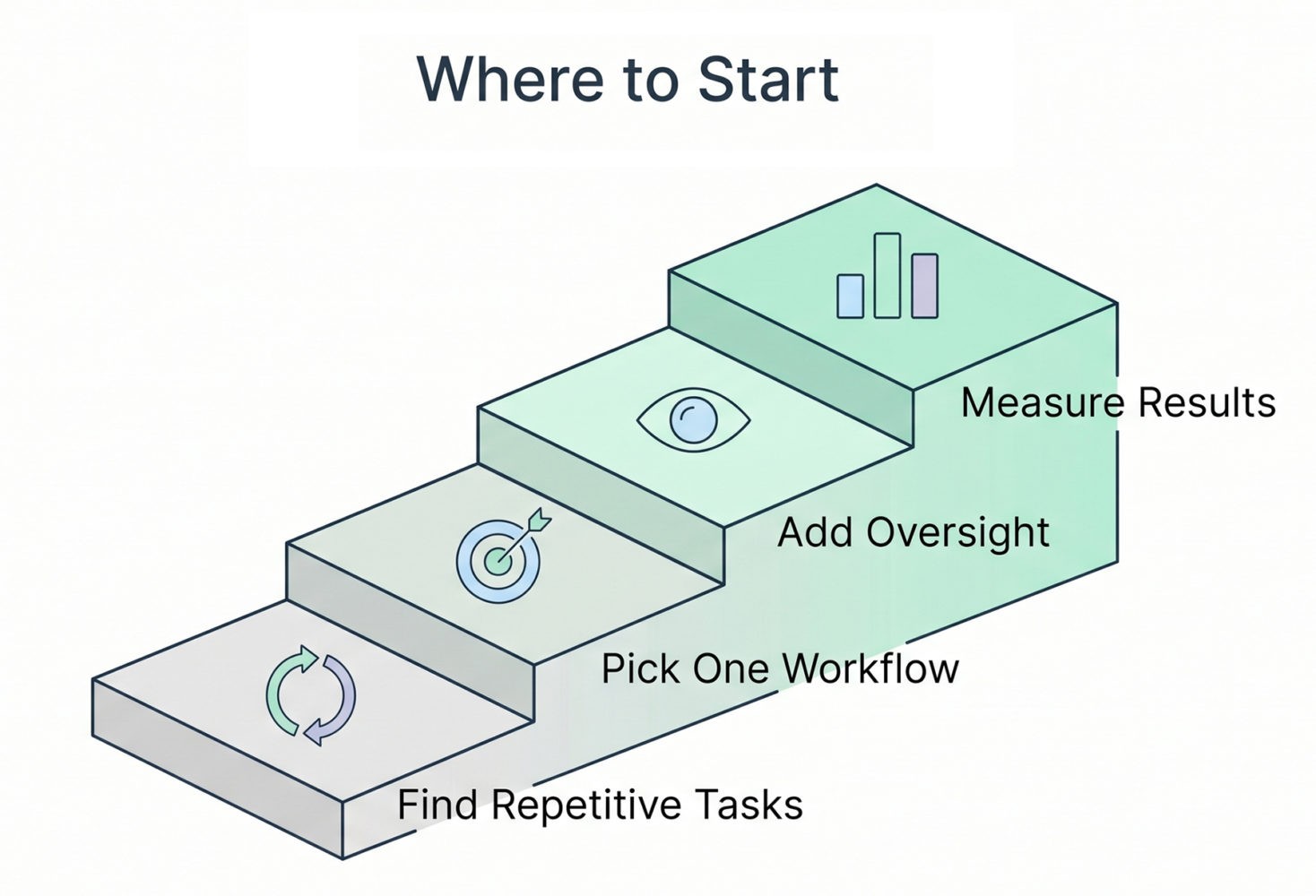
Most companies do not need a massive AI transformation strategy to begin seeing value. A better approach is targeted experimentation.
Start with repetitive coordination work
Look for workflows where employees regularly copy information between systems, route requests, check statuses, send reminders, update records, or summarize information. These are strong automation candidates.
Choose narrow use cases first
Avoid broad objectives like ”automate customer service.” Start with something specific: ”Automatically resolve shipping-delay tickets under predefined conditions.” Specificity dramatically improves reliability.
Keep humans in the loop initially
Early deployments should prioritize supervision. AI agents work best when humans review outputs, monitor edge cases, handle exceptions, and refine workflows. Full autonomy should be earned gradually.
Audit your existing processes first
Before deploying AI agents, document decision points, escalation paths, exceptions, dependencies, and approval requirements. This exercise alone often reveals operational inefficiencies worth fixing before automation. The principles behind customizable, well-designed workflows apply directly here.
Measure operational outcomes
Track response times, throughput, error rates, employee workload, customer satisfaction, and resolution speed. The goal is business improvement, not AI adoption for its own sake. Tools that combine AI with solid project management make that measurement much easier to maintain.
Build, Buy, or Use What You Already Have
Once a team identifies a workflow worth automating, the next question is almost always the same: should we build a custom agent or use something off the shelf?
For most business teams, the honest answer is: start with what you already pay for. The major platforms — Salesforce, HubSpot, ServiceNow, Microsoft, Google Workspace, Atlassian — have all embedded agentic features into their existing products. These are usually the lowest-risk starting point because the agent is already connected to the data, permissions, and audit trails your business runs on.
Custom-built agents, typically assembled on frameworks like LangChain, LlamaIndex, or direct model APIs, make sense when the workflow is genuinely specific to your business, the embedded options cannot reach the systems you need, or the economics justify the engineering investment. That bar is higher than most vendors suggest.
A reasonable sequence for most teams: use embedded agents first to learn what works, identify where they fall short, and only then consider custom builds for the gaps that matter.
What Agentic AI Means for Employees
Many professionals understandably worry about automation. Some tasks will disappear. But the larger shift, historically and in what I am observing across industries today, is task redistribution rather than total job elimination.
The more immediate change is that professionals will increasingly supervise, orchestrate, and collaborate with AI systems. Valuable skills are shifting toward judgment, process design, communication, exception handling, and system oversight.
Employees who understand workflows deeply may actually become more valuable, not less. Businesses need people who can determine where automation works, where it fails, where human intervention matters, and how systems should be governed. The companies that benefit most from agentic AI are unlikely to be the ones that remove humans fastest. They will be the ones that redesign work intelligently.
For a broader look at how AI tools are already changing day-to-day team productivity, the AI and productivity guide on this blog is worth reading alongside this piece.
The Bigger Shift: Software Interfaces May Start Disappearing
Today, employees often act as translators between disconnected systems, logging into platforms, moving information around, and manually coordinating processes. Agentic AI changes that dynamic because the AI can increasingly interact with software directly.
That could gradually reduce the importance of traditional dashboards and manual workflows. Instead of navigating multiple tools, professionals may increasingly define goals while AI handles execution across systems behind the scenes. Gartner projects that by 2028, 33% of enterprise software applications will include agentic AI, up from less than 1% in 2024.
Final Takeaway: Treat Agentic AI as Operational Infrastructure
Businesses should neither panic nor move without clear purpose. Agentic AI is not an all-knowing digital employee. It is a new operational layer that can reduce coordination overhead and automate structured decision-making.
The companies likely to benefit most are not chasing maximum automation immediately. They are identifying specific operational bottlenecks where AI agents can reliably improve speed, consistency, and execution, then building carefully from there.
For business teams, the practical question is not ”Will AI replace us?” It is: ”Which parts of our workflow should humans stop managing manually?”
That is the conversation worth having. And the teams that start experimenting now — carefully and with strong operational discipline — will build fluency that compounds over time.
About the author:
Anton Gora is an AI and software development specialist with 15 years of experience in technical strategy and hands-on implementation. He builds intelligent, scalable systems that combine advanced technology with practical, user-focused solutions across AI, system architecture, and product development.