




Can a developer really become a founder and build a U.S.-based tech startup as an international entrepreneur? The short answer is yes, but the path is more layered than most expect.
Take a backend engineer working remotely for global clients. Over time, they notice a recurring issue: small businesses struggle to manage distributed teams. They build a simple internal tool to solve it. That tool gains traction, friends start using it, and suddenly it looks like a real product. The next step feels obvious — turn it into a startup.
But then reality hits. Where should the company be registered? How do you access funding? What about visas? The gap between writing code and building a company widens fast.
That gap holds back many talented developers. The consequences are significant: great ideas stay as side projects. Promising products never reach global markets. Founders delay decisions until opportunities fade.
This article breaks down how developers make that leap — from coding solutions to building startups in the U.S. — and what international entrepreneurs need to consider along the way.
Why Developers Make Great Founders
Developers often underestimate how well their skills translate into entrepreneurship.
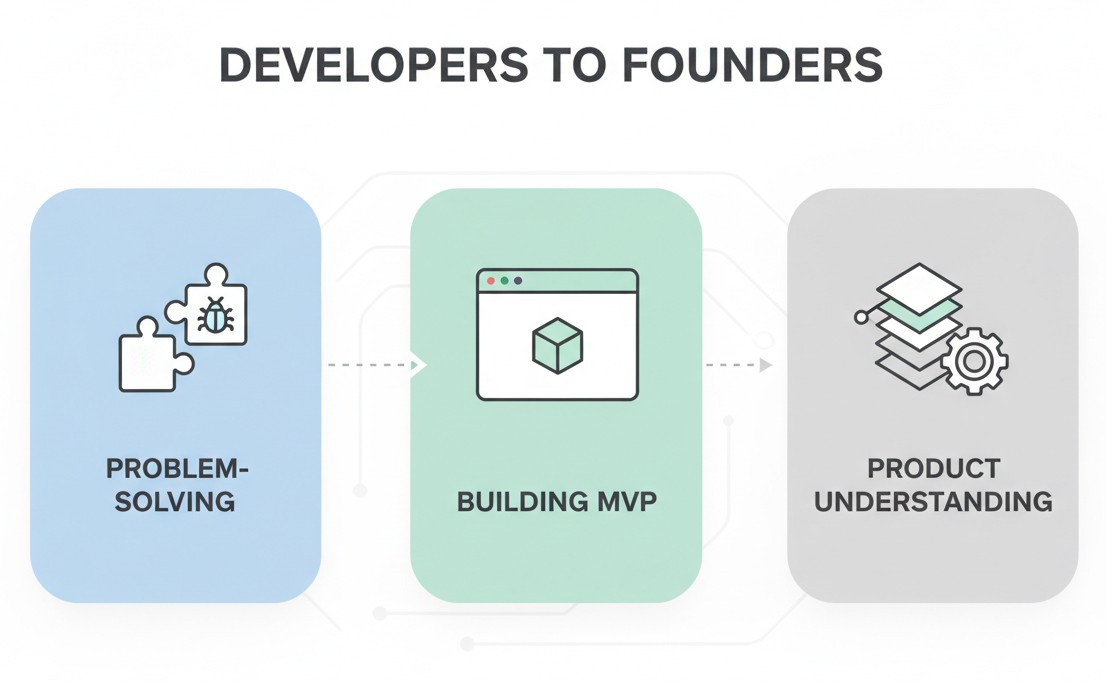
They Solve Real Problems First
Most startups fail because they build products nobody needs. Developers tend to start the opposite way. They solve problems they personally face, which often reflect broader market needs.
They Can Build Without Waiting
A non-technical founder needs a team from day one. A developer can build a minimum viable product (MVP) independently. That speed matters. It allows faster testing, iteration, and validation.
According to the latest CB Insights analysis, 43% of startups fail due to poor product-market fit (CB Insights, “Why Startups Fail: Top 9 Reasons”, March 2026). Developers can reduce this risk because they often start by solving real, personal use cases they’ve experienced themselves.
They Understand Product Deeply
Developers don’t just design features. They understand how those features work under the hood. That knowledge helps them make better decisions when scaling.
Still, technical strength alone isn’t enough.
The Leap From Writing Code To Building A Company
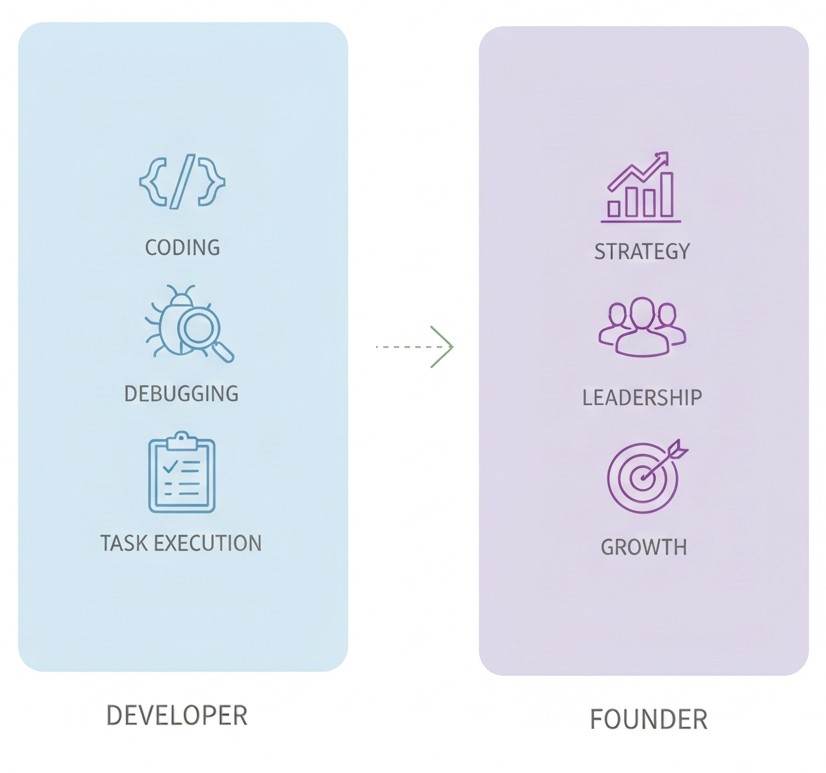
The transition from developer to founder changes how you think and work.
Shifting From Execution To Vision
Developers focus on solving defined problems. Founders define which problems are worth solving. That shift requires stepping back from code and thinking about users, markets, and growth.
Learning The Business Side
A founder needs to understand:
- Product-market fit
- Customer acquisition
- Revenue models
- Investor expectations
Y Combinator reports that startups that achieve strong product-market fit grow significantly faster and raise more capital (Y Combinator Library). Without it, even well-built products struggle.
Facing New Challenges
Developers moving into leadership roles often encounter:
- Difficulty delegating technical work
- Pressure to make non-technical decisions
- Managing teams instead of tasks
Consider a frontend developer who builds a SaaS product that gains early traction. Growth demands hiring engineers, handling customer support, and pitching investors. If they stay stuck in coding mode, progress slows. The company stalls.
Why The U.S. Remains A Top Launchpad For Startups
Despite the rise of remote work, the U.S. continues to dominate the startup landscape.

Access To Capital
The U.S. attracts a large share of global venture capital. According to PitchBook, U.S. startups raised over $170 billion in venture funding in 2023 (PitchBook Global VC Report). That level of funding creates opportunities that are difficult to match elsewhere.
Strong Startup Ecosystems
Cities like San Francisco, New York, and Austin offer:
- Dense founder networks
- Access to mentors and advisors
- Accelerators and incubators
These ecosystems help founders move faster and avoid common mistakes.
Legal And Infrastructure Advantages
The U.S. provides:
- Reliable intellectual property protection
- Established corporate structures
- A large and diverse customer base
For an international founder, these factors can significantly improve the chances of scaling a startup globally.
The Immigration Reality For International Founders
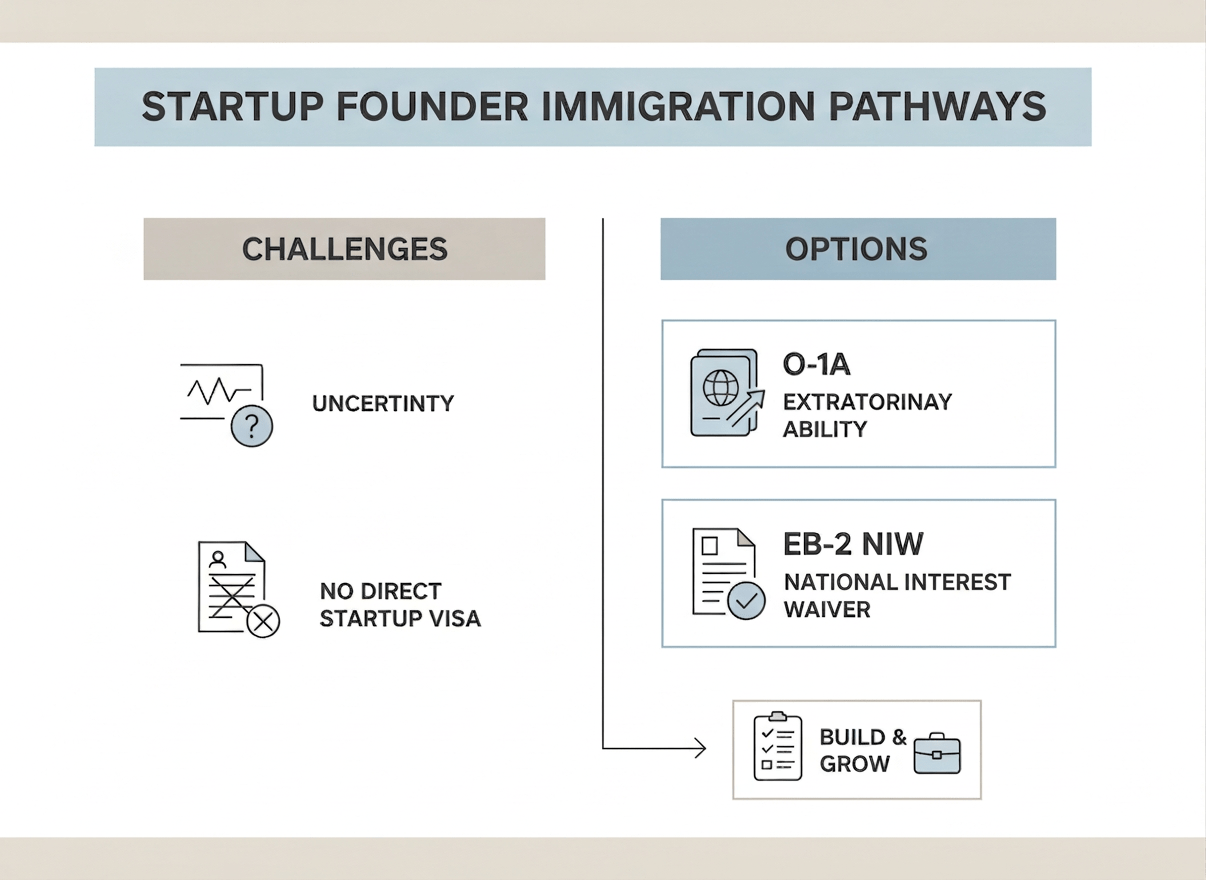
Building a startup in the U.S. involves more than a strong idea. Immigration plays a critical role.
No Direct Startup Visa
Unlike some countries, the U.S. does not offer a straightforward “startup visa.” This creates uncertainty for international founders.
Without a clear path, founders may:
- Delay launching in the U.S.
- Operate in legal gray areas
- Miss funding or partnership opportunities
These delays can weaken momentum at a crucial stage.
Founder-Friendly Visa Pathways
Some visa options align well with entrepreneurial goals when approached strategically.
O-1A Visa (Extraordinary Ability)
This visa suits individuals with strong achievements in fields like technology or business. Developers who have:
- Built impactful products
- Received industry recognition
- Contributed to open-source or innovation
may qualify under this category.
For a deeper breakdown, see this guide on the O-1A visa for individuals with extraordinary ability.
EB-2 NIW (National Interest Waiver)
This pathway focuses on individuals whose work benefits the United States. Founders building innovative solutions or contributing to economic growth can position themselves under this category.
Here’s a detailed guide on the EB-2 NIW pathway for entrepreneurs.
Both options require strong documentation and a clear narrative of impact.
Strategic Positioning Matters
Success depends on how founders present their work:
- Demonstrating innovation and measurable impact
- Highlighting leadership and influence
- Connecting the startup’s mission to broader economic or societal benefits
A developer who built a widely used API, for example, can frame it as a contribution to industry infrastructure, not just a technical project.
Building A Startup While Navigating Immigration
Running a startup and handling immigration at the same time creates additional complexity.
Align Business Goals With Immigration Strategy
Your startup should support your visa case. If your application highlights innovation, your product must reflect that.
A mismatch weakens both efforts.
Structure The Company Thoughtfully
Many founders choose U.S.-friendly structures such as Delaware C-corporations. This setup aligns with investor expectations and simplifies fundraising.
Use Your Technical Background As An Advantage
Technical founders can:
- Demonstrate direct involvement in product development
- Show measurable contributions
- Provide clear evidence of expertise
That combination strengthens both business credibility and immigration positioning.
A Practical Roadmap For Developer-Founders
Turning an idea into a U.S.-based startup requires a structured approach.
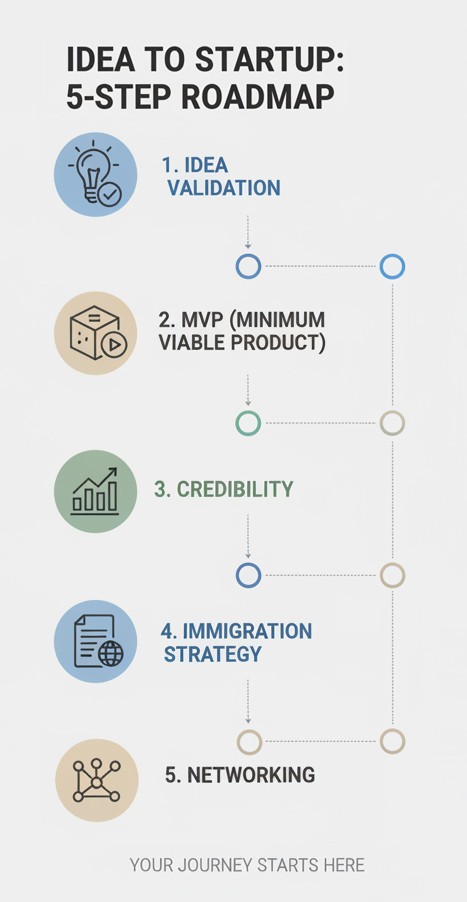
Step 1: Validate The Idea
Start with a problem worth solving. Talk to users. Test assumptions early.
Step 2: Build An MVP
Focus on core functionality. Avoid overbuilding. Launch quickly and gather feedback.
Step 3: Establish Credibility
Build proof of impact:
- User growth
- Media mentions
- Partnerships
- Contributions to the industry
These signals matter for both investors and visa applications.
Step 4: Choose The Right Immigration Path
Evaluate options based on your background and goals. Timing is critical. Early planning prevents delays later.
Step 5: Expand Your Network
Connections open doors to funding, partnerships, and opportunities. Engage with founder communities, online and offline.
The Future Of Global Entrepreneurship
Technology continues to remove barriers to entry, but geography still influences scale.
Global teams are becoming standard. Founders operate across borders. Yet the U.S. remains a central hub for innovation and investment.
According to the National Science Foundation, immigrants have founded or co-founded over 50% of U.S. unicorn startups (NSF, 2022 data). That trend highlights the importance of international talent in shaping the tech ecosystem.
Developers who transition into founders play a major role in this shift. They combine technical expertise with entrepreneurial thinking, creating solutions that scale globally.
Conclusion: Code Your Future Beyond Borders
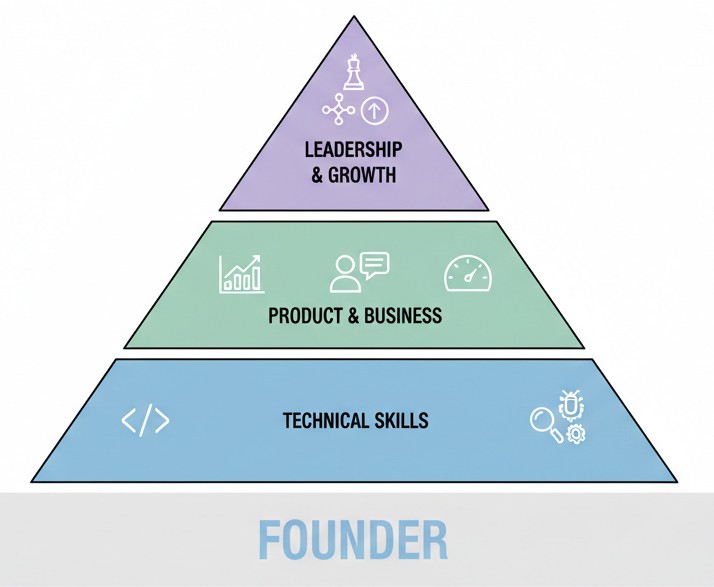
The path from developer to founder is not linear. It requires new skills, new perspectives, and strategic decisions beyond code.
International entrepreneurs face additional layers of complexity. Immigration, funding, and market entry all intersect. Ignoring these factors can slow progress or block opportunities altogether.
Still, the opportunity is clear. Developers already possess the foundation to build impactful products. With the right approach, they can turn those products into companies that operate on a global scale.
Building a U.S.-based startup is not just about location. It is about access, growth, and long-term potential. For developers willing to take the leap, the transition from writing code to building companies is no longer out of reach.
⸻ Author Bio ⸻
Joseph K. Robinson is a U.S. immigration attorney and founder of Robinson Immigration Law, where he advises founders, executives, researchers, and investors on strategic, high-skilled immigration pathways. His practice focuses on complex cases such as extraordinary ability petitions and national interest waivers, with an emphasis on aligning immigration strategy with long-term career and business goals. Having personally navigated the immigration process, Joseph brings both professional expertise and firsthand insight to his work.