




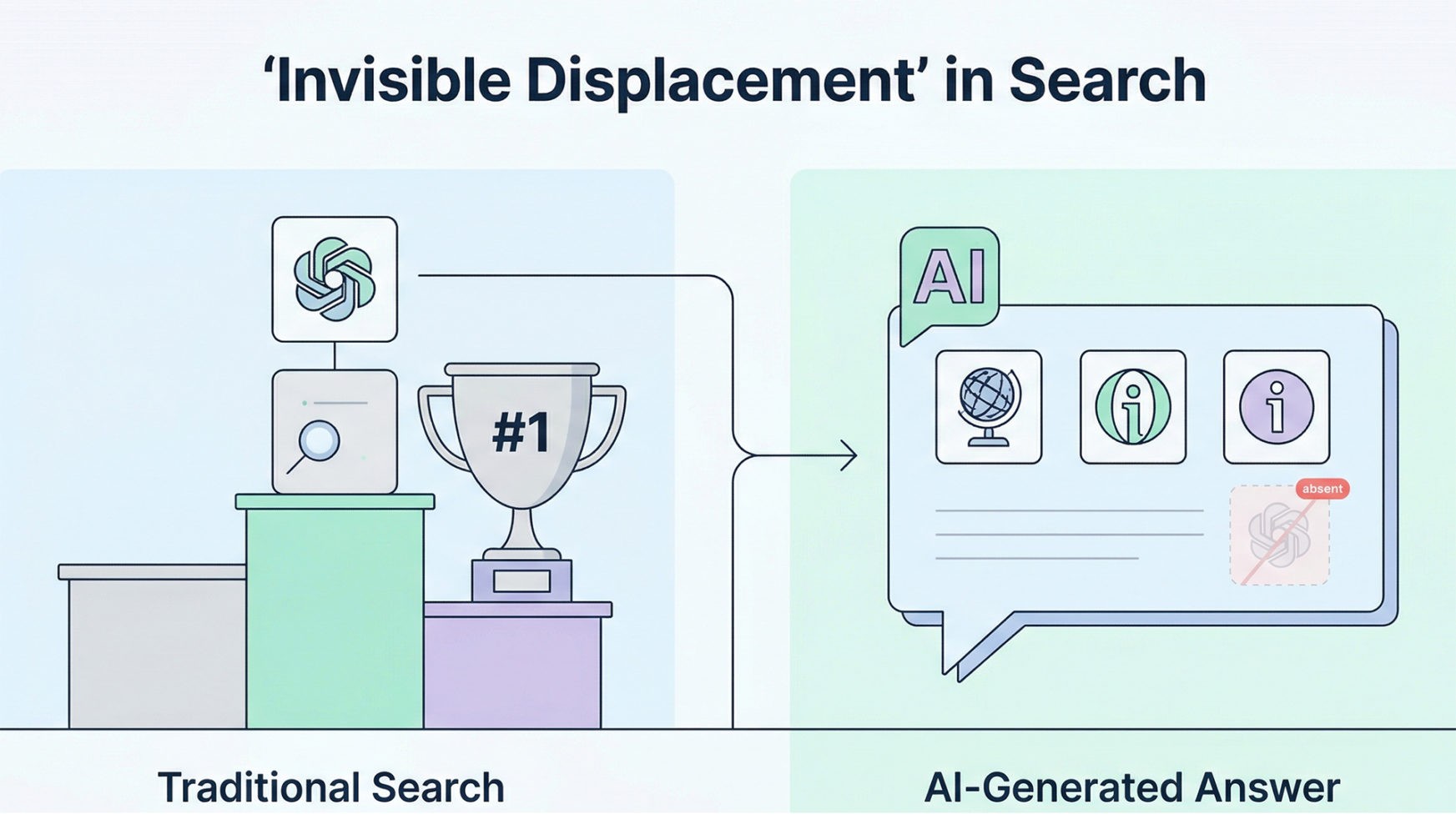
A growing number of brands are experiencing what can be described as invisible displacement, and it’s reshaping the GEO vs SEO 2026 conversation entirely. They rank highly in traditional search results, yet remain completely absent from the AI-generated answers their customers actually see.
As AI systems increasingly resolve queries directly within their interfaces, visibility is no longer defined by position alone. It depends on whether your brand is selected, cited, and trusted within those synthesized responses.
A #1 ranking on Google still matters, but it is no longer the final objective. The real goal is becoming a primary source in AI-generated answers.
The Shift to AI-Driven Search
AI-powered interfaces are changing how users interact with information. Instead of scanning multiple results, users receive consolidated answers that often eliminate the need to click through to websites.
This transforms the visibility model: success is no longer defined by being found, but by being included.
Invisible Displacement Explained
Invisible displacement occurs when a brand dominates traditional rankings but is excluded from AI-generated responses that satisfy the same query.
From the user’s perspective, that brand effectively does not exist.
Because these systems frequently resolve intent within their own interface, visibility is increasingly measured through LLM Share of Voice (SoV) — the frequency and prominence with which a brand appears in AI-generated outputs.
SEO vs. GEO: Key Differences
Traditional SEO and Generative Engine Optimization (GEO) operate on different principles.
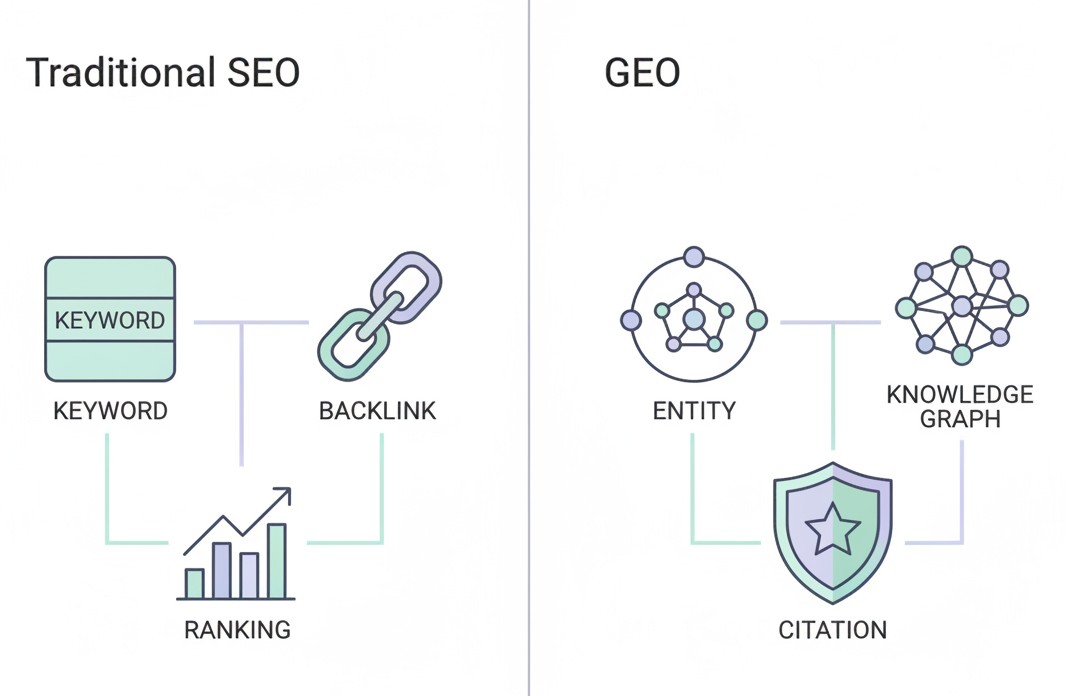
Traditional SEO focuses on:
- Optimizing for search engine algorithms
- Keywords and backlinks
- Driving clicks to landing pages
- Metrics such as rankings, impressions, and CTR
GEO focuses on:
- How AI systems retrieve and synthesize information
- Entities, relationships, and verifiable facts
- Inclusion in generated answers and citations
- Metrics such as mention frequency, sentiment, and citation rate
SEO remains essential, but GEO reflects how modern systems evaluate and present information.
The Conversion Value of AI Search
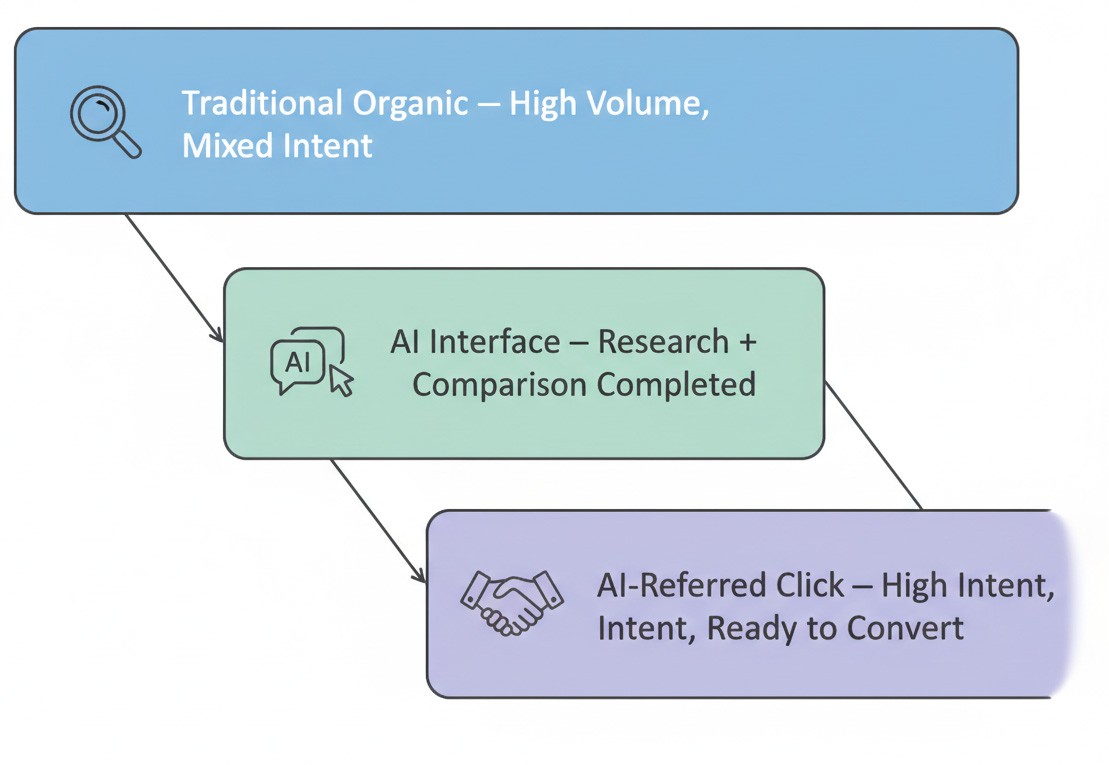
AI-referred traffic is typically lower in volume than traditional organic search, but it tends to reflect stronger intent.
In tracked campaigns across multiple agency clients, AI-referred sessions consistently show lower bounce rates and shorter time-to-conversion compared to standard organic traffic from the same campaigns. Users often arrive after completing much of their research within the AI interface itself.
This positions AI search as a high-efficiency acquisition channel, where fewer visits can still produce meaningful business outcomes.
The 2026 Search Visibility Stack
To measure performance in this environment, agencies need tools that extend beyond rank tracking and into AI visibility.
| Tool | Focus | 2026 Capabilities |
|---|---|---|
| Ahrefs Brand Radar | Share of Voice | Tracks brand mentions across AI platforms including Google AI Overviews and Perplexity |
| SE Visible | Strategic Analytics | Measures sentiment and identifies missed citation opportunities across AI-generated results |
| Surfer AI Tracker | Content Performance | Provides AI content optimization guidance, including structure and extractability scoring |
| Profound | Technical GEO | Analyzes how brands appear at the prompt level across AI systems |
These tools complement traditional SEO platforms by providing insight into how brands are represented in AI-generated outputs.
Building Content for AI Extraction
To succeed in this environment, content must be structured for both human readers and machine interpretation.
1. Prioritize Entity-Driven Content
AI systems map relationships between entities rather than relying solely on keyword matching.
Effective content clearly defines:
- What your brand is
- What problem it solves
- The context in which it operates
Example:
Instead of “Best CRM for Small Business,” use:
“How [Brand] Solves Scalability Challenges for Series A Startups.”
This connects a specific entity to a clear and verifiable use case.
2. Optimize for Extractability
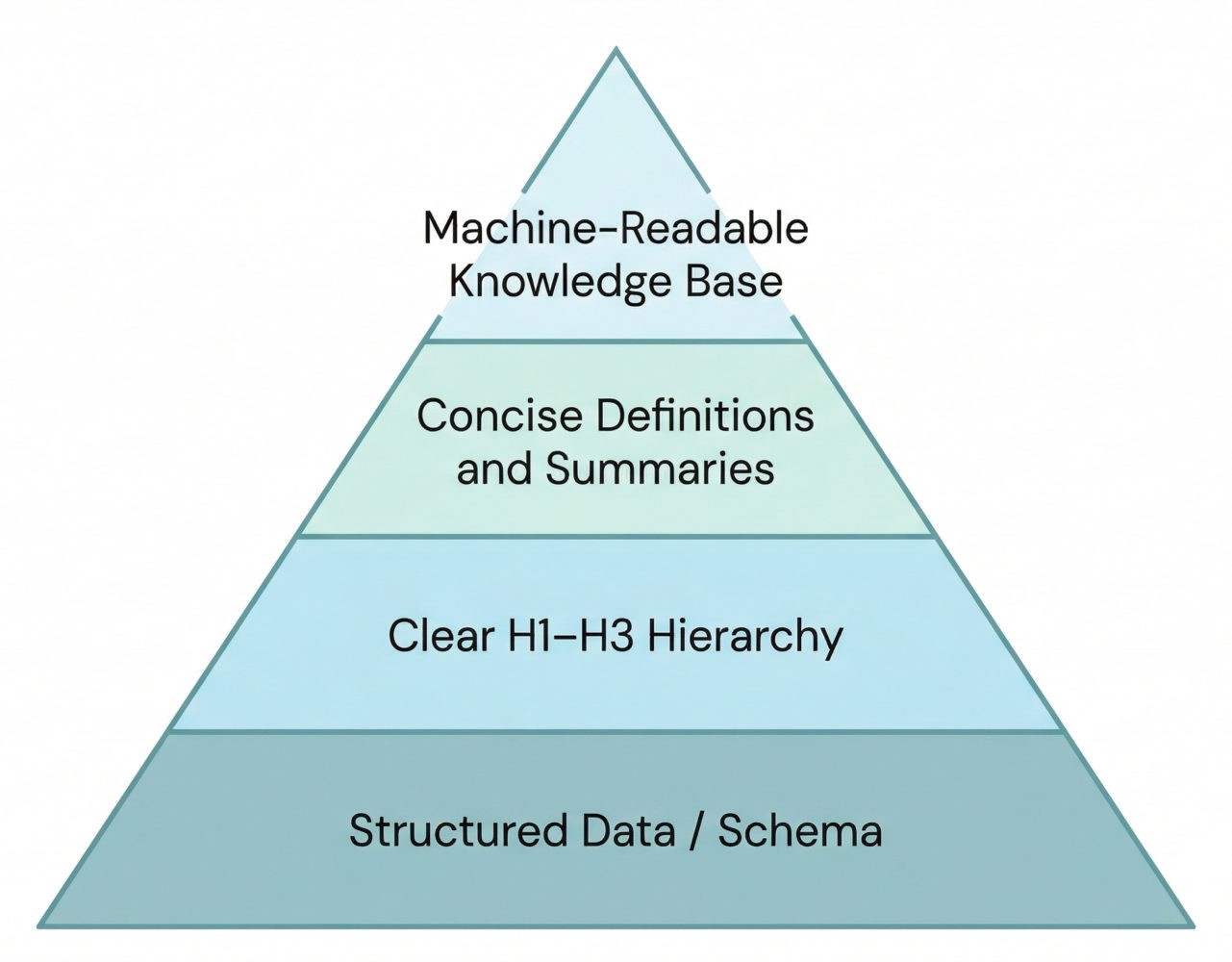
AI systems prioritize content that is structured, concise, and easy to retrieve.
Key improvements include:
- Clear heading hierarchy (H1–H3)
- Concise summaries and definitions
- Structured formatting (tables, bullet points where justified)
- Implementation of structured data such as FAQ or product schema
Your website should function as a machine-readable knowledge base, not just a content repository.
3. Mention Engineering
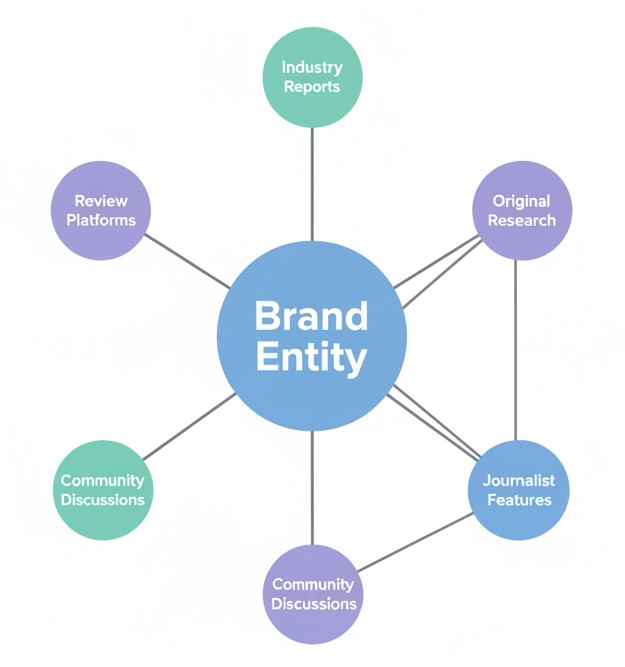
Mentions are increasingly as influential as backlinks in shaping AI visibility.
AI systems build their understanding of authority using signals from across the web, including industry publications, forums, reports, and review platforms. However, earning mentions requires deliberate effort.
Effective tactics include:
- Contributing proprietary data or insights to industry reports
- Responding to journalist queries through platforms similar to HARO
- Publishing original research or benchmarks designed to be cited
- Participating in high-signal community discussions where expertise is visible
Consistent presence across these sources strengthens a brand’s position within AI-generated narratives.
Measuring GEO Performance
To justify investment in GEO, reporting must move beyond traffic metrics and focus on visibility and influence.
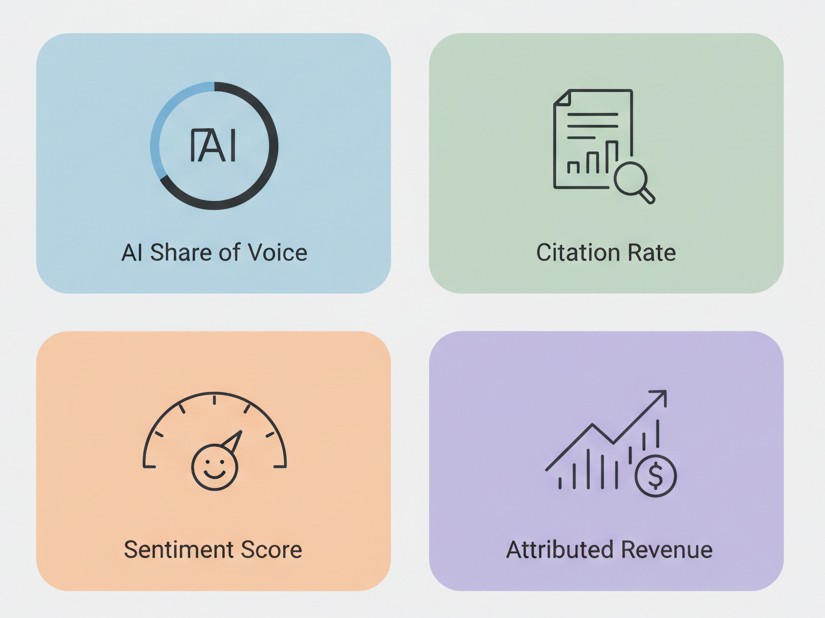
Key indicators include:
- AI Share of Voice (SoV):
The percentage of relevant prompts where your brand appears - Citation Rate:
How frequently your content is used as a source - Sentiment Score:
How AI systems position your brand (leader, niche player, budget option) - Attributed Revenue:
Conversions linked to AI-referred sessions
While traffic volume may be lower, these metrics reflect quality, intent, and authority.
Where GEO Fits in Your Strategy
GEO intersects with multiple disciplines rather than replacing them.
Content must be structured and authoritative. PR efforts must generate credible mentions. Technical SEO must ensure accessibility and structured data. Community engagement contributes to distributed authority signals.
Search visibility has evolved beyond a siloed task. It now emerges from the synergy of marketing, content, and brand strategy working together.
Conclusion: Visibility as Reputation
Search visibility is increasingly tied to how AI systems interpret trust, authority, and relevance.
Organizations that align their content with these systems — through structured information, strong entity signals, and credible mentions — will maintain and expand their visibility.
Those that rely solely on traditional rankings may find their presence eroding without clear warning signals, even as their positions appear unchanged.
The transformation is evident: search is transitioning from locating links to providing direct answers. Visibility now hinges less on optimization and more on being recognized.
About the author:
Eve Cichon specializes in marketing strategy, brand development, and digital growth. Working as a freelancer, she helps businesses connect product value with audience needs through data-informed strategy and creative execution. Her expertise spans brand positioning, campaign management, audience engagement, and building scalable marketing systems that support long-term growth.